图片文件尺寸 : 4205 x 4194px
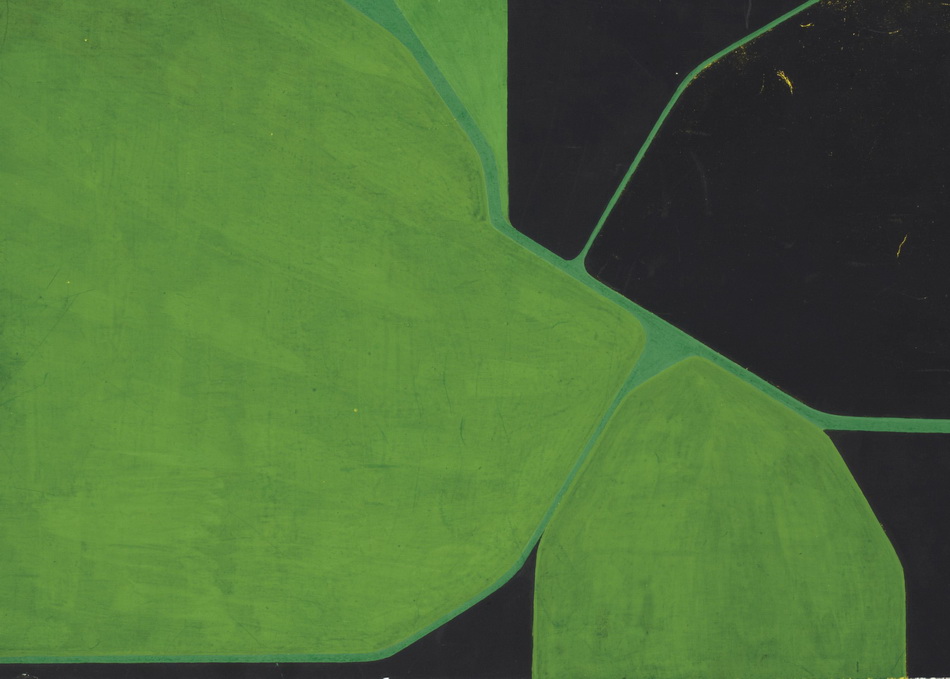
当代科尔 包括:-Arpad Szenes提供的纸上墨水-Sergio d e Castro提供的DDIACEPierre BerS纸上水粉画-纸上的DDICACE-AttributionThomas Benton面板上的油-纸上的拼贴画-纸上的水粉画和四张贺卡艺术家
图片文件尺寸 : 4205 x 4194px
当代科尔 包括:-Arpad Szenes提供的纸上墨水-Sergio d e Castro提供的DDIACEPierre BerS纸上水粉画-纸上的DDICACE-AttributionThomas Benton面板上的油-纸上的拼贴画-纸上的水粉画和四张贺卡艺术家

图片文件尺寸 : 4944 x 4852px
Edwin Lord Weeks:Loading the Camels, Salé, Morocco, alternately titled Along the Nile and Loading in the Donkeys, Near East
Signed \'E.L. Weeks\' (lower right), identified on a label from The Jordan-Volpe Gallery, New York (affixed to the foamcore backing board), dated to c. 1880 in a letter from Edward S. Levin that accompanies the lot
oil on canvas
22 1/4 x 36 in. (56.5 x 91.0 cm)
framed 33 3/4 x 47 5/8 x 3 in.
埃德温·洛德·威克斯 装载骆驼,萨莱,摩洛哥,交替标题为《尼罗河沿岸》和《驴子装载》,近东22 1/4 x 36英寸。框架33 3/4 x 47 5/8 x 3英寸。
 图片文件像素:5930 x 4411 px
卡拉·阿卡尔迪,当代艺术I-
Carla Accardi * - Zeitgenössische Kunst I-
(Trapani 1924–2014 Rome)
Untitled, 1954, signed and dated; signed and dated again on the reverse, tempera (casein) on paper laid down on canvas, 68 x 32 cm, framed
This work is registered in the Archivio Accardi Sanfilippo, Rome and is accompanied by a photo certificate signed by the artist, Studio Accardi, Rome
Provenance:
Sale Nuova Brerarte, Milan, 11 December 1990, lot 71
European Private Collection (acquired from the above)
Note:
The paper was laid down on canvas directly by the artist as evident also from the signature and the date on the reverse.
Yes, 1954 was a critical year, but my first works featuring the sign, which I made on paper, were born in 1953. The meaning behind this choice, my surrender to the sign, which was basic at first and structural later, no doubt emerged from the idea artists have always had about contemporary art, about culture in their time.
Although I wasn’t studying mathematics or anthropology, Structuralism was a topical discovery all the same, something that exhisted in the Western world.
I bestowed an image on the Structuralist vision of the world; a visual image that bore all the components: events, the aggregation of signs were repeated in my paintings with phenomenic variations: but always faithful to themselves and repeatable.
Carla Accardi interviewed by Vanni Bramanti, in V. Bramanti, Conversazione con Carla Accardi, Rome 1982

图片文件尺寸 : 4640 x 4271px
Helen Bradley:
Uncle Tom\'s Funeral Procession
signed \'HELEN BRADLEY\' and with fly insignia (lower right); further signed, inscribed and dated \'\"Theyre off\" called John Sam\'els wife Florrie, who was/standing on a chair peeping through the Blind, but Martha/Higgingbottom who was also peeping was away counting/the neighbours who were following the Hearse. \"We cant/feed all that lot\" said aunt Mary, who was away/stealing the ham. Mother wasnt thinking about the food/but great uncle Toms sideboard. \"I wonder who he\'s left it/too\" she said, but aunt Annie (who was only an aunt by/marriage) said, \"Jane, youve enough furniture, I could do/ with that sideboard\". Just then Sarah\'s voice came from/upstairs, \"Everybody\'s making for the front gardens and/I can hear a bull bellowing\", So mother, aunt Mary,/and aunt Frances rushed upstairs to see what was happening/sure enough, Joe Wroe the Butcher was so busy watching/great uncle Toms funeral that he forgot to fasten his bulls in,/so out they came and away they ran. Two were soon caught but/one ran down into Lees, and the thought of it deterred several people/ who were coming to the house for the funeral tea which made it/easier for mother and the aunts. Alas we didnt get the sideboard/and the year was 1909./Helen Layfield Bradley 1973.\' (on a label attached to backboard)
oil on canvas laid on board
60.3 x 151.5 cm. (23 3/4 x 59 5/8 in.)
海伦·布拉德利 汤姆叔叔的葬礼流程60.3 x 151.5 cm。

图片文件尺寸 : 4614 x 4383px
Helen Bradley:
Uncle Tom\'s Funeral Procession
signed \'HELEN BRADLEY\' and with fly insignia (lower right); further signed, inscribed and dated \'\"Theyre off\" called John Sam\'els wife Florrie, who was/standing on a chair peeping through the Blind, but Martha/Higgingbottom who was also peeping was away counting/the neighbours who were following the Hearse. \"We cant/feed all that lot\" said aunt Mary, who was away/stealing the ham. Mother wasnt thinking about the food/but great uncle Toms sideboard. \"I wonder who he\'s left it/too\" she said, but aunt Annie (who was only an aunt by/marriage) said, \"Jane, youve enough furniture, I could do/ with that sideboard\". Just then Sarah\'s voice came from/upstairs, \"Everybody\'s making for the front gardens and/I can hear a bull bellowing\", So mother, aunt Mary,/and aunt Frances rushed upstairs to see what was happening/sure enough, Joe Wroe the Butcher was so busy watching/great uncle Toms funeral that he forgot to fasten his bulls in,/so out they came and away they ran. Two were soon caught but/one ran down into Lees, and the thought of it deterred several people/ who were coming to the house for the funeral tea which made it/easier for mother and the aunts. Alas we didnt get the sideboard/and the year was 1909./Helen Layfield Bradley 1973.\' (on a label attached to the backboard)
oil on canvas laid on board
60.3 x 151.5 cm. (23 3/4 x 59 5/8 in.)
海伦·布拉德利 汤姆叔叔的葬礼流程60.3 x 151.5 cm。
 图片文件像素:5115 x 4368 px
Gunter Damisch,当代艺术I-
Gunter Damisch * - Zeitgenössische Kunst I-
(Steyr 1958–2016 Vienna)
“Rotfeldweltwege/Doppelflämmerer”, signed and dated
G. Damisch 2000/2001 on the reverse as well as label with the title, oil on canvas, 160 x 140 cm, on metal stretcher
Provenance:
Galerie Ohse, Bremen
Private Collection, 德国y
Yes, in the sense that a painting actually always develops out of a proliferation and growth and evolutionary process and in the sense that every result cries out for a new one, so to speak, or generates something new. This always plays itself out in various ways. In principle, it has something to do with the phenomena that can be experienced in painting. This global issue results from the fact that I have found painting to be something that creates identity and meaning. You get to know yourself and express yourself and enter into a process where you are not only passively at the mercy of others, but can also achieve a lot on a creative level.
Gunter Damisch, in conversation with Friedhelm Mennekes
Ja, in diesem Sinne, daß sich ein Bild eigentlich immer aus einem Wuchern und Wachsen und evolutionären Prozeß heraus entwickelt und sozusagen jedes Ergebnis nach einem neuen schreit oder etwas Neues generiert. Das spielt sich immer in Variationen durch und hat grundsätzlich etwas mit Phänomenen zu tun, die in der Malerei erfahrbar sind. Dieses Weltthema resultiert daher, daß ich Malerei als etwas Identitäts- und Sinnstiftendes empfunden habe. Man lernt sich da kennen und ausdrücken und begibt sich in einen Prozeß, wo man nicht nur passiv ausgeliefert ist, sondern auch gestalterisch eine Menge bewirken kann.
Gunter Damisch aus einem Gespräch mit Friedhelm Mennekes

图片文件尺寸 : 4239 x 5276px
JONSTON, JOHN. 1603-1675.:Dendrographias Sive Historiae Naturalis De Arboribus Et Fruticibus Tam Nostri Quam Peregrini Orbis. Frankfurt: Hieronymi Polichii for the heirs of Matthaüs Merian, 1662.
4to (340 x 197 mm). Engraved frontis, 137 engraved plates. 18th-century mottled calf, morocco title labels to spine, gilt. Minor foxing throughout, edge of upper corner torn at pl. 87/8.
Provenance: Charles de Secondat, Baron de Montesquieu (ink note to title page: \"Ex Biblioth. de Montesquieu;\" Desgraves Catalogue De La Bibliothèque De Montesquieu À La Brède 1380); Arpad Plesch (his bookplate, his sale, Sotheby Parke Bernet Company, 17 November 1975, lot 408).
BARON DE MONTESQUIEU\'S COPY, FROM ARPAD PLESCH, THE FIRST EDITION OF JONSTON\'S IMPORTANT WORK ON FRUITS. A complete copy of this work including the famous engraving of \"Agnus scythicus\" or \"Planta Tartarica Barometz,\" a plant of Central Asia believed to grow sheep as fruit. Plesch 408 (for this copy); Stafleu Cowan II:3408.
约翰·琼斯顿。1603-1675. Sive树木和Nostri和Peregrini Orbis果实的自然历史。法兰克福:希罗尼米·波里奇伊(Hieronymi Polichii)为马蒂亚斯·梅里安(Matthaüs Merian)的继承人,1662年。
 图片文件像素:5713 x 4685 px
托姆布雷-
Cy Twombly * - Zeitgenössische Kunst I-
(Lexington, Virginia 1928–2011 Rome)
Untitled, 1963/1964, signed Cy Twombly, colored pencil, wax crayon on paper, 86 x 67 cm, framed
Provenance:
Galleria La Tartaruga, Rome
Galerie Karsten Greve, Cologne
Private Collection, 德国y
Kunsthaus Lempertz, 3 December 2016, lot 450 - acquired there by the present owner
Literature:
Nicola Del Roscio, Cy Twombly, drawings, catalogue raisonné, Gagosian Gallery, New York (Ed.), Munich 2011, vol. 4, no. 20
Cy Twombly occupies a unique position among US artists. Twombly lived and worked in Italy, far from the 美国 art world, and felt free to experiment. In Rome, Twombly refined his distinctive artistic language. Twombly\'s visual language is informed by classical literature, ancient history, poetry and mythology, as well as his own life experience. Since the 1950s, Twombly\'s drawings have been dominated by rhythmically repeated line progressions, swirls, dense tangles and isolated numbers. Pencil, coloured pens and ballpoint pens enabled Twombly to make this \'scriptural\' drawing, which ultimately includes the signature of the artist himself. On the white of the paper, the pictorial elements provoke by appearing as scribbles, appearing as if randomly distributed on the surface.
The untitled work offered here is a vivid example of Twombly\'s unique pictorial language. The pictorial elements merge into an abstract composition that is both delicate and dynamic. The work was created in Italy between 1963-64. Twombly lived in a 17th-century palazzo on Via di Monserrato in Rome at the time the work was created. Untitled is emblematic of the groundbreaking work Twombly produced in the 1960s, widely regarded as a critical and highly fruitful period in his long and illustrious career.
“Paint is something that I use with my hands and do all those tactile things. I really don’t like oil because you can’t get back into it, or you make a mess. It’s not my favourite thing... pencil is more my medium than wet paint.”
Cy Twombly
 图片文件像素:5822 x 4298 px
Hans Hartung,当代艺术I-
Hans Hartung * - Zeitgenössische Kunst I-
(Leipzig 1904–1989 Antibes)
T 1964 - E 40, 1964, signed, dated Hartung 64, titled and inscribed and with directional arrow on the stretcher, acrylic on canvas, 81 x 130 cm, framed
This work is registered at the Foundation Hans Hartung and Anna-Eva Bergman, Antibes, and will be included in the forthcoming Catalogue Raisonné being prepared by the Foundation Hartung Bergman, Antibes (confirmation via email 3. October 2022).
Provenance:
Galerie Kallenbach, Munich
Private collection, North Rhine-Westphalia
Ketterer Kunst, Munich, 18 June 2021, lot 302 - acquired there by the present owner
Hans Hartung\'s entire oeuvre is characterised by abstract, non-objective painting. This interplay of light and shadow, structure, texture and airiness would become the formative elements of his later works. The non-figurative painting T 1964 - E 40 offered here also belongs to his catalogue of work. The canvas is primed in yellow, the upper part of the painting is dipped in a rich black. Above this is a layer of dark blue paint splashes with white accents, which the artist has worked on with a steel brush and scraper. A particular focus of the work is the complementary contrast of blue and yellow as well as the contrast between surface and stroke. The pictorial space is composed of light, shadow and their contrast.
The multitude of brushstrokes and scratches, the result of the painter\'s activity on the canvas, represent Hartung\'s style of the 1960s. The compositional scheme of the work offered here is reminiscent of the depiction of fireworks. The rockets explode in the night sky and colour it a sulphurous yellow.
“The first and most important thing is to remain free, free in each line you undertake, in your ideas and in your political action, in your moral conduct. The artist especially must remain free from all outer restraints.”
Hans Hartung
 图片文件像素:6259 x 4573 px
杰森·马丁,当代艺术I-
Jason Martin * - Zeitgenössische Kunst I-
(born in London in 1970)
Untitled, 2008, oil on steel, 236 x 354 x 11 cm
Provenance:
Private collection Thomas Olbricht, Essen
Van Ham, Cologne, 26 September 2020, lot 333 - acquired there by the present owner
Exhibited:
Hamburg, Deichtorhallen, Zwei Sammler: Thomas Olbricht und Harald Falckenberg, 24 June – 21 August 2011
Literature:
Luckow, Dirk: Zwei Sammler - Thomas Olbricht und Harald Falckenberg, Cologne 2011, p. 52 (without ill.)
The British artist Jason Martin expands the possibilities of painting with his innovative approach in using unusual materials which serve as paint. He attracted international attention with his large, brushed oil paintings, executed in thin layers of paint with self-made comb-like tools – such as the one being auctioned off. Because of the light bouncing off the shiny surface, experiencing the work in person is like walking towards a sculpture rather than a painting.
“There’s never really any single point to review the work or to experience the work, it’s about moving around. But there is a stillness as well, in that the organisation of the marks all collide into a central or suggested central point. […] When you encounter a work of mine, there is an academic approach to the performative act, the gestural act. I have a series of reduced movements that then compile in a composition. And you also look through it, because there is this implied sense of looking through, this illusion. […] I would suggest that my paintings are a hybrid between that naturalism, that looking through, that perspectival space, that implied pictorial depth and the didactic, academic concerns of abstraction, which are for me physical and arm-led, or I immerse my body into the whole making of the work. And they sit very much in between these two places, these two worlds. [...]”
Jason Martin on the exhibition: Convergence. Thaddaeus Ropac, Seoul Fort Hill, 24.2.-16.4.22
图片文件尺寸 : 4205 x 4194px
当代科尔 包括:-Arpad Szenes提供的纸上墨水-Sergio d e Castro提供的DDIACEPierre BerS纸上水粉画-纸上的DDICACE-AttributionThomas Benton面板上的油-纸上的拼贴画-纸上的水粉画和四张贺卡艺术家
图片文件尺寸 : 4944 x 4852px
Edwin Lord Weeks:Loading the Camels, Salé, Morocco, alternately titled Along the Nile and Loading in the Donkeys, Near East
Signed \'E.L. Weeks\' (lower right), identified on a label from The Jordan-Volpe Gallery, New York (affixed to the foamcore backing board), dated to c. 1880 in a letter from Edward S. Levin that accompanies the lot
oil on canvas
22 1/4 x 36 in. (56.5 x 91.0 cm)
framed 33 3/4 x 47 5/8 x 3 in.
埃德温·洛德·威克斯 装载骆驼,萨莱,摩洛哥,交替标题为《尼罗河沿岸》和《驴子装载》,近东22 1/4 x 36英寸。框架33 3/4 x 47 5/8 x 3英寸。
图片文件像素:5930 x 4411 px
卡拉·阿卡尔迪,当代艺术I-
Carla Accardi * - Zeitgenössische Kunst I-
(Trapani 1924–2014 Rome)
Untitled, 1954, signed and dated; signed and dated again on the reverse, tempera (casein) on paper laid down on canvas, 68 x 32 cm, framed
This work is registered in the Archivio Accardi Sanfilippo, Rome and is accompanied by a photo certificate signed by the artist, Studio Accardi, Rome
Provenance:
Sale Nuova Brerarte, Milan, 11 December 1990, lot 71
European Private Collection (acquired from the above)
Note:
The paper was laid down on canvas directly by the artist as evident also from the signature and the date on the reverse.
Yes, 1954 was a critical year, but my first works featuring the sign, which I made on paper, were born in 1953. The meaning behind this choice, my surrender to the sign, which was basic at first and structural later, no doubt emerged from the idea artists have always had about contemporary art, about culture in their time.
Although I wasn’t studying mathematics or anthropology, Structuralism was a topical discovery all the same, something that exhisted in the Western world.
I bestowed an image on the Structuralist vision of the world; a visual image that bore all the components: events, the aggregation of signs were repeated in my paintings with phenomenic variations: but always faithful to themselves and repeatable.
Carla Accardi interviewed by Vanni Bramanti, in V. Bramanti, Conversazione con Carla Accardi, Rome 1982
图片文件尺寸 : 4640 x 4271px
Helen Bradley:
Uncle Tom\'s Funeral Procession
signed \'HELEN BRADLEY\' and with fly insignia (lower right); further signed, inscribed and dated \'\"Theyre off\" called John Sam\'els wife Florrie, who was/standing on a chair peeping through the Blind, but Martha/Higgingbottom who was also peeping was away counting/the neighbours who were following the Hearse. \"We cant/feed all that lot\" said aunt Mary, who was away/stealing the ham. Mother wasnt thinking about the food/but great uncle Toms sideboard. \"I wonder who he\'s left it/too\" she said, but aunt Annie (who was only an aunt by/marriage) said, \"Jane, youve enough furniture, I could do/ with that sideboard\". Just then Sarah\'s voice came from/upstairs, \"Everybody\'s making for the front gardens and/I can hear a bull bellowing\", So mother, aunt Mary,/and aunt Frances rushed upstairs to see what was happening/sure enough, Joe Wroe the Butcher was so busy watching/great uncle Toms funeral that he forgot to fasten his bulls in,/so out they came and away they ran. Two were soon caught but/one ran down into Lees, and the thought of it deterred several people/ who were coming to the house for the funeral tea which made it/easier for mother and the aunts. Alas we didnt get the sideboard/and the year was 1909./Helen Layfield Bradley 1973.\' (on a label attached to backboard)
oil on canvas laid on board
60.3 x 151.5 cm. (23 3/4 x 59 5/8 in.)
海伦·布拉德利 汤姆叔叔的葬礼流程60.3 x 151.5 cm。
图片文件尺寸 : 4614 x 4383px
Helen Bradley:
Uncle Tom\'s Funeral Procession
signed \'HELEN BRADLEY\' and with fly insignia (lower right); further signed, inscribed and dated \'\"Theyre off\" called John Sam\'els wife Florrie, who was/standing on a chair peeping through the Blind, but Martha/Higgingbottom who was also peeping was away counting/the neighbours who were following the Hearse. \"We cant/feed all that lot\" said aunt Mary, who was away/stealing the ham. Mother wasnt thinking about the food/but great uncle Toms sideboard. \"I wonder who he\'s left it/too\" she said, but aunt Annie (who was only an aunt by/marriage) said, \"Jane, youve enough furniture, I could do/ with that sideboard\". Just then Sarah\'s voice came from/upstairs, \"Everybody\'s making for the front gardens and/I can hear a bull bellowing\", So mother, aunt Mary,/and aunt Frances rushed upstairs to see what was happening/sure enough, Joe Wroe the Butcher was so busy watching/great uncle Toms funeral that he forgot to fasten his bulls in,/so out they came and away they ran. Two were soon caught but/one ran down into Lees, and the thought of it deterred several people/ who were coming to the house for the funeral tea which made it/easier for mother and the aunts. Alas we didnt get the sideboard/and the year was 1909./Helen Layfield Bradley 1973.\' (on a label attached to the backboard)
oil on canvas laid on board
60.3 x 151.5 cm. (23 3/4 x 59 5/8 in.)
海伦·布拉德利 汤姆叔叔的葬礼流程60.3 x 151.5 cm。
图片文件像素:5115 x 4368 px
Gunter Damisch,当代艺术I-
Gunter Damisch * - Zeitgenössische Kunst I-
(Steyr 1958–2016 Vienna)
“Rotfeldweltwege/Doppelflämmerer”, signed and dated
G. Damisch 2000/2001 on the reverse as well as label with the title, oil on canvas, 160 x 140 cm, on metal stretcher
Provenance:
Galerie Ohse, Bremen
Private Collection, 德国y
Yes, in the sense that a painting actually always develops out of a proliferation and growth and evolutionary process and in the sense that every result cries out for a new one, so to speak, or generates something new. This always plays itself out in various ways. In principle, it has something to do with the phenomena that can be experienced in painting. This global issue results from the fact that I have found painting to be something that creates identity and meaning. You get to know yourself and express yourself and enter into a process where you are not only passively at the mercy of others, but can also achieve a lot on a creative level.
Gunter Damisch, in conversation with Friedhelm Mennekes
Ja, in diesem Sinne, daß sich ein Bild eigentlich immer aus einem Wuchern und Wachsen und evolutionären Prozeß heraus entwickelt und sozusagen jedes Ergebnis nach einem neuen schreit oder etwas Neues generiert. Das spielt sich immer in Variationen durch und hat grundsätzlich etwas mit Phänomenen zu tun, die in der Malerei erfahrbar sind. Dieses Weltthema resultiert daher, daß ich Malerei als etwas Identitäts- und Sinnstiftendes empfunden habe. Man lernt sich da kennen und ausdrücken und begibt sich in einen Prozeß, wo man nicht nur passiv ausgeliefert ist, sondern auch gestalterisch eine Menge bewirken kann.
Gunter Damisch aus einem Gespräch mit Friedhelm Mennekes
图片文件尺寸 : 4239 x 5276px
JONSTON, JOHN. 1603-1675.:Dendrographias Sive Historiae Naturalis De Arboribus Et Fruticibus Tam Nostri Quam Peregrini Orbis. Frankfurt: Hieronymi Polichii for the heirs of Matthaüs Merian, 1662.
4to (340 x 197 mm). Engraved frontis, 137 engraved plates. 18th-century mottled calf, morocco title labels to spine, gilt. Minor foxing throughout, edge of upper corner torn at pl. 87/8.
Provenance: Charles de Secondat, Baron de Montesquieu (ink note to title page: \"Ex Biblioth. de Montesquieu;\" Desgraves Catalogue De La Bibliothèque De Montesquieu À La Brède 1380); Arpad Plesch (his bookplate, his sale, Sotheby Parke Bernet Company, 17 November 1975, lot 408).
BARON DE MONTESQUIEU\'S COPY, FROM ARPAD PLESCH, THE FIRST EDITION OF JONSTON\'S IMPORTANT WORK ON FRUITS. A complete copy of this work including the famous engraving of \"Agnus scythicus\" or \"Planta Tartarica Barometz,\" a plant of Central Asia believed to grow sheep as fruit. Plesch 408 (for this copy); Stafleu Cowan II:3408.
约翰·琼斯顿。1603-1675. Sive树木和Nostri和Peregrini Orbis果实的自然历史。法兰克福:希罗尼米·波里奇伊(Hieronymi Polichii)为马蒂亚斯·梅里安(Matthaüs Merian)的继承人,1662年。
图片文件像素:5713 x 4685 px
托姆布雷-
Cy Twombly * - Zeitgenössische Kunst I-
(Lexington, Virginia 1928–2011 Rome)
Untitled, 1963/1964, signed Cy Twombly, colored pencil, wax crayon on paper, 86 x 67 cm, framed
Provenance:
Galleria La Tartaruga, Rome
Galerie Karsten Greve, Cologne
Private Collection, 德国y
Kunsthaus Lempertz, 3 December 2016, lot 450 - acquired there by the present owner
Literature:
Nicola Del Roscio, Cy Twombly, drawings, catalogue raisonné, Gagosian Gallery, New York (Ed.), Munich 2011, vol. 4, no. 20
Cy Twombly occupies a unique position among US artists. Twombly lived and worked in Italy, far from the 美国 art world, and felt free to experiment. In Rome, Twombly refined his distinctive artistic language. Twombly\'s visual language is informed by classical literature, ancient history, poetry and mythology, as well as his own life experience. Since the 1950s, Twombly\'s drawings have been dominated by rhythmically repeated line progressions, swirls, dense tangles and isolated numbers. Pencil, coloured pens and ballpoint pens enabled Twombly to make this \'scriptural\' drawing, which ultimately includes the signature of the artist himself. On the white of the paper, the pictorial elements provoke by appearing as scribbles, appearing as if randomly distributed on the surface.
The untitled work offered here is a vivid example of Twombly\'s unique pictorial language. The pictorial elements merge into an abstract composition that is both delicate and dynamic. The work was created in Italy between 1963-64. Twombly lived in a 17th-century palazzo on Via di Monserrato in Rome at the time the work was created. Untitled is emblematic of the groundbreaking work Twombly produced in the 1960s, widely regarded as a critical and highly fruitful period in his long and illustrious career.
“Paint is something that I use with my hands and do all those tactile things. I really don’t like oil because you can’t get back into it, or you make a mess. It’s not my favourite thing... pencil is more my medium than wet paint.”
Cy Twombly
图片文件像素:5822 x 4298 px
Hans Hartung,当代艺术I-
Hans Hartung * - Zeitgenössische Kunst I-
(Leipzig 1904–1989 Antibes)
T 1964 - E 40, 1964, signed, dated Hartung 64, titled and inscribed and with directional arrow on the stretcher, acrylic on canvas, 81 x 130 cm, framed
This work is registered at the Foundation Hans Hartung and Anna-Eva Bergman, Antibes, and will be included in the forthcoming Catalogue Raisonné being prepared by the Foundation Hartung Bergman, Antibes (confirmation via email 3. October 2022).
Provenance:
Galerie Kallenbach, Munich
Private collection, North Rhine-Westphalia
Ketterer Kunst, Munich, 18 June 2021, lot 302 - acquired there by the present owner
Hans Hartung\'s entire oeuvre is characterised by abstract, non-objective painting. This interplay of light and shadow, structure, texture and airiness would become the formative elements of his later works. The non-figurative painting T 1964 - E 40 offered here also belongs to his catalogue of work. The canvas is primed in yellow, the upper part of the painting is dipped in a rich black. Above this is a layer of dark blue paint splashes with white accents, which the artist has worked on with a steel brush and scraper. A particular focus of the work is the complementary contrast of blue and yellow as well as the contrast between surface and stroke. The pictorial space is composed of light, shadow and their contrast.
The multitude of brushstrokes and scratches, the result of the painter\'s activity on the canvas, represent Hartung\'s style of the 1960s. The compositional scheme of the work offered here is reminiscent of the depiction of fireworks. The rockets explode in the night sky and colour it a sulphurous yellow.
“The first and most important thing is to remain free, free in each line you undertake, in your ideas and in your political action, in your moral conduct. The artist especially must remain free from all outer restraints.”
Hans Hartung
图片文件像素:6259 x 4573 px
杰森·马丁,当代艺术I-
Jason Martin * - Zeitgenössische Kunst I-
(born in London in 1970)
Untitled, 2008, oil on steel, 236 x 354 x 11 cm
Provenance:
Private collection Thomas Olbricht, Essen
Van Ham, Cologne, 26 September 2020, lot 333 - acquired there by the present owner
Exhibited:
Hamburg, Deichtorhallen, Zwei Sammler: Thomas Olbricht und Harald Falckenberg, 24 June – 21 August 2011
Literature:
Luckow, Dirk: Zwei Sammler - Thomas Olbricht und Harald Falckenberg, Cologne 2011, p. 52 (without ill.)
The British artist Jason Martin expands the possibilities of painting with his innovative approach in using unusual materials which serve as paint. He attracted international attention with his large, brushed oil paintings, executed in thin layers of paint with self-made comb-like tools – such as the one being auctioned off. Because of the light bouncing off the shiny surface, experiencing the work in person is like walking towards a sculpture rather than a painting.
“There’s never really any single point to review the work or to experience the work, it’s about moving around. But there is a stillness as well, in that the organisation of the marks all collide into a central or suggested central point. […] When you encounter a work of mine, there is an academic approach to the performative act, the gestural act. I have a series of reduced movements that then compile in a composition. And you also look through it, because there is this implied sense of looking through, this illusion. […] I would suggest that my paintings are a hybrid between that naturalism, that looking through, that perspectival space, that implied pictorial depth and the didactic, academic concerns of abstraction, which are for me physical and arm-led, or I immerse my body into the whole making of the work. And they sit very much in between these two places, these two worlds. [...]”
Jason Martin on the exhibition: Convergence. Thaddaeus Ropac, Seoul Fort Hill, 24.2.-16.4.22