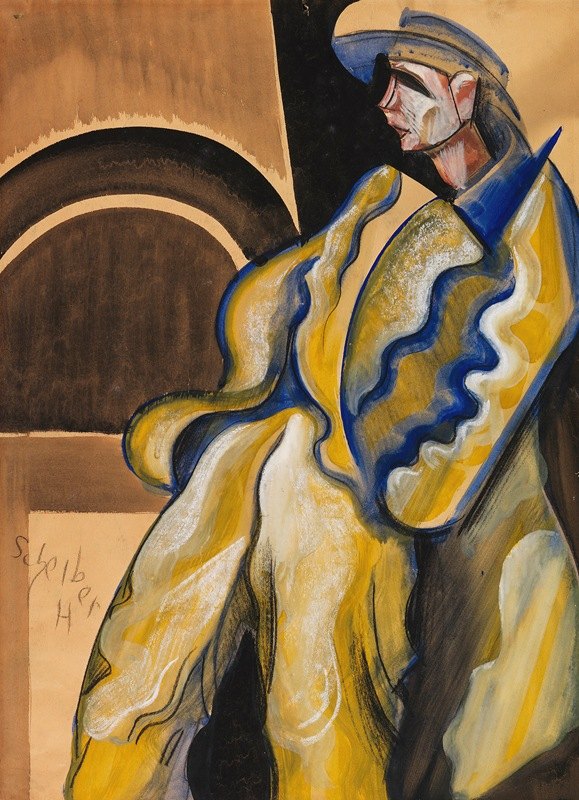
71. 俄罗斯艺术杂志。 Zhar Ptitsa/Jar Ptitsa[火鸟]。巴黎和柏林:Russkoe Iskustvo,1921年8月至1926年1月。 高清作品[23%]

Zhar-Ptitsa/Jar-Ptitza [The Firebird]. Paris and Berlin: Russkoe Iskusstvo, August 1921-January 1926.

图片文件尺寸 : 5489 x 4959px

RUSSIAN ART JOURNAL.:Zhar-Ptitsa/Jar-Ptitza [The Firebird]. Paris and Berlin: Russkoe Iskusstvo, August 1921-January 1926. 14 issues in 13 volumes (No. 4/5 double issue). 4to (315 x 240 mm). Illustrated in color and black and white, with many plates tipped in. Original color lithographed wrappers. Some issues missing spines with pages detached; internal tears and some loss.

A COMPLETE SET OF THE RARE RUSSIAN EMIGRE LITERARY ART MAGAZINE IN ORIGINAL ISSUES, reportedly no more than 300 copies were printed. Supplemental summaries of the numbers were provided in the back in a variety of languages including English. Zhar-ptitsa was the most influential art journal of the flourishing community of exiles who were feverishly trying to keep the culture of Old Russia alive. Due to paper shortages and extensive censorship by the Bolsheviks back in the USSR, the Russian book business was booming in Germany and France. This lavish periodical was the natural successor to S. Diaghilev\'s Mir iskusstva since many of those involved had been members of the World of Art Group and designers for the Ballets Russes. The rich selection subjects and contributors under A. E. Kogan\'s art department embraced L. Bakst, A. Benois, I. Bilibin, M. Chagall, S. Chekhonin, N. Goncharova, B. Grigoriev, B. Kustodiev, M. Larionov, V. Shukaev, K. Somov, S. Sudeikin and many other important artists. Poet Sasha Cherny was literary editor; and such important writers as L. Andreev, K. Balmont, I. Bunin, V. Khodasevich, B. Pilnyak, A. Remizov, N. Teffi, A.N. Tolstoi, B. Zaitsev, and the young Vladimir Nabokov (as \"V. Sirin\") appeared in its pages. Fekula called Zhar-ptitsa \"perhaps the most famous of post-revolutionary art journals, whose contributors threw new light on the development of Russian art at the beginning of the twentieth century.\" According to Vengerov, \"Even separate issues of the magazine, let alone complete sets of its issues, are a great bibliographic rarity.\" Fekula 5742; Vengerov Staraya russkaya kniga 105.

俄罗斯艺术杂志。 Zhar Ptitsa/Jar Ptitsa[火鸟]。巴黎和柏林:Russkoe Iskustvo,1921年8月至1926年1月。
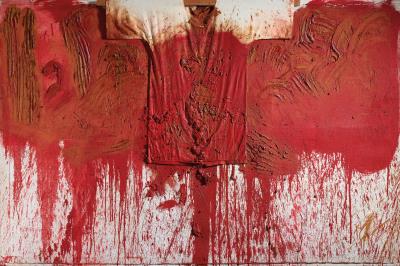
72. 赫尔曼·尼奇,当代艺术I 高清作品[22%]

DO-Hermann Nitsch  - 现代艺术 I
图片文件像素:6034 x 4375 px

赫尔曼·尼奇,当代艺术I-

Hermann Nitsch * - Zeitgenössische Kunst I-

(Vienna 1938–2022 Mistelbach, Lower Austria)
Splatter painting with chemise and impasto, signed, dated hermann nitsch 1995 on the reverse, oil on burlap, stretched over wooden frame along the right and left edge, fixed to wooden frame along the upper and lower front, 200 x 300 cm

Compare:
Hermann Nitsch. Das Gesamtkunstwerk des Orgien Mysterien Theaters, Verlag der Buchhandlung Walther König, 2015, pp. 606–607

Exhibited and illustrated in the catalogue:
Ekilibrio Foundation Collection, Galleria Sirio Arte, Padua, 10 October – 7 November 2020, pp. 168-169

Photo of this work signed hermann nitsch on the reverse available.

Provenance:
Aurelio Stefanini, Studio d’arte, Firenze (label on the reverse)
Private Collection, Italy

„… der in den exzess ekstatisch abgestiegene akteur befleckt und beschüttet… die bildfläche. oft noch spontaner, als es nur auf der bildfläche gelingt, trägt sich die intensität auf dem hemd zu. es wird automatisch befleckt, besudelt, beschmutzt, betappt, beschmiert, beschüttet, bespritzt… es ist, als ob der unsere abgründe eröffnende maler beim malvorgang in die nähe des blutschwitzens, des austrinkens des leidenskelches, der geisselung, der kreuzigung, der zerreissung des dionysos, der blendung des ödipus gerät. sein priesterkleid, sein opferhemd ist geprägt vom feuchten stempel der entäusserung… des hemd wird als höchster schmuck und trophäe auf ein bild gehängt, um dessen farbgefüge zu bereichern. es gibt bilder, die brauchen kein hemd, andere verlangen danach…“
Hermann Nitsch – aus der oben angeführten Literatur

“... the actor, ecstatically descended into the excess, stains and pours things onto … the surface of the image. often it’s even more spontaneous than just hitting the surface of the image, striking his shirt in its intensity, too. it’s automatically stained, sullied, dirtied, touched, smeared; it automatically has things poured onto it, sprayed onto it... it’s as if the painter, opening up our deepest depths, is almost sweating blood when he paints, almost drinking from the chalice of grief, flagellation, crucifixion, the dismemberment of dionysus, the blinding of oedipus. his priestly robes, his victim’s shirt is marked by the moistened stamp of renunciation. the shirt is hung on an image, enriching the texture of its colours, as if it were the most precious piece of jewellery, a trophy. there are some images that don’t need a shirt, but others demand it…”
Hermann Nitsch – from the literature cited above

73. 皮耶罗·多拉齐奥 高清作品[17%]

DO-Piero Dorazio  - 现代艺术 I
图片文件像素:5842 x 5474 px

皮耶罗·多拉齐奥-

Piero Dorazio * - Zeitgenössische Kunst I-

(Rome 1927–2005 Perugia)
Untitled [Contro il rassegnarsi], 1967, Signed, dated, dedicated and inscribed on the reverse, oil on canvas, 100 x 100, framed

This work is registered in the Archivio Piero Dorazio, Milan and is accompanied by a photo certificate of authenticity

Provenance:
V. Pirozzi Collection, Rome
Sale Farsetti, Prato, 27 May 2000, lot 303
Anfiteatro Arte, Milan
European Private Collection

Exhibited:
Milan, Galleria Anfiteatro Arte, 1999, exh. cat. p. 47 no. 15 with ill.
Genoa, Dorazio, Marco Canepa Arte Contemporanea, 2006, exh. cat. with ill.
Padua, Piero Dorazio, Anfiteatro Arte, 1 February – 18 March 2007, exh. cat. p. 74 and 75 with ill. (label on the reverse)


Literature:
M. Volpi Orandini, J. Lassaigne, G. Crisafi, Dorazio Catalogo ragionato delle opere, Alfieri Editore, 1977, no. 8 (in the addenda at the end of the catalogue)

The subject of the painting always drives from the previous painting, hence there is no reason for inspiration. One tries again, keeps on trying to do what he has already done…
Piero Dorazio

Of all the great first and second generation 美国 painters I have known since 1953 (the third generation is not yet discernable), Kenneth Noland is a truly singular case.

He is from North Carolina and Washington, i.e. the provinces, rather than the artistic milieu of New York.

[...]In the 1950s and 1960s I never understood whether some artistic circles in the Metropolis or certain isolated artists like Kenneth Noland and Morris Louis, Georgia O\'Keeffe in New Mexico or Andrew Wyeth in Pennsylvania were more provincial. Although isolated, Louis and Noland were already the most modern of modern 美国 painters in the early 1960s. They were a surprising revelation when discovered and presented by the critic Clement Greenberg at the 法国 and Co. Gallery in New York. Their exhibitions in that gallery between \'59 and \'60 remain by far the most exciting of the decade.

Kenneth Noland\'s painting has nothing to do, therefore, with all the clichés of 美国 painting disseminated here by European critics who have framed all expressions into schools or categories or groups (Action Painting, New Dada, Abstract expressionism, Pop Art, Minimal Art etc.) letting what were actually the most creative values and personalities slip through their fingers. [...]

Ken Noland established himself, from the late 1960s and 1970s, among those few artists defined as \'Colour field painters\' or \'Post Painterly Abstraction\' not as a group but rather as a trend: Helen Frankenhaler, Morris Louis, Jules Olitsky, Friedel Dzubas, Larry Poons. There was a convergence of interests among these painters for colour as an element that defines large spaces and long periods of time for the observer, who is induced to meditate because he is immersed in the rhythm of the lines and chromatic masses of a truly abstract painting, devoid of any allusion or reference to the real, the metaphysical or the subjective temperament. Painting that refers on the one hand to the decorative character of early Matisse, and on the other to the secular spirit of Constructivism. Among those painters, Noland was always the one who, with tenacity and clarity of purpose, was best able to sublimate \'pure visibility\' into a highly lyrical personal poetics. His nature as a colourist and his technique inspired his constant formal research into surface-colour and material-colour relationships. [...]

In these works chromatic fantasy and refined sensitivity, arranged in a precise structural order, bring the brushstrokes and pictorial matter to life in decisive and delicate spaces and lights and rhythms, expressing a constant reflection on the inevitable characteristics of reality. Constancy and appearance, the negative and the positive, fullness and emptiness; our gaze is entertained and delighted by this repertoire of perception, emotion and mind.

(Piero Dorazio, Il singolare caso di Kenenth Noland, in “Rigando dritto. Piero Dorazio Scritti 1945-2004, pp. 425-427)

74. 多斯托耶夫斯基的名片上写着亚历山大·赫尔岑。 照片署名并题写(俄语)给亚历山大·赫尔岑, 高清作品[11%]

Photograph signed and inscribed [in Russian] to Alexander Herzen,

图片文件尺寸 : 3981 x 5780px

DOSTOEVSKY CARTE-DE-VISITE INSCRIBED TO ALEXANDER HERZEN.:DOSTOEVSKY, FYODOR. 1821-1881. Photograph signed and inscribed [in Russian] to Alexander Herzen, albumen print carte-de-visite full length portrait by M.B. Tulinov, Petersburg, 1861, 105 x 65 mm, inscribed by Dostoevsky in Russian to the verso, \"Alexander Ivanovich Herzen in memory of our meeting in London. Fyodor Dostoyevsky 8 July/20 July 1862,\" minor stain to verso.
Provenance: Alexander Ivanovich Herzen; to daughter Olga Aleksandrovna [Herzen] Monod; by descent.
Publication: For a discussion of the photograph, see Volgin, Igor. \"Introduction\" to The Dostoevsky Archive (1997), p 21.

Pull quote: \"Herzen awaits his readers in the future. Far above the heads of the present crowd, he transmits his thoughts to those who will be able to comprehend them.\" – Leo Tolstoy, 1905.

VERY RARE CARTE DE VISITE PHOTOGRAPH OF FYODOR DOSTOEVSKY PRESENTED TO ALEXANDER HERZEN IN REMEMBRANCE OF THEIR 1862 MEETING IN LONDON: A TREMENDOUSLY IMPORTANT ASSOCIATION BETWEEN TWO OF THE LEADING INTELLECTUALS OF THE 19TH-CENTURY.

Alexander Herzen was one of the most important and influential Russian writers and thinkers of the 19th-century. called the \"father of Russian socialism,\" he had a profound influence on late-19th century Russian writers, including Fyodor Dostoevsky. Born illegitimately to a wealthy Russian landowner, Herzen became a dissident and critic of the Russian feudal system. Of Herzen, Tolstoy said he had never met a man \"with so rare a combination of scintillating brilliance and depth.\" His writings, including From the Other Shore (1848) and those appearing in his influential publications of the 1850s-60s The Bell and the Polestar, would help mold a generation of Russian writing and thought.

Herzen and Dostoevsky met for the first time in Russia in 1846, following Dostoevsky\'s comment in a letter to his brother that Herzen and Goncharov stand as \"the most remarkable\" of his rivals; Herzen\'s recollection of the meeting was less than effusive, however: \"I can\'t say he made a particularly present impression.\" Their second meeting occurred when Dostoevsky visited Herzen in London in July of 1862, of which this photograph is a memento. During the 1850s and early 1860s, visits to the emigree Herzen by Russian writers and intellectuals were something of a right of passage, and Dostoevsky\'s visit followed right on the heels of Turgenev. This series of meetings profoundly affected Dostoevsky and his work, and is clearly acknowledged in his Winter Notes which he wrote later that year, exhibiting a clear debt to Herzen\'s own writings. Dostoevsky, along with Solzhenitsyn, acknowledged the formative influence of Herzen on his work, and Herzen would also appear in composite in a number of Dostoevsky\'s characters throughout his career. Herzen, however, noted, rather condescendingly, \"Dostoevsky was here yesterday—he is a naïve, not entirely lucid, but a very dear person. He believes enthusiastically in the Russian people.\"

The two towering figures would meet again on a steamship from Naples to Livorno the following year, where Dostoevsky was travelling with his mistress Polina Suslova. According to Suslova\'s diaries (as published in The Dostoevsky Archives), Dostoevsky took pains to hide their relationship from Herzen, introducing her vaguely as a family member, and even encouraged her to arrange a visit with Herzen\'s son in Paris that Winter. After they parted, Dostoevsky became angry with her over a photograph of her he had seen at Herzen\'s, which she had given at an earlier date. In 1865, Dostoevsky wrote to Herzen imploring him for a loan, and became peevish when Herzen did not immediately respond. By the late 1860s Dostoevsky would disparage Herzen, somewhat unfairly, as a \"Westernizer,\" leading to his more severe criticism of Herzen in his Writer\'s Diary.

Herzen was one of the most complex and brilliant figures of the 19th-century, and was largely responsible for assimilating western ideas into Russian thought, while still maintaining his advocacy for the freedom of the Russian serf.

In reality, the two writers/thinkers shared a great deal in their outlook: both asserted the importance of the individual, and the folly of the search for a unified teleological system, cutting against the grain of their mid-19th century contemporaries. While Herzen was embraced by Lenin, identified as the \"father of Russian socialism,\" Herzen\'s socialism was a different breed, \"Centralization may do a great deal for order and for various public undertakings, but it is incompatible with freedom. It easily brings a nation to the position of a well-tended flock or a pack of hounds cleverly kept in order by a huntsman.\" Lenin regarded Herzen\'s focus on freedom as a shortcoming of his bourgeois roots. During the 20th-century Russian-British philosopher Isaiah Berlin came across Herzen\'s writings and recognized the prescience of Herzen\'s thought. It was Berlin, who reestablished Herzen\'s influence, agreeing with and amplifying his idea that the pursuit of \"a perfect society\" invariably leads to blood.

The present photograph was taken by Mikhail Borisovich Tulinov (1823–1889) in Petersburg in 1861. Any period photograph of Dostoevsky is rare, and moreso inscribed. We trace two inscribed photographs at auction in the last 40 years. However, we find no record of an inscribed photograph of similar substance and importance in the historical record. An incredible, and incredibly rare, Dostoevsky item tying together two of the greatest thinkers and writers of the 19th-century.

REFERENCES:
Kelly, Aileen. The Discovery of Chance: The Life and Thought of Alexander Herzen. 2016.
Kelly, Aileen. \"Irony and Utopia in Herzen and Dostoevsky: From the Other Shore and Diary of a Writer.\" The Russian Review, 50:4 (1991), pp 397-416.
Lantz, Kenneth. The Dostoevsky Encycolpedia. 2004.
Serakin, Peter. The Dostoevsky Archive: Firsthand Accounts of the Novelist from Contemporaries\' Memoirs and Rare Periodicals. 1997.


\"If only people wanted to save themselves instead of saving the world, how much they would do for the salvation of the world and the liberation of humanity!\" – Alexander Herzen, From the Other Shore, 1848.

多斯托耶夫斯基的名片上写着亚历山大·赫尔岑。 照片署名并题写(俄语)给亚历山大·赫尔岑,

75. 历史绘画画家 收纳世界名画的网站 高清作品[7%]

按时间顺序排列的列表 使用ctrl-F (PC) 或command-F (Mac) 搜索名称

亚伯拉罕·布洛马尔特 1564-1651 荷兰画家
彼得拉斯特曼 1583-1633 荷兰画家
雅各布·皮纳斯 1585-1650 荷兰画家
克拉斯·科内利斯。莫亚特 1591-1655 荷兰画家
尼古拉斯·普桑 1594-1665 法国画家
莱昂纳特·布拉默 1596-1674 荷兰画家
伦勃朗范莱恩 1606-1669 荷兰画家/雕刻师
塞萨尔范埃弗丁根 1617-1678 荷兰画家
彼得莱利爵士 1618-1680 荷兰/英国画家
塞巴斯蒂亚诺里奇 1659-1734 意大利画家
安托万科佩尔 1661-1722 法国画家
乔瓦尼·安东尼奥·佩莱格里尼 1675-1741 意大利画家
让-弗朗索瓦·德·特洛伊 1679-1752 法国画家
贾科莫阿米科尼 1682-1752 意大利画家
弗朗索瓦·勒莫恩 1688-1737 法国画家
让·雷斯托 1692-1768 法国画家
皮埃尔·苏伯莱拉斯 1699-1749 法国画家
查尔斯·约瑟夫·纳托尔 1700-1777 法国画家
弗朗索瓦布歇 1703-1770 法国画家
卡尔范卢 1705-1765 法国画家
诺埃尔·哈勒 1711-1781 法国画家
约瑟夫·玛丽·维恩 1716-1809 法国画家
让-巴蒂斯特·德赛 1729-1765 法国画家
让-奥诺雷·弗拉戈纳尔 1732-1806 法国画家
詹姆斯·巴里 1741-1806 爱尔兰画家
弗朗索瓦-安德烈·文森特 1746-1816 法国画家
雅克-路易·大卫 1748-1825 法国画家
约翰·特朗布尔 1756-1843 美国画家
约翰范德林 1775-1852 美国画家
本杰明·罗伯特·海顿 1786-1846 英国画家
弗朗索瓦-约瑟夫·纳维兹 1787-1869 比利时画家
莱昂科涅特 1794-1880 法国画家
保罗德拉罗什 1797-1856 法国画家
约瑟夫-尼古拉斯-罗伯特-弗勒里 1797-1890 法国画家
古斯塔夫瓦珀斯 1803-1874 比利时画家
安托万维尔兹 1806-1865 比利时画家
路易斯·加莱特 1810-1887 比利时画家
弗朗茨·伊滕巴赫 1813-1879 德国画家
查尔斯穆勒 1815-1892 法国画家
让-路易斯-欧内斯特·梅索尼埃 1815-1891 法国画家
伊曼纽尔·戈特利布·洛伊茨 1816-1868 德国/美国画家
西奥多·夏塞留 1819-1856 法国画家
莫尔比 1828-1899 匈牙利画家
埃德温龙 1829-1891 英国画家
让-保罗·劳伦斯 1838-1921 法国画家
托尼·罗伯特·弗勒里 1838-1912 法国画家
古斯塔夫·塞德斯特伦 1845-1933 瑞典画家
艾伯特贝斯纳德 1849-1934 法国画家
乔治·安托万·罗什格罗斯 1859-1938 法国画家
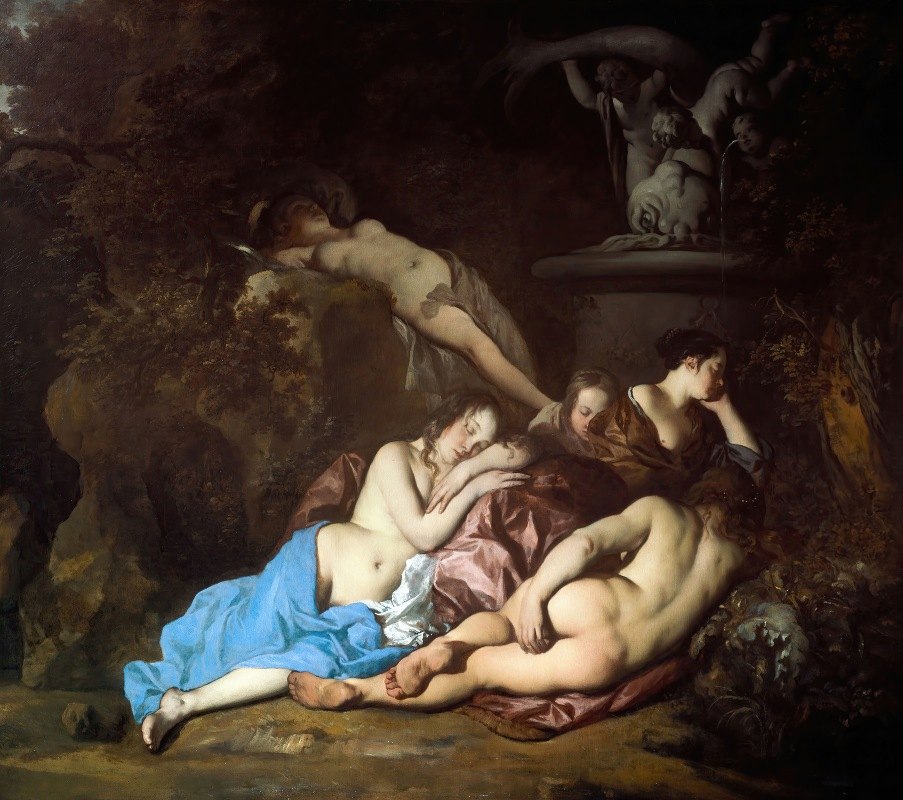
Nymphs-

76. 匈牙利艺术家大全 匈牙利都有哪些画家? 高清作品[6%]


亚诺斯雷特大师 15世纪
米歇尔潘诺尼奥 1400-1464 画家
硕士 16世纪 画家
雅各布博格达尼 1660-1724 画家
伊斯特凡·多夫迈斯特 1729-1797 画家
亚诺斯·多纳图斯 1744-1830 画家
塞缪尔之吻 1780-1819 画家
维尔莫斯艾格 1792-1830 画家
桑多·科齐纳 1808-1873 画家
米克洛斯·巴拉巴斯 1810-1898 画家
Giergl Alajos Gyorgyi 1821-1863 画家
索马·奥尔莱·佩特里奇 1822-1880 画家
安塔利盖蒂 1823-1890 画家
莫尔比 1828-1899 画家
维克多·马达拉斯 1830-1917 画家
卡罗莉·洛茨 1833-1904 画家
伯塔兰塞克利 1835-1910 画家
丹尼尔索莫吉 1837-1890 画家
盖萨·梅索里 1844-1887 画家
米哈利·蒙卡西 1844-1900 画家
Merse Pal Szinyei 1845-1920 政治家/画家
拉霍斯·迪克-埃布纳 1850-1934 画家
拉兹洛·梅德尼扬斯基 1852-1919 画家
Tivadar Csontvary Kosztka 1853-1919 画家
Jeno Gyarfas 1857-1925 画家
西蒙霍洛西 1857-1918 画家
拉兹洛·帕塔基 1857-1912 画家
南多的士兵 1860-1932 画家
约瑟夫·里普尔-罗奈 1861-1927 画家
卡罗利·费伦齐 1862-1917 画家
斯蒂芬·索克 1865-1961 画家
阿道夫·芬耶斯 1867-1945 画家
菲利普·亚历克修斯·德·拉斯洛 1869-1937 画家
拉斯洛赫格杜斯 1870-1911 画家
伊斯特万雷蒂 1872-1945 画家
雨果·施伊伯 1873-1950 画家
莫里斯布劳恩 1877-1941 画家
防御率 1877-1956 画家
拉霍斯古拉西 1882-1932 画家
威利波加尼 1882-1955 插画师
约瑟夫·埃格里 1883-1951 画家
维尔莫斯胡萨尔 1884-1960 画家
斯蒂芬·法卡斯 1887-1944 画家
尼古拉斯穆雷 1892-1965 摄影师
路易斯·保罗·乔纳斯 1894-1971 雕塑家
安德烈·凯特斯 1894-1985 摄影师
拉斯洛·莫霍利-纳吉 1895-1946 画家/摄影师
布拉赛 1899-1984 摄影师
维吉 1899-1968 摄影师
约兰·格罗斯·贝特海姆 1900-1972 画家/版画家
马塞尔布鲁尔 1902-1981 建筑师
乔治凯佩斯 1906-2001 画家
伊娃蔡塞尔 1906-2011 设计师
佐尔坦·凯梅尼 1907-1965 雕塑家
维克多·瓦萨里 1908-1997 画家
罗伯特·卡帕 1913-1954 摄影师
加博彼得迪 1915-2001 画家/版画家
西蒙汉泰 1922-2008 画家
加博西拉西 1928年出生 摄影师
阿提拉你好 1954年出生 画家/插画家
Der Mann-  

匈牙利艺术家作品集

thans油画图片- 高清thans绘画作品- 代表作全集 中艺名画下载


71. 俄罗斯艺术杂志。 Zhar Ptitsa/Jar Ptitsa[火鸟]。巴黎和柏林:Russkoe Iskustvo,1921年8月至1926年1月。 高清作品[23%]

Zhar-Ptitsa/Jar-Ptitza [The Firebird]. Paris and Berlin: Russkoe Iskusstvo, August 1921-January 1926.

图片文件尺寸 : 5489 x 4959px

RUSSIAN ART JOURNAL.:Zhar-Ptitsa/Jar-Ptitza [The Firebird]. Paris and Berlin: Russkoe Iskusstvo, August 1921-January 1926. 14 issues in 13 volumes (No. 4/5 double issue). 4to (315 x 240 mm). Illustrated in color and black and white, with many plates tipped in. Original color lithographed wrappers. Some issues missing spines with pages detached; internal tears and some loss.

A COMPLETE SET OF THE RARE RUSSIAN EMIGRE LITERARY ART MAGAZINE IN ORIGINAL ISSUES, reportedly no more than 300 copies were printed. Supplemental summaries of the numbers were provided in the back in a variety of languages including English. Zhar-ptitsa was the most influential art journal of the flourishing community of exiles who were feverishly trying to keep the culture of Old Russia alive. Due to paper shortages and extensive censorship by the Bolsheviks back in the USSR, the Russian book business was booming in Germany and France. This lavish periodical was the natural successor to S. Diaghilev\'s Mir iskusstva since many of those involved had been members of the World of Art Group and designers for the Ballets Russes. The rich selection subjects and contributors under A. E. Kogan\'s art department embraced L. Bakst, A. Benois, I. Bilibin, M. Chagall, S. Chekhonin, N. Goncharova, B. Grigoriev, B. Kustodiev, M. Larionov, V. Shukaev, K. Somov, S. Sudeikin and many other important artists. Poet Sasha Cherny was literary editor; and such important writers as L. Andreev, K. Balmont, I. Bunin, V. Khodasevich, B. Pilnyak, A. Remizov, N. Teffi, A.N. Tolstoi, B. Zaitsev, and the young Vladimir Nabokov (as \"V. Sirin\") appeared in its pages. Fekula called Zhar-ptitsa \"perhaps the most famous of post-revolutionary art journals, whose contributors threw new light on the development of Russian art at the beginning of the twentieth century.\" According to Vengerov, \"Even separate issues of the magazine, let alone complete sets of its issues, are a great bibliographic rarity.\" Fekula 5742; Vengerov Staraya russkaya kniga 105.

俄罗斯艺术杂志。 Zhar Ptitsa/Jar Ptitsa[火鸟]。巴黎和柏林:Russkoe Iskustvo,1921年8月至1926年1月。

72. 赫尔曼·尼奇,当代艺术I 高清作品[22%]

DO-Hermann Nitsch  - 现代艺术 I
图片文件像素:6034 x 4375 px

赫尔曼·尼奇,当代艺术I-

Hermann Nitsch * - Zeitgenössische Kunst I-

(Vienna 1938–2022 Mistelbach, Lower Austria)
Splatter painting with chemise and impasto, signed, dated hermann nitsch 1995 on the reverse, oil on burlap, stretched over wooden frame along the right and left edge, fixed to wooden frame along the upper and lower front, 200 x 300 cm

Compare:
Hermann Nitsch. Das Gesamtkunstwerk des Orgien Mysterien Theaters, Verlag der Buchhandlung Walther König, 2015, pp. 606–607

Exhibited and illustrated in the catalogue:
Ekilibrio Foundation Collection, Galleria Sirio Arte, Padua, 10 October – 7 November 2020, pp. 168-169

Photo of this work signed hermann nitsch on the reverse available.

Provenance:
Aurelio Stefanini, Studio d’arte, Firenze (label on the reverse)
Private Collection, Italy

„… der in den exzess ekstatisch abgestiegene akteur befleckt und beschüttet… die bildfläche. oft noch spontaner, als es nur auf der bildfläche gelingt, trägt sich die intensität auf dem hemd zu. es wird automatisch befleckt, besudelt, beschmutzt, betappt, beschmiert, beschüttet, bespritzt… es ist, als ob der unsere abgründe eröffnende maler beim malvorgang in die nähe des blutschwitzens, des austrinkens des leidenskelches, der geisselung, der kreuzigung, der zerreissung des dionysos, der blendung des ödipus gerät. sein priesterkleid, sein opferhemd ist geprägt vom feuchten stempel der entäusserung… des hemd wird als höchster schmuck und trophäe auf ein bild gehängt, um dessen farbgefüge zu bereichern. es gibt bilder, die brauchen kein hemd, andere verlangen danach…“
Hermann Nitsch – aus der oben angeführten Literatur

“... the actor, ecstatically descended into the excess, stains and pours things onto … the surface of the image. often it’s even more spontaneous than just hitting the surface of the image, striking his shirt in its intensity, too. it’s automatically stained, sullied, dirtied, touched, smeared; it automatically has things poured onto it, sprayed onto it... it’s as if the painter, opening up our deepest depths, is almost sweating blood when he paints, almost drinking from the chalice of grief, flagellation, crucifixion, the dismemberment of dionysus, the blinding of oedipus. his priestly robes, his victim’s shirt is marked by the moistened stamp of renunciation. the shirt is hung on an image, enriching the texture of its colours, as if it were the most precious piece of jewellery, a trophy. there are some images that don’t need a shirt, but others demand it…”
Hermann Nitsch – from the literature cited above

73. 皮耶罗·多拉齐奥 高清作品[17%]

DO-Piero Dorazio  - 现代艺术 I
图片文件像素:5842 x 5474 px

皮耶罗·多拉齐奥-

Piero Dorazio * - Zeitgenössische Kunst I-

(Rome 1927–2005 Perugia)
Untitled [Contro il rassegnarsi], 1967, Signed, dated, dedicated and inscribed on the reverse, oil on canvas, 100 x 100, framed

This work is registered in the Archivio Piero Dorazio, Milan and is accompanied by a photo certificate of authenticity

Provenance:
V. Pirozzi Collection, Rome
Sale Farsetti, Prato, 27 May 2000, lot 303
Anfiteatro Arte, Milan
European Private Collection

Exhibited:
Milan, Galleria Anfiteatro Arte, 1999, exh. cat. p. 47 no. 15 with ill.
Genoa, Dorazio, Marco Canepa Arte Contemporanea, 2006, exh. cat. with ill.
Padua, Piero Dorazio, Anfiteatro Arte, 1 February – 18 March 2007, exh. cat. p. 74 and 75 with ill. (label on the reverse)


Literature:
M. Volpi Orandini, J. Lassaigne, G. Crisafi, Dorazio Catalogo ragionato delle opere, Alfieri Editore, 1977, no. 8 (in the addenda at the end of the catalogue)

The subject of the painting always drives from the previous painting, hence there is no reason for inspiration. One tries again, keeps on trying to do what he has already done…
Piero Dorazio

Of all the great first and second generation 美国 painters I have known since 1953 (the third generation is not yet discernable), Kenneth Noland is a truly singular case.

He is from North Carolina and Washington, i.e. the provinces, rather than the artistic milieu of New York.

[...]In the 1950s and 1960s I never understood whether some artistic circles in the Metropolis or certain isolated artists like Kenneth Noland and Morris Louis, Georgia O\'Keeffe in New Mexico or Andrew Wyeth in Pennsylvania were more provincial. Although isolated, Louis and Noland were already the most modern of modern 美国 painters in the early 1960s. They were a surprising revelation when discovered and presented by the critic Clement Greenberg at the 法国 and Co. Gallery in New York. Their exhibitions in that gallery between \'59 and \'60 remain by far the most exciting of the decade.

Kenneth Noland\'s painting has nothing to do, therefore, with all the clichés of 美国 painting disseminated here by European critics who have framed all expressions into schools or categories or groups (Action Painting, New Dada, Abstract expressionism, Pop Art, Minimal Art etc.) letting what were actually the most creative values and personalities slip through their fingers. [...]

Ken Noland established himself, from the late 1960s and 1970s, among those few artists defined as \'Colour field painters\' or \'Post Painterly Abstraction\' not as a group but rather as a trend: Helen Frankenhaler, Morris Louis, Jules Olitsky, Friedel Dzubas, Larry Poons. There was a convergence of interests among these painters for colour as an element that defines large spaces and long periods of time for the observer, who is induced to meditate because he is immersed in the rhythm of the lines and chromatic masses of a truly abstract painting, devoid of any allusion or reference to the real, the metaphysical or the subjective temperament. Painting that refers on the one hand to the decorative character of early Matisse, and on the other to the secular spirit of Constructivism. Among those painters, Noland was always the one who, with tenacity and clarity of purpose, was best able to sublimate \'pure visibility\' into a highly lyrical personal poetics. His nature as a colourist and his technique inspired his constant formal research into surface-colour and material-colour relationships. [...]

In these works chromatic fantasy and refined sensitivity, arranged in a precise structural order, bring the brushstrokes and pictorial matter to life in decisive and delicate spaces and lights and rhythms, expressing a constant reflection on the inevitable characteristics of reality. Constancy and appearance, the negative and the positive, fullness and emptiness; our gaze is entertained and delighted by this repertoire of perception, emotion and mind.

(Piero Dorazio, Il singolare caso di Kenenth Noland, in “Rigando dritto. Piero Dorazio Scritti 1945-2004, pp. 425-427)

74. 多斯托耶夫斯基的名片上写着亚历山大·赫尔岑。 照片署名并题写(俄语)给亚历山大·赫尔岑, 高清作品[11%]

Photograph signed and inscribed [in Russian] to Alexander Herzen,

图片文件尺寸 : 3981 x 5780px

DOSTOEVSKY CARTE-DE-VISITE INSCRIBED TO ALEXANDER HERZEN.:DOSTOEVSKY, FYODOR. 1821-1881. Photograph signed and inscribed [in Russian] to Alexander Herzen, albumen print carte-de-visite full length portrait by M.B. Tulinov, Petersburg, 1861, 105 x 65 mm, inscribed by Dostoevsky in Russian to the verso, \"Alexander Ivanovich Herzen in memory of our meeting in London. Fyodor Dostoyevsky 8 July/20 July 1862,\" minor stain to verso.
Provenance: Alexander Ivanovich Herzen; to daughter Olga Aleksandrovna [Herzen] Monod; by descent.
Publication: For a discussion of the photograph, see Volgin, Igor. \"Introduction\" to The Dostoevsky Archive (1997), p 21.

Pull quote: \"Herzen awaits his readers in the future. Far above the heads of the present crowd, he transmits his thoughts to those who will be able to comprehend them.\" – Leo Tolstoy, 1905.

VERY RARE CARTE DE VISITE PHOTOGRAPH OF FYODOR DOSTOEVSKY PRESENTED TO ALEXANDER HERZEN IN REMEMBRANCE OF THEIR 1862 MEETING IN LONDON: A TREMENDOUSLY IMPORTANT ASSOCIATION BETWEEN TWO OF THE LEADING INTELLECTUALS OF THE 19TH-CENTURY.

Alexander Herzen was one of the most important and influential Russian writers and thinkers of the 19th-century. called the \"father of Russian socialism,\" he had a profound influence on late-19th century Russian writers, including Fyodor Dostoevsky. Born illegitimately to a wealthy Russian landowner, Herzen became a dissident and critic of the Russian feudal system. Of Herzen, Tolstoy said he had never met a man \"with so rare a combination of scintillating brilliance and depth.\" His writings, including From the Other Shore (1848) and those appearing in his influential publications of the 1850s-60s The Bell and the Polestar, would help mold a generation of Russian writing and thought.

Herzen and Dostoevsky met for the first time in Russia in 1846, following Dostoevsky\'s comment in a letter to his brother that Herzen and Goncharov stand as \"the most remarkable\" of his rivals; Herzen\'s recollection of the meeting was less than effusive, however: \"I can\'t say he made a particularly present impression.\" Their second meeting occurred when Dostoevsky visited Herzen in London in July of 1862, of which this photograph is a memento. During the 1850s and early 1860s, visits to the emigree Herzen by Russian writers and intellectuals were something of a right of passage, and Dostoevsky\'s visit followed right on the heels of Turgenev. This series of meetings profoundly affected Dostoevsky and his work, and is clearly acknowledged in his Winter Notes which he wrote later that year, exhibiting a clear debt to Herzen\'s own writings. Dostoevsky, along with Solzhenitsyn, acknowledged the formative influence of Herzen on his work, and Herzen would also appear in composite in a number of Dostoevsky\'s characters throughout his career. Herzen, however, noted, rather condescendingly, \"Dostoevsky was here yesterday—he is a naïve, not entirely lucid, but a very dear person. He believes enthusiastically in the Russian people.\"

The two towering figures would meet again on a steamship from Naples to Livorno the following year, where Dostoevsky was travelling with his mistress Polina Suslova. According to Suslova\'s diaries (as published in The Dostoevsky Archives), Dostoevsky took pains to hide their relationship from Herzen, introducing her vaguely as a family member, and even encouraged her to arrange a visit with Herzen\'s son in Paris that Winter. After they parted, Dostoevsky became angry with her over a photograph of her he had seen at Herzen\'s, which she had given at an earlier date. In 1865, Dostoevsky wrote to Herzen imploring him for a loan, and became peevish when Herzen did not immediately respond. By the late 1860s Dostoevsky would disparage Herzen, somewhat unfairly, as a \"Westernizer,\" leading to his more severe criticism of Herzen in his Writer\'s Diary.

Herzen was one of the most complex and brilliant figures of the 19th-century, and was largely responsible for assimilating western ideas into Russian thought, while still maintaining his advocacy for the freedom of the Russian serf.

In reality, the two writers/thinkers shared a great deal in their outlook: both asserted the importance of the individual, and the folly of the search for a unified teleological system, cutting against the grain of their mid-19th century contemporaries. While Herzen was embraced by Lenin, identified as the \"father of Russian socialism,\" Herzen\'s socialism was a different breed, \"Centralization may do a great deal for order and for various public undertakings, but it is incompatible with freedom. It easily brings a nation to the position of a well-tended flock or a pack of hounds cleverly kept in order by a huntsman.\" Lenin regarded Herzen\'s focus on freedom as a shortcoming of his bourgeois roots. During the 20th-century Russian-British philosopher Isaiah Berlin came across Herzen\'s writings and recognized the prescience of Herzen\'s thought. It was Berlin, who reestablished Herzen\'s influence, agreeing with and amplifying his idea that the pursuit of \"a perfect society\" invariably leads to blood.

The present photograph was taken by Mikhail Borisovich Tulinov (1823–1889) in Petersburg in 1861. Any period photograph of Dostoevsky is rare, and moreso inscribed. We trace two inscribed photographs at auction in the last 40 years. However, we find no record of an inscribed photograph of similar substance and importance in the historical record. An incredible, and incredibly rare, Dostoevsky item tying together two of the greatest thinkers and writers of the 19th-century.

REFERENCES:
Kelly, Aileen. The Discovery of Chance: The Life and Thought of Alexander Herzen. 2016.
Kelly, Aileen. \"Irony and Utopia in Herzen and Dostoevsky: From the Other Shore and Diary of a Writer.\" The Russian Review, 50:4 (1991), pp 397-416.
Lantz, Kenneth. The Dostoevsky Encycolpedia. 2004.
Serakin, Peter. The Dostoevsky Archive: Firsthand Accounts of the Novelist from Contemporaries\' Memoirs and Rare Periodicals. 1997.


\"If only people wanted to save themselves instead of saving the world, how much they would do for the salvation of the world and the liberation of humanity!\" – Alexander Herzen, From the Other Shore, 1848.

多斯托耶夫斯基的名片上写着亚历山大·赫尔岑。 照片署名并题写(俄语)给亚历山大·赫尔岑,

75. 历史绘画画家 收纳世界名画的网站 高清作品[7%]

按时间顺序排列的列表 使用ctrl-F (PC) 或command-F (Mac) 搜索名称

亚伯拉罕·布洛马尔特 1564-1651 荷兰画家
彼得拉斯特曼 1583-1633 荷兰画家
雅各布·皮纳斯 1585-1650 荷兰画家
克拉斯·科内利斯。莫亚特 1591-1655 荷兰画家
尼古拉斯·普桑 1594-1665 法国画家
莱昂纳特·布拉默 1596-1674 荷兰画家
伦勃朗范莱恩 1606-1669 荷兰画家/雕刻师
塞萨尔范埃弗丁根 1617-1678 荷兰画家
彼得莱利爵士 1618-1680 荷兰/英国画家
塞巴斯蒂亚诺里奇 1659-1734 意大利画家
安托万科佩尔 1661-1722 法国画家
乔瓦尼·安东尼奥·佩莱格里尼 1675-1741 意大利画家
让-弗朗索瓦·德·特洛伊 1679-1752 法国画家
贾科莫阿米科尼 1682-1752 意大利画家
弗朗索瓦·勒莫恩 1688-1737 法国画家
让·雷斯托 1692-1768 法国画家
皮埃尔·苏伯莱拉斯 1699-1749 法国画家
查尔斯·约瑟夫·纳托尔 1700-1777 法国画家
弗朗索瓦布歇 1703-1770 法国画家
卡尔范卢 1705-1765 法国画家
诺埃尔·哈勒 1711-1781 法国画家
约瑟夫·玛丽·维恩 1716-1809 法国画家
让-巴蒂斯特·德赛 1729-1765 法国画家
让-奥诺雷·弗拉戈纳尔 1732-1806 法国画家
詹姆斯·巴里 1741-1806 爱尔兰画家
弗朗索瓦-安德烈·文森特 1746-1816 法国画家
雅克-路易·大卫 1748-1825 法国画家
约翰·特朗布尔 1756-1843 美国画家
约翰范德林 1775-1852 美国画家
本杰明·罗伯特·海顿 1786-1846 英国画家
弗朗索瓦-约瑟夫·纳维兹 1787-1869 比利时画家
莱昂科涅特 1794-1880 法国画家
保罗德拉罗什 1797-1856 法国画家
约瑟夫-尼古拉斯-罗伯特-弗勒里 1797-1890 法国画家
古斯塔夫瓦珀斯 1803-1874 比利时画家
安托万维尔兹 1806-1865 比利时画家
路易斯·加莱特 1810-1887 比利时画家
弗朗茨·伊滕巴赫 1813-1879 德国画家
查尔斯穆勒 1815-1892 法国画家
让-路易斯-欧内斯特·梅索尼埃 1815-1891 法国画家
伊曼纽尔·戈特利布·洛伊茨 1816-1868 德国/美国画家
西奥多·夏塞留 1819-1856 法国画家
莫尔比 1828-1899 匈牙利画家
埃德温龙 1829-1891 英国画家
让-保罗·劳伦斯 1838-1921 法国画家
托尼·罗伯特·弗勒里 1838-1912 法国画家
古斯塔夫·塞德斯特伦 1845-1933 瑞典画家
艾伯特贝斯纳德 1849-1934 法国画家
乔治·安托万·罗什格罗斯 1859-1938 法国画家
Nymphs-

76. 匈牙利艺术家大全 匈牙利都有哪些画家? 高清作品[6%]


亚诺斯雷特大师 15世纪
米歇尔潘诺尼奥 1400-1464 画家
硕士 16世纪 画家
雅各布博格达尼 1660-1724 画家
伊斯特凡·多夫迈斯特 1729-1797 画家
亚诺斯·多纳图斯 1744-1830 画家
塞缪尔之吻 1780-1819 画家
维尔莫斯艾格 1792-1830 画家
桑多·科齐纳 1808-1873 画家
米克洛斯·巴拉巴斯 1810-1898 画家
Giergl Alajos Gyorgyi 1821-1863 画家
索马·奥尔莱·佩特里奇 1822-1880 画家
安塔利盖蒂 1823-1890 画家
莫尔比 1828-1899 画家
维克多·马达拉斯 1830-1917 画家
卡罗莉·洛茨 1833-1904 画家
伯塔兰塞克利 1835-1910 画家
丹尼尔索莫吉 1837-1890 画家
盖萨·梅索里 1844-1887 画家
米哈利·蒙卡西 1844-1900 画家
Merse Pal Szinyei 1845-1920 政治家/画家
拉霍斯·迪克-埃布纳 1850-1934 画家
拉兹洛·梅德尼扬斯基 1852-1919 画家
Tivadar Csontvary Kosztka 1853-1919 画家
Jeno Gyarfas 1857-1925 画家
西蒙霍洛西 1857-1918 画家
拉兹洛·帕塔基 1857-1912 画家
南多的士兵 1860-1932 画家
约瑟夫·里普尔-罗奈 1861-1927 画家
卡罗利·费伦齐 1862-1917 画家
斯蒂芬·索克 1865-1961 画家
阿道夫·芬耶斯 1867-1945 画家
菲利普·亚历克修斯·德·拉斯洛 1869-1937 画家
拉斯洛赫格杜斯 1870-1911 画家
伊斯特万雷蒂 1872-1945 画家
雨果·施伊伯 1873-1950 画家
莫里斯布劳恩 1877-1941 画家
防御率 1877-1956 画家
拉霍斯古拉西 1882-1932 画家
威利波加尼 1882-1955 插画师
约瑟夫·埃格里 1883-1951 画家
维尔莫斯胡萨尔 1884-1960 画家
斯蒂芬·法卡斯 1887-1944 画家
尼古拉斯穆雷 1892-1965 摄影师
路易斯·保罗·乔纳斯 1894-1971 雕塑家
安德烈·凯特斯 1894-1985 摄影师
拉斯洛·莫霍利-纳吉 1895-1946 画家/摄影师
布拉赛 1899-1984 摄影师
维吉 1899-1968 摄影师
约兰·格罗斯·贝特海姆 1900-1972 画家/版画家
马塞尔布鲁尔 1902-1981 建筑师
乔治凯佩斯 1906-2001 画家
伊娃蔡塞尔 1906-2011 设计师
佐尔坦·凯梅尼 1907-1965 雕塑家
维克多·瓦萨里 1908-1997 画家
罗伯特·卡帕 1913-1954 摄影师
加博彼得迪 1915-2001 画家/版画家
西蒙汉泰 1922-2008 画家
加博西拉西 1928年出生 摄影师
阿提拉你好 1954年出生 画家/插画家
Der Mann-  

匈牙利艺术家作品集