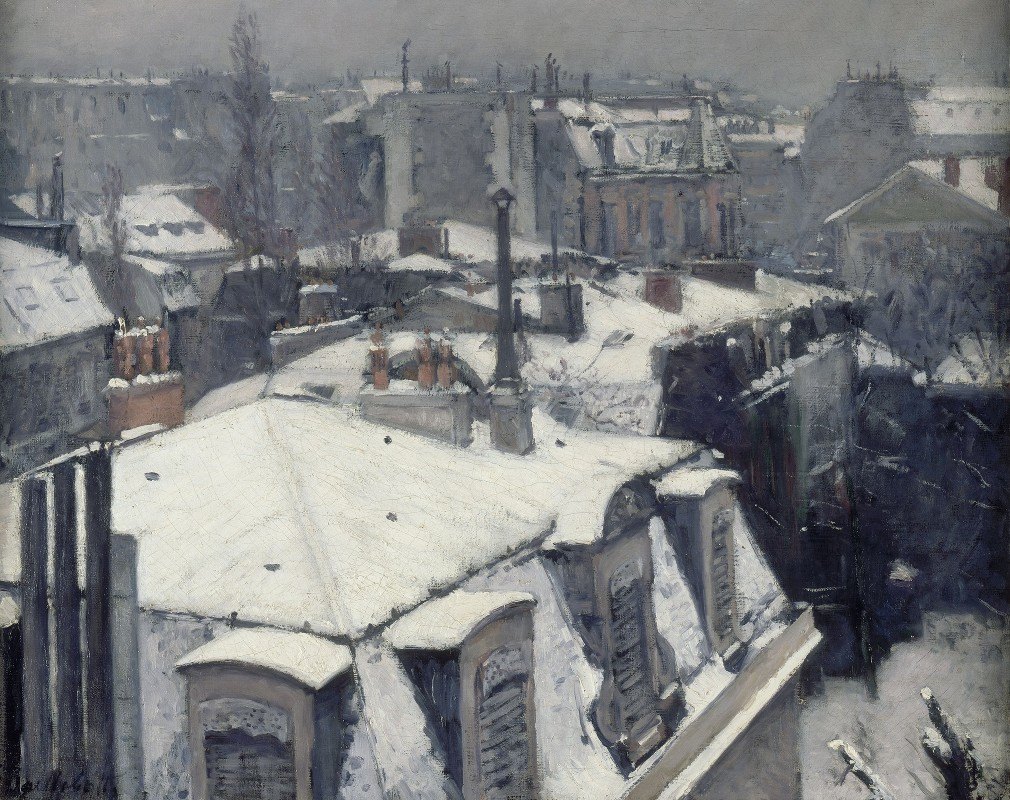
图片文件尺寸 : 5041 x 3993px
Gustave Caillebotte的《雪中的屋顶》(雪效果)-Gustave Caillebotte
雪中的屋顶(雪效果)--Gustave Caillebotte (法国, 1848-1894)
图片文件尺寸 : 5041 x 3993px
Gustave Caillebotte的《雪中的屋顶》(雪效果)-Gustave Caillebotte
雪中的屋顶(雪效果)--Gustave Caillebotte (法国, 1848-1894)

图片文件尺寸 : 4501 x 3579px
阿尔弗雷德·西斯利的《爱的银行,秋季效应》-Alfred Sisley
洛林银行,秋季效应--Alfred Sisley (法国, 1840-1899)
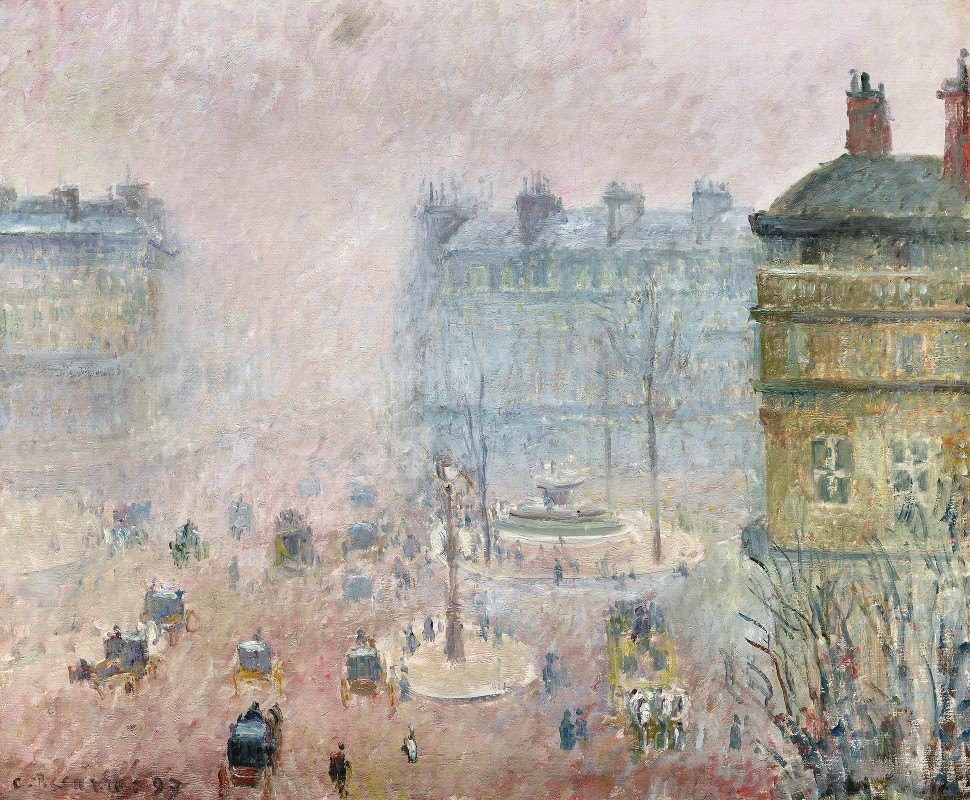
图片文件尺寸 : 7768 x 6406px
卡米尔·皮萨罗的《法兰西剧院,迷雾效应》-Camille Pissarro
法国剧院,雾效果--Camille Pissarro (法国, 1830-1903)
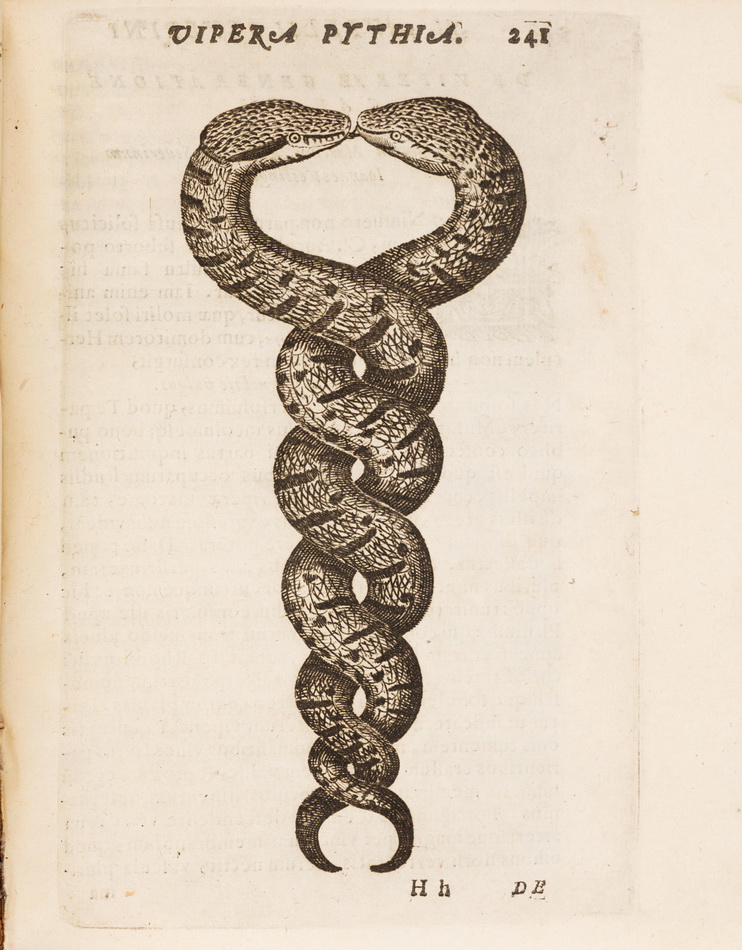
图片文件尺寸 : 4121 x 5889px
SEVERINO, MARCO AURELIO. 1580-1656.:Vipera Pythia. Id est de viperae natura, veneno, medicina demonstrationes et experimenta nova. Padua: Paulo Frambotti, 1651.
4to (200 x 145 mm). Engraved portrait frontispiece, 20 full-page and 4 small engraved illustrations in text. Contemporary speckled calf, rebacked retaining original covers and spine. Lacking additional engraved title page and final blank, inked annotations on front fly-leaf, some ink underlining, browning, especially to frontispiece.
Second edition, published a year after the first, of this work on the toxic effect of vipers. Severino argued, among other things, that the magnetic effect of music could act as cure. A number of the plates have a mythological theme. Nissen 3829; Osler 3961; Waller 8893.
塞韦利诺,马尔科·奥利奥。1580–1656. 蟒蛇。ID来自Viperae Natura,毒药,医学演示和实验新星。帕多瓦:保罗·弗拉姆博蒂,1651年。

图片文件尺寸 : 3812 x 2712px
克劳德·莫奈的《干草堆(雪和太阳的影响)》-Claude Monet
干草堆(雪和太阳的影响)--Claude Monet (法国, 1840-1926)

图片文件尺寸 : 2889 x 3575px
“Rue de l”Épicerie,鲁昂(阳光的影响)-Camille Pissarro
l’街Épicerie,鲁昂(阳光效果)--Camille Pissarro (法国, 1830-1903)

图片文件尺寸 : 2936 x 4220px
詹姆斯·沃德(James Ward)在B处使用全刷,“在A处均匀均匀地涂刷颜色,以及相同颜色的渐变效果”-James Ward
在A处平坦均匀地应用颜色,在B处使用全刷,并使用相同颜色的渐变效果--James Ward (Irish, 1851–1924)
 图片文件像素:4698 x 4418 px
Heinz Mack,当代艺术I-
Heinz Mack * - Zeitgenössische Kunst I-
(born in Lollar, Hessen 1931)
Wing relief, 1989, signed, dated Mack 89, on the reverse again signed, dated, inscribed and with directional arrow, relief of aluminum grid, board and mirror, 81.5 x 101.5 cm, framed
Certificate:
Atelier Mack, Mönchengladbach, signed by the artist
Provenance:
Private Collection, Rhineland Palatinate
Private Collection, North Rhine-Westphalia - acquired from the above in 2006
Private Collection, Venice
Ketterer Kunst, Munich, 5 December 2006, lot 335
Literature:
Exhibition catalogue Galerie Ludorff, Düsseldorf 2020, p. 88
The Zero artist Heinz Mack discovered the effect of light on a piece of aluminium foil by accident. When he stepped on a piece of the foil lying on the floor, he created a carpet of light, a light reflector with the embossed pattern of his sisal carpet. This showed him how the light from the aluminium foil refracts and at the same time reflects the embossed pattern of the carpet. From then on, the effect of light in his works played a decisive role for Heinz Mack in the conception of his art. The character of the reliefs is that they capture the light and at the same time return it to the room.
The work offered here is from the series of so-called ‘wing reliefs’ (Flügelreliefs). Here Mack - unlike in his painting - does not experiment with colour, but with material and form, with the reflection and location of the viewer in the work. Mack uses a fine-meshed flexible expanded metal aluminium fabric for his wing reliefs, originally created for the aerospace industry. Its technical materiality allow the metal mesh to be given soft contours and to form varied patterns from the individual honeycombs. The artistic intention of making light, structure and movement visible is accentuated in a special way in the wing reliefs by the fine structure of the honeycomb fabric.
The structure of the relief allows the viewer to experience the refraction of light from different angles anew each time. The light refracts in the depths of the honeycombs and captivates the viewer.
 图片文件像素:5457 x 4998 px
草间弥生,当代艺术I-
Yayoi Kusama - Zeitgenössische Kunst I-
(born in Matsumoto, Japan 1929)
Pumpkin KKK, 2002, signed, dated and titled on the reverse, acrylic on canvas, 22.7 x 15.8 cm, in plexiglass box
This work is accompanied by a registration card issued by Yayoi Kusama Studio
We are grateful to Yayoi Kusama Inc. for confirming the registration of the work in its database
Provenance:
European Private Collection
Iconic Pumpkin
Yayoi Kusama is possibly the best known Japanese artist in the world. Her famous polka dots have become her trademark and Kusama\'s stylized pumpkins are among the most iconic masterpieces of contemporary art.
Born in the late 1920s, Yayoi Kusama grew up in the conservative confines of the small town of Matsumoto in Nagano Prefecture in Japan. She attended the Kyoto School of Arts and Crafts, and after staging her first exhibitions, through which she was ‘discovered’ by the international art world, Kusama was able to emigrate to America, where she lived and worked, primarily in New York, from 1957 to 1973. Kusama celebrated her first major success in New York in 1959 with a solo exhibition at the Brata Gallery, entitled Obsessional Monochrome. The Infinity Net Paintings exhibited there were compositions of dense networks executed with white brushstrokes on a black ground and characterised by the theme of repetition.
Grids, flashes of light and, above all, dots that repeat endlessly are the most striking characteristic of Kusama\'s works and established her fame as the ‘Polka Dot Princess’. For the artist, the dots that overgrow everything are not merely a harmless pattern. They have their origins in the hallucinations and panic attacks she has experienced since her youth, which determined her perception of the world. Growing up, she saw dot and net patterns and feared she would dissolve into them. The polka dots and their constant repetition now became an expression of the search for infinity and the desire for self-dissolution. The dots erase the image into which the artist channels her fears. With her polka dots, Kusama covers not only canvases, but also everyday objects such as tea kettles or bookshelves, clothes, giant tentacles, oversized flowers, entire rooms or herself. And pumpkins as well.
\"Pumpkin KKK\" (2002) represents another important theme in Yayoi Kusama\'s work. For Kusama, the pumpkin is associated with memories of childhood and has been a favourite motif with almost mythical status since the 1970s-1980s. The artist first saw pumpkins during walks with her grandfather, and they had a calming effect on the hallucination-stricken artist. \"I love pumpkins for their humorous shape, their warmth and their human quality,\" Kusama says. She devoted herself to pumpkins in paintings and sculptures and incorporated them into her Infinity Rooms. Bold colours characterise the pumpkins, as do the precisely placed polka dots. The colour scheme follows an inner symbolism, according to which the artist categorises unprocessed experiences. The pumpkins stand for triumph over inner struggles, their endless repetition allows the artist to find her mental balance.
Since her return to Japan, Kusama, who has never made a secret of her illness, has voluntarily lived in a psychiatric institution. In 2017, a museum dedicated solely to her opened in Tokyo and numerous international exhibitions testify to considerable on-going interest in her work. With her unconventional works, her extraordinary performances, self-dramatisations and happenings, Kusama has anticipated many trends in contemporary art.
图片文件尺寸 : 5041 x 3993px
Gustave Caillebotte的《雪中的屋顶》(雪效果)-Gustave Caillebotte
雪中的屋顶(雪效果)--Gustave Caillebotte (法国, 1848-1894)
图片文件尺寸 : 4501 x 3579px
阿尔弗雷德·西斯利的《爱的银行,秋季效应》-Alfred Sisley
洛林银行,秋季效应--Alfred Sisley (法国, 1840-1899)
图片文件尺寸 : 7768 x 6406px
卡米尔·皮萨罗的《法兰西剧院,迷雾效应》-Camille Pissarro
法国剧院,雾效果--Camille Pissarro (法国, 1830-1903)
图片文件尺寸 : 4121 x 5889px
SEVERINO, MARCO AURELIO. 1580-1656.:Vipera Pythia. Id est de viperae natura, veneno, medicina demonstrationes et experimenta nova. Padua: Paulo Frambotti, 1651.
4to (200 x 145 mm). Engraved portrait frontispiece, 20 full-page and 4 small engraved illustrations in text. Contemporary speckled calf, rebacked retaining original covers and spine. Lacking additional engraved title page and final blank, inked annotations on front fly-leaf, some ink underlining, browning, especially to frontispiece.
Second edition, published a year after the first, of this work on the toxic effect of vipers. Severino argued, among other things, that the magnetic effect of music could act as cure. A number of the plates have a mythological theme. Nissen 3829; Osler 3961; Waller 8893.
塞韦利诺,马尔科·奥利奥。1580–1656. 蟒蛇。ID来自Viperae Natura,毒药,医学演示和实验新星。帕多瓦:保罗·弗拉姆博蒂,1651年。
图片文件尺寸 : 3812 x 2712px
克劳德·莫奈的《干草堆(雪和太阳的影响)》-Claude Monet
干草堆(雪和太阳的影响)--Claude Monet (法国, 1840-1926)
图片文件尺寸 : 2889 x 3575px
“Rue de l”Épicerie,鲁昂(阳光的影响)-Camille Pissarro
l’街Épicerie,鲁昂(阳光效果)--Camille Pissarro (法国, 1830-1903)
图片文件尺寸 : 2936 x 4220px
詹姆斯·沃德(James Ward)在B处使用全刷,“在A处均匀均匀地涂刷颜色,以及相同颜色的渐变效果”-James Ward
在A处平坦均匀地应用颜色,在B处使用全刷,并使用相同颜色的渐变效果--James Ward (Irish, 1851–1924)
图片文件像素:4698 x 4418 px
Heinz Mack,当代艺术I-
Heinz Mack * - Zeitgenössische Kunst I-
(born in Lollar, Hessen 1931)
Wing relief, 1989, signed, dated Mack 89, on the reverse again signed, dated, inscribed and with directional arrow, relief of aluminum grid, board and mirror, 81.5 x 101.5 cm, framed
Certificate:
Atelier Mack, Mönchengladbach, signed by the artist
Provenance:
Private Collection, Rhineland Palatinate
Private Collection, North Rhine-Westphalia - acquired from the above in 2006
Private Collection, Venice
Ketterer Kunst, Munich, 5 December 2006, lot 335
Literature:
Exhibition catalogue Galerie Ludorff, Düsseldorf 2020, p. 88
The Zero artist Heinz Mack discovered the effect of light on a piece of aluminium foil by accident. When he stepped on a piece of the foil lying on the floor, he created a carpet of light, a light reflector with the embossed pattern of his sisal carpet. This showed him how the light from the aluminium foil refracts and at the same time reflects the embossed pattern of the carpet. From then on, the effect of light in his works played a decisive role for Heinz Mack in the conception of his art. The character of the reliefs is that they capture the light and at the same time return it to the room.
The work offered here is from the series of so-called ‘wing reliefs’ (Flügelreliefs). Here Mack - unlike in his painting - does not experiment with colour, but with material and form, with the reflection and location of the viewer in the work. Mack uses a fine-meshed flexible expanded metal aluminium fabric for his wing reliefs, originally created for the aerospace industry. Its technical materiality allow the metal mesh to be given soft contours and to form varied patterns from the individual honeycombs. The artistic intention of making light, structure and movement visible is accentuated in a special way in the wing reliefs by the fine structure of the honeycomb fabric.
The structure of the relief allows the viewer to experience the refraction of light from different angles anew each time. The light refracts in the depths of the honeycombs and captivates the viewer.
图片文件像素:5457 x 4998 px
草间弥生,当代艺术I-
Yayoi Kusama - Zeitgenössische Kunst I-
(born in Matsumoto, Japan 1929)
Pumpkin KKK, 2002, signed, dated and titled on the reverse, acrylic on canvas, 22.7 x 15.8 cm, in plexiglass box
This work is accompanied by a registration card issued by Yayoi Kusama Studio
We are grateful to Yayoi Kusama Inc. for confirming the registration of the work in its database
Provenance:
European Private Collection
Iconic Pumpkin
Yayoi Kusama is possibly the best known Japanese artist in the world. Her famous polka dots have become her trademark and Kusama\'s stylized pumpkins are among the most iconic masterpieces of contemporary art.
Born in the late 1920s, Yayoi Kusama grew up in the conservative confines of the small town of Matsumoto in Nagano Prefecture in Japan. She attended the Kyoto School of Arts and Crafts, and after staging her first exhibitions, through which she was ‘discovered’ by the international art world, Kusama was able to emigrate to America, where she lived and worked, primarily in New York, from 1957 to 1973. Kusama celebrated her first major success in New York in 1959 with a solo exhibition at the Brata Gallery, entitled Obsessional Monochrome. The Infinity Net Paintings exhibited there were compositions of dense networks executed with white brushstrokes on a black ground and characterised by the theme of repetition.
Grids, flashes of light and, above all, dots that repeat endlessly are the most striking characteristic of Kusama\'s works and established her fame as the ‘Polka Dot Princess’. For the artist, the dots that overgrow everything are not merely a harmless pattern. They have their origins in the hallucinations and panic attacks she has experienced since her youth, which determined her perception of the world. Growing up, she saw dot and net patterns and feared she would dissolve into them. The polka dots and their constant repetition now became an expression of the search for infinity and the desire for self-dissolution. The dots erase the image into which the artist channels her fears. With her polka dots, Kusama covers not only canvases, but also everyday objects such as tea kettles or bookshelves, clothes, giant tentacles, oversized flowers, entire rooms or herself. And pumpkins as well.
\"Pumpkin KKK\" (2002) represents another important theme in Yayoi Kusama\'s work. For Kusama, the pumpkin is associated with memories of childhood and has been a favourite motif with almost mythical status since the 1970s-1980s. The artist first saw pumpkins during walks with her grandfather, and they had a calming effect on the hallucination-stricken artist. \"I love pumpkins for their humorous shape, their warmth and their human quality,\" Kusama says. She devoted herself to pumpkins in paintings and sculptures and incorporated them into her Infinity Rooms. Bold colours characterise the pumpkins, as do the precisely placed polka dots. The colour scheme follows an inner symbolism, according to which the artist categorises unprocessed experiences. The pumpkins stand for triumph over inner struggles, their endless repetition allows the artist to find her mental balance.
Since her return to Japan, Kusama, who has never made a secret of her illness, has voluntarily lived in a psychiatric institution. In 2017, a museum dedicated solely to her opened in Tokyo and numerous international exhibitions testify to considerable on-going interest in her work. With her unconventional works, her extraordinary performances, self-dramatisations and happenings, Kusama has anticipated many trends in contemporary art.