图片文件尺寸 : 2076 x 3165px
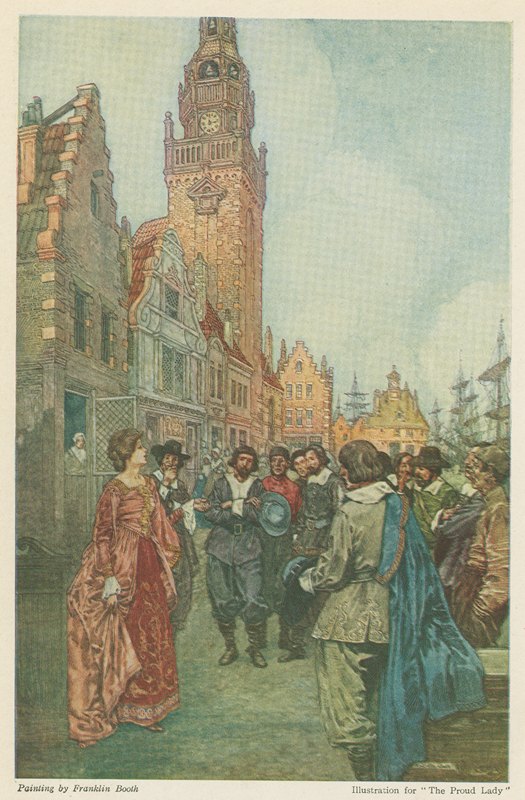
富兰克林·布斯说:“谁能把我最好的带回家,我就和他结婚。”-Franklin Booth
And he who bringeth me home the best, with that man will I wed--Franklin Booth (美国, 1874-1948)
图片文件尺寸 : 2076 x 3165px
富兰克林·布斯说:“谁能把我最好的带回家,我就和他结婚。”-Franklin Booth
And he who bringeth me home the best, with that man will I wed--Franklin Booth (美国, 1874-1948)

图片文件尺寸 : 2327 x 3088px
“他上下颠簸,眉头皱得那么可怕,你会以为他瞎了。”-Arthur Rackham
He bounced up and down, and so fearful a frown contracted his brow, youd have thought hed been blind.--Arthur Rackham (英国, 1867-1939)

图片文件尺寸 : 8784 x 6024px
“那个傻瓜,查尔斯·达纳·吉布森(Charles Dana Gibson)称她为他的淑女-Charles Dana Gibson
And the fool, he called her his lady fair--Charles Dana Gibson (美国, 1867 - 1944)

图片文件尺寸 : 2194 x 2851px
莱昂纳德·莱斯利·布鲁克(Leonard Leslie Brooke)的《他射中的裁缝没打中目标》-Leonard Leslie Brooke
The tailor he shot and missed his mark.--Leonard Leslie Brooke (英国, 1862–1940)

材质 : Oil on canvas
图片文件尺寸 : 4859 x 3695 px
Hermann Max Pechstein-Boote am Dangaster Priel / Kühe, 1910.
赫尔曼·马克斯·佩赫斯坦-1910年,丹加斯特普里尔奶牛的船。

图片文件尺寸 : 4733 x 5007px
ZIELEZINSKI, JERZY (GEORGE ZIEL). 1914-1982.:24 Drawings from the Concentration Camps in Germany. Munich: F. Bruckmann, 1946.
Folio. 24 rotogravure plates, loose as issued. Cloth-backed gray board portfolio with applied rotogravure illustration on cover, black cloth clamshell box. Thumbed, with some fingermarks and minor stains to title page.
LIMITED EDITION, signed by the author on the title page, stamped 0007 on front paste-down of portfolio. These powerful drawings were made by Polish-born Zielezinski while he was a prisoner at Dachau concentration camp. He later settled in the U.S., where he became a prolific illustrator and book jacket designer under the name George Ziel.
杰日·齐列津斯基。1914-1982. 24德国集中营图纸。慕尼黑:F.布鲁克曼,1946年。
 图片文件像素:6224 x 5523 px
Giuseppe Capogrossi,当代艺术I-
Giuseppe Capogrossi * - Zeitgenössische Kunst I-
(Rome 1900–1972)
Superficie n. 149, 1956, signed and dated; signed, titled and dated again on the reverse, oil on canvas, 65 x 50 cm, framed
We are grateful to Archivio Capogrossi, Rome for the kind assistance with the cataloguing of this work
Provenance:
Galleria d’Arte Selecta, Rome (stamp on the reverse)
F. Russoli Collection, Milan
European Private Collection
Exhibited:
Rome, Galleria Selecta, 1956
Paris, Galerie Rive Gauche, 1956, exh. cat. no. 18
Berlin, Fünf italienischte Maler der Galleria La Bussola, Turin und Rom, 1957
Wuppertal, Städtisches Museum, Fünf italienische Maler, 1957, exh. cat. with ill. (label on the reverse)
Literature:
G. C. Argan, Capogrossi, Editalia, Rome 1967, p. 29, p. 164 no. 235 with ill.
The theme he discovers - this claw, this hand, this trident, this gallows - is already a style. He bends it to his moods, imprints his fantasies on it, calms it or exacerbates it, unleashes it, puts it to sleep, haunts it, indulges it. There is nothing he cannot make it do, nothing he cannot make it say.
One theme: the whole world.
Since Mondrian, I have never seen such an intimate and tenacious union of personal style. Allowing for due differences, of course, as the contrast between the two is remarkable. Capogrossi is infinitely richer than Mondrian, who is infinitely deeper. One established solid and simple foundation from which the other can profit, build upon, and afford a thousand fantasies.
Michel Seuphor in the catalogue of the exhibition Capogrossi, Galleria del Naviglio, Milan 1953

图片文件尺寸 : 2146 x 3407px
彼得·纽威尔(Peter Newell)说:“他温柔而愚蠢的脸上闪现出淡淡的笑容,开始了-Peter Newell
With a faint smile lighting up his gentle, foolish face, he began..--Peter Newell (美国, 1862 – 1924)

图片文件尺寸 : 3983 x 4901px
“Ish-A-Ró-Yeh,《背着狼的人,杰出的勇士》,乔治·卡特林著-George Catlin
IshARóYeh, He Who Carries a Wolf, a Distinguished Brave--George Catlin (美国, 1796 - 1872)

图片文件尺寸 : 6668 x 4219px
“即使是威严的骑兵总督威廉·伯克利爵士也认为他必须屈服于霍华德·派尔-Howard Pyle
Even Sir William Berkeley, the redoubtable cavalier governor, saw that he must yield--Howard Pyle (美国, 1853 – 1911)
图片文件尺寸 : 2076 x 3165px
富兰克林·布斯说:“谁能把我最好的带回家,我就和他结婚。”-Franklin Booth
And he who bringeth me home the best, with that man will I wed--Franklin Booth (美国, 1874-1948)
图片文件尺寸 : 2327 x 3088px
“他上下颠簸,眉头皱得那么可怕,你会以为他瞎了。”-Arthur Rackham
He bounced up and down, and so fearful a frown contracted his brow, youd have thought hed been blind.--Arthur Rackham (英国, 1867-1939)
图片文件尺寸 : 8784 x 6024px
“那个傻瓜,查尔斯·达纳·吉布森(Charles Dana Gibson)称她为他的淑女-Charles Dana Gibson
And the fool, he called her his lady fair--Charles Dana Gibson (美国, 1867 - 1944)
图片文件尺寸 : 2194 x 2851px
莱昂纳德·莱斯利·布鲁克(Leonard Leslie Brooke)的《他射中的裁缝没打中目标》-Leonard Leslie Brooke
The tailor he shot and missed his mark.--Leonard Leslie Brooke (英国, 1862–1940)
材质 : Oil on canvas
图片文件尺寸 : 4859 x 3695 px
Hermann Max Pechstein-Boote am Dangaster Priel / Kühe, 1910.
赫尔曼·马克斯·佩赫斯坦-1910年,丹加斯特普里尔奶牛的船。
图片文件尺寸 : 4733 x 5007px
ZIELEZINSKI, JERZY (GEORGE ZIEL). 1914-1982.:24 Drawings from the Concentration Camps in Germany. Munich: F. Bruckmann, 1946.
Folio. 24 rotogravure plates, loose as issued. Cloth-backed gray board portfolio with applied rotogravure illustration on cover, black cloth clamshell box. Thumbed, with some fingermarks and minor stains to title page.
LIMITED EDITION, signed by the author on the title page, stamped 0007 on front paste-down of portfolio. These powerful drawings were made by Polish-born Zielezinski while he was a prisoner at Dachau concentration camp. He later settled in the U.S., where he became a prolific illustrator and book jacket designer under the name George Ziel.
杰日·齐列津斯基。1914-1982. 24德国集中营图纸。慕尼黑:F.布鲁克曼,1946年。
图片文件像素:6224 x 5523 px
Giuseppe Capogrossi,当代艺术I-
Giuseppe Capogrossi * - Zeitgenössische Kunst I-
(Rome 1900–1972)
Superficie n. 149, 1956, signed and dated; signed, titled and dated again on the reverse, oil on canvas, 65 x 50 cm, framed
We are grateful to Archivio Capogrossi, Rome for the kind assistance with the cataloguing of this work
Provenance:
Galleria d’Arte Selecta, Rome (stamp on the reverse)
F. Russoli Collection, Milan
European Private Collection
Exhibited:
Rome, Galleria Selecta, 1956
Paris, Galerie Rive Gauche, 1956, exh. cat. no. 18
Berlin, Fünf italienischte Maler der Galleria La Bussola, Turin und Rom, 1957
Wuppertal, Städtisches Museum, Fünf italienische Maler, 1957, exh. cat. with ill. (label on the reverse)
Literature:
G. C. Argan, Capogrossi, Editalia, Rome 1967, p. 29, p. 164 no. 235 with ill.
The theme he discovers - this claw, this hand, this trident, this gallows - is already a style. He bends it to his moods, imprints his fantasies on it, calms it or exacerbates it, unleashes it, puts it to sleep, haunts it, indulges it. There is nothing he cannot make it do, nothing he cannot make it say.
One theme: the whole world.
Since Mondrian, I have never seen such an intimate and tenacious union of personal style. Allowing for due differences, of course, as the contrast between the two is remarkable. Capogrossi is infinitely richer than Mondrian, who is infinitely deeper. One established solid and simple foundation from which the other can profit, build upon, and afford a thousand fantasies.
Michel Seuphor in the catalogue of the exhibition Capogrossi, Galleria del Naviglio, Milan 1953
图片文件尺寸 : 2146 x 3407px
彼得·纽威尔(Peter Newell)说:“他温柔而愚蠢的脸上闪现出淡淡的笑容,开始了-Peter Newell
With a faint smile lighting up his gentle, foolish face, he began..--Peter Newell (美国, 1862 – 1924)
图片文件尺寸 : 3983 x 4901px
“Ish-A-Ró-Yeh,《背着狼的人,杰出的勇士》,乔治·卡特林著-George Catlin
IshARóYeh, He Who Carries a Wolf, a Distinguished Brave--George Catlin (美国, 1796 - 1872)
图片文件尺寸 : 6668 x 4219px
“即使是威严的骑兵总督威廉·伯克利爵士也认为他必须屈服于霍华德·派尔-Howard Pyle
Even Sir William Berkeley, the redoubtable cavalier governor, saw that he must yield--Howard Pyle (美国, 1853 – 1911)