
图片文件尺寸 : 4847 x 4010px
《海滩上》(On the Beach)-Édouard Manet
On the Beach--Édouard Manet (法国, 1832-1883)
图片文件尺寸 : 4847 x 4010px
《海滩上》(On the Beach)-Édouard Manet
On the Beach--Édouard Manet (法国, 1832-1883)

图片文件尺寸 : 1141 x 1528px
“The Britton Printing Co.”作者:匿名-Anonymous
The Britton Printing Co.--Anonymous

图片文件尺寸 : 4260 x 2332px
“Cyparissus Mourning The Stag”作者:匿名-Anonymous
Cyparissus Mourning The Stag--Anonymous
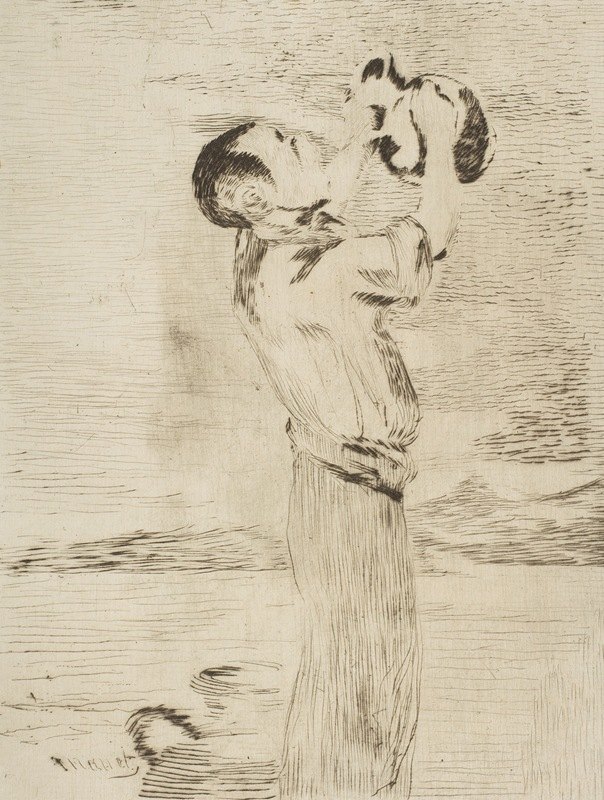
图片文件尺寸 : 2459 x 3256px
《喝水者》(The Water Drinker)-Édouard Manet
The Water Drinker--Édouard Manet (法国, 1832-1883)
 图片文件像素:5704 x 5632 px
卢西奥·丰塔纳,当代艺术I-
Lucio Fontana * - Zeitgenössische Kunst I-
(Rosario di Santa Fe, Argentina 1899–1968 Comabbio)
Concetto Spaziale, 1965, signed; signed and titled on the reverse, oil, tearing and scratching on canvas, pink, 92 x 73 cm, framed
This work is registered in the Fondazione Lucio Fontana, Milan and is accompanied by a photo certificate of authenticity
Provenance:
Galleria Arte Borgogna, Milan
European Private Collection
Literature:
E. Crispolti, Lucio Fontana: Catalogue Raisonné des Peintures, Sculptures et Environnements Spatiaux, vol. II, Brussels 1974, pp. 142, 143 with ill.
E. Crispolti, Lucio Fontana: Catalogo Generale, vol. II, Milan 1986, p. 487 with full-page ill., p. 488 no. 65 O 2 with ill.
E. Crispolti, Catalogo ragionato di sculture, dipinti e ambientazioni, vol. II, Milan 2006, p. 680, no. 65 O 2 with ill.
Lucio Fontana\'s first perforated canvases were created in 1949, and a decade later the artist began to work on his famous cuts through the canvas. Holes and cuts, buchi and tagli, became variations on Fontana\'s fundamental concept. The \"Olii\", on which Fontana worked intensively from the early 1960s, are also dominated by deep punctures and scratches.
With the radical gesture of piercing, the flat surface of the image is broken. The light falls through the openings, creating a new spatiality and depth. In this way, Fontana crosses a boundary that opens a new dimension and thus a new freedom for art - a revolutionary path in art history.
Accordingly, Fontana names his works \"Concetti Spaziali\" - spatial concepts: \"A hole is the beginning of a sculpture in space. My works are not pictures, but art concepts.\" Fontana allows the art genres - architecture, painting, sculpture - to merge into one another. In his Concetti Spaziali, real and imagined space combine; the view into the hole challenges the viewer\'s imagination. At the same time, the material character of the canvas or object is made tangible by piercing and cutting through it.
Fontana\'s \"Olii\" of the 1960s, as well as his metal works which were created during the same period, bear witness to the artist\'s sensual relationship to the material. He was fascinated by the texture of the malleable, slightly plastic oil paint, which is particularly well-suited to making visible gestures of scoring, piercing, or cutting. Fontana plays with the possibilities of handling canvas, paint, metal, glass or even light: the artistic gesture develops on the material and brings its potential to life.
\"The hole is my invention, that is all there is to it.
After this invention, I can die.\"
Lucio Fontana

图片文件尺寸 : 5260 x 6560px
“The Review of Reviews。世界进步的图解总结。7月由Anonymous出版-Anonymous
The Review of Reviews. An illustrated summary of the worlds progress. July--Anonymous

图片文件尺寸 : 3602 x 2940px
“长者扬·埃克尔斯(Jan Ekels)的《阿姆斯特丹斯普伊河上的所谓博伦弗德里特》(Boerenverdriet on The Spui,Amsterdam)-Jan Ekels the elder
The socalled Boerenverdriet on the Spui, Amsterdam--Jan Ekels the elder (荷兰, 1724-1781)

图片文件尺寸 : 3695 x 4572px
“长老汉斯·霍尔贝因(Hans Holbein The Elder)瞄准的弓箭手的头部-Hans Holbein The Elder
The head of a crossbowman taking aim--Hans Holbein The Elder (德国, 1460 – 1524)
 图片文件像素:5946 x 5480 px
彼得·哈雷,当代艺术I-
Peter Halley - Zeitgenössische Kunst I-
(born in New York 1953)
Six Prisons, 2006, signed and dated on the reverse, acrylic, fluorescent acrylic, pearlescent, metallic acrylic, and Roll-a-Tex on 6 adjoined canvases, 190.5 x 190.5 cm
We are grateful to Peter Halley Studio, New York for the kind assistance with the cataloguing of this work.
Provenance:
Galerie Forsblom, Stockholm (label on the reverse)
Private Collection, Vienna
Exhibited:
Galerie Forsblom, Helsinki, 10 November
2006 - 10 January 2007
Peter Halley – Prisons, Friedrich Schiller University,
Jena, 德国y, 10 May 2014 – 27 July 2014
Literature:
Martin S. Fischer, Barbara Happe, Steffen Siegel, et al.,
Peter Halley – Prisons, exhibition catalogue (Jena: Friedrich Schiller University, 2014), 91, ill.
“The deployment of the geometric dominates the landscape. Space is divided into discrete, isolated cells, explicitly determined as to extent and function. Cells are reached through complex networks of corridors and roadways that must be traveled at prescribed speeds and at prescribed times. The constant increase in the complexity and scale of these geometries continuously transforms the landscape…
Along with the geometrization of the landscape, there occurs the geo-metrization of thought. Specific reality is displaced by the primacy of the model. And the model is in turn imposed on the landscape, further displacing reality in a process of ever more complete circularity.”
Peter Halley, The Employment of the Geometric
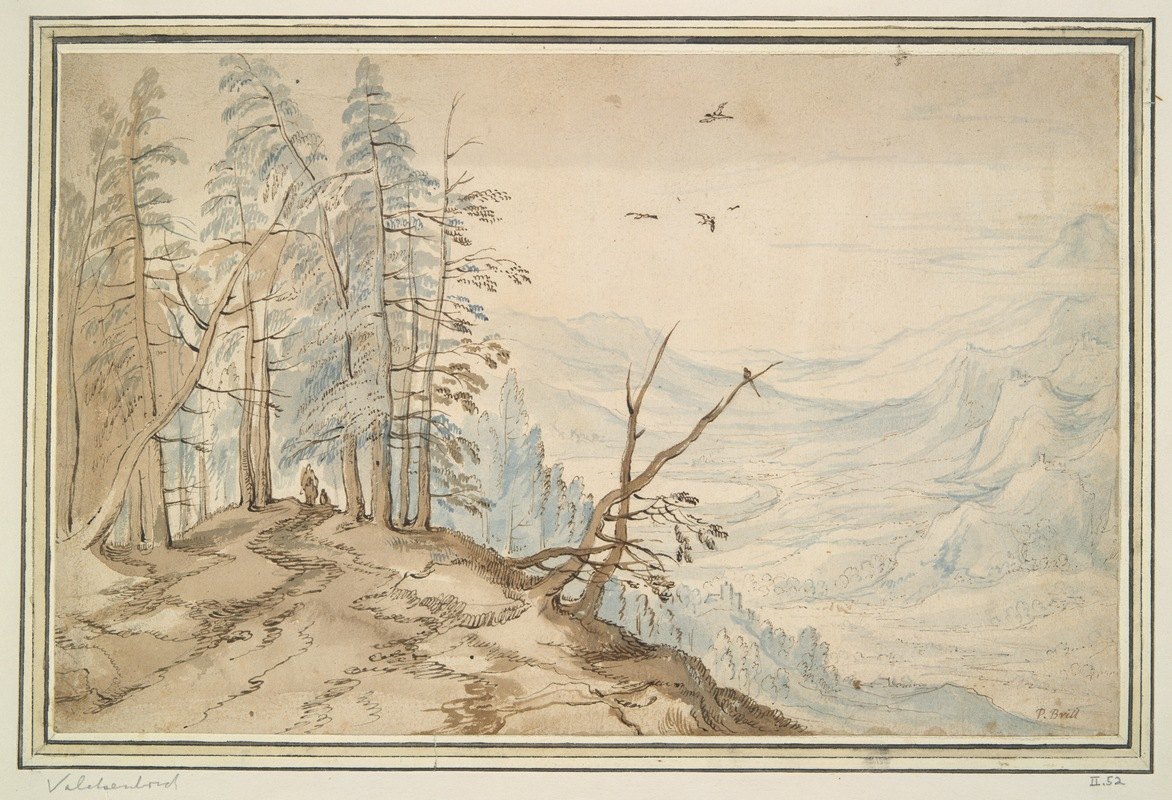
图片文件尺寸 : 3000 x 2047px
《从山路边缘看山谷》作者:Jan Brueghel the Elder学校-School of Jan Brueghel the Elder
View in a Valley from the Edge of a Mountain Road--School of Jan Brueghel the Elder (Flemish, 1568-1625)
图片文件尺寸 : 4847 x 4010px
《海滩上》(On the Beach)-Édouard Manet
On the Beach--Édouard Manet (法国, 1832-1883)
图片文件尺寸 : 1141 x 1528px
“The Britton Printing Co.”作者:匿名-Anonymous
The Britton Printing Co.--Anonymous
图片文件尺寸 : 4260 x 2332px
“Cyparissus Mourning The Stag”作者:匿名-Anonymous
Cyparissus Mourning The Stag--Anonymous
图片文件尺寸 : 2459 x 3256px
《喝水者》(The Water Drinker)-Édouard Manet
The Water Drinker--Édouard Manet (法国, 1832-1883)
图片文件像素:5704 x 5632 px
卢西奥·丰塔纳,当代艺术I-
Lucio Fontana * - Zeitgenössische Kunst I-
(Rosario di Santa Fe, Argentina 1899–1968 Comabbio)
Concetto Spaziale, 1965, signed; signed and titled on the reverse, oil, tearing and scratching on canvas, pink, 92 x 73 cm, framed
This work is registered in the Fondazione Lucio Fontana, Milan and is accompanied by a photo certificate of authenticity
Provenance:
Galleria Arte Borgogna, Milan
European Private Collection
Literature:
E. Crispolti, Lucio Fontana: Catalogue Raisonné des Peintures, Sculptures et Environnements Spatiaux, vol. II, Brussels 1974, pp. 142, 143 with ill.
E. Crispolti, Lucio Fontana: Catalogo Generale, vol. II, Milan 1986, p. 487 with full-page ill., p. 488 no. 65 O 2 with ill.
E. Crispolti, Catalogo ragionato di sculture, dipinti e ambientazioni, vol. II, Milan 2006, p. 680, no. 65 O 2 with ill.
Lucio Fontana\'s first perforated canvases were created in 1949, and a decade later the artist began to work on his famous cuts through the canvas. Holes and cuts, buchi and tagli, became variations on Fontana\'s fundamental concept. The \"Olii\", on which Fontana worked intensively from the early 1960s, are also dominated by deep punctures and scratches.
With the radical gesture of piercing, the flat surface of the image is broken. The light falls through the openings, creating a new spatiality and depth. In this way, Fontana crosses a boundary that opens a new dimension and thus a new freedom for art - a revolutionary path in art history.
Accordingly, Fontana names his works \"Concetti Spaziali\" - spatial concepts: \"A hole is the beginning of a sculpture in space. My works are not pictures, but art concepts.\" Fontana allows the art genres - architecture, painting, sculpture - to merge into one another. In his Concetti Spaziali, real and imagined space combine; the view into the hole challenges the viewer\'s imagination. At the same time, the material character of the canvas or object is made tangible by piercing and cutting through it.
Fontana\'s \"Olii\" of the 1960s, as well as his metal works which were created during the same period, bear witness to the artist\'s sensual relationship to the material. He was fascinated by the texture of the malleable, slightly plastic oil paint, which is particularly well-suited to making visible gestures of scoring, piercing, or cutting. Fontana plays with the possibilities of handling canvas, paint, metal, glass or even light: the artistic gesture develops on the material and brings its potential to life.
\"The hole is my invention, that is all there is to it.
After this invention, I can die.\"
Lucio Fontana
图片文件尺寸 : 5260 x 6560px
“The Review of Reviews。世界进步的图解总结。7月由Anonymous出版-Anonymous
The Review of Reviews. An illustrated summary of the worlds progress. July--Anonymous
图片文件尺寸 : 3602 x 2940px
“长者扬·埃克尔斯(Jan Ekels)的《阿姆斯特丹斯普伊河上的所谓博伦弗德里特》(Boerenverdriet on The Spui,Amsterdam)-Jan Ekels the elder
The socalled Boerenverdriet on the Spui, Amsterdam--Jan Ekels the elder (荷兰, 1724-1781)
图片文件尺寸 : 3695 x 4572px
“长老汉斯·霍尔贝因(Hans Holbein The Elder)瞄准的弓箭手的头部-Hans Holbein The Elder
The head of a crossbowman taking aim--Hans Holbein The Elder (德国, 1460 – 1524)
图片文件像素:5946 x 5480 px
彼得·哈雷,当代艺术I-
Peter Halley - Zeitgenössische Kunst I-
(born in New York 1953)
Six Prisons, 2006, signed and dated on the reverse, acrylic, fluorescent acrylic, pearlescent, metallic acrylic, and Roll-a-Tex on 6 adjoined canvases, 190.5 x 190.5 cm
We are grateful to Peter Halley Studio, New York for the kind assistance with the cataloguing of this work.
Provenance:
Galerie Forsblom, Stockholm (label on the reverse)
Private Collection, Vienna
Exhibited:
Galerie Forsblom, Helsinki, 10 November
2006 - 10 January 2007
Peter Halley – Prisons, Friedrich Schiller University,
Jena, 德国y, 10 May 2014 – 27 July 2014
Literature:
Martin S. Fischer, Barbara Happe, Steffen Siegel, et al.,
Peter Halley – Prisons, exhibition catalogue (Jena: Friedrich Schiller University, 2014), 91, ill.
“The deployment of the geometric dominates the landscape. Space is divided into discrete, isolated cells, explicitly determined as to extent and function. Cells are reached through complex networks of corridors and roadways that must be traveled at prescribed speeds and at prescribed times. The constant increase in the complexity and scale of these geometries continuously transforms the landscape…
Along with the geometrization of the landscape, there occurs the geo-metrization of thought. Specific reality is displaced by the primacy of the model. And the model is in turn imposed on the landscape, further displacing reality in a process of ever more complete circularity.”
Peter Halley, The Employment of the Geometric
图片文件尺寸 : 3000 x 2047px
《从山路边缘看山谷》作者:Jan Brueghel the Elder学校-School of Jan Brueghel the Elder
View in a Valley from the Edge of a Mountain Road--School of Jan Brueghel the Elder (Flemish, 1568-1625)