
图片文件尺寸 : 3194 x 2374px
“无名氏首次展出波士顿建筑俱乐部的工艺美术和特展”-Anonymous
First exhibition of the arts crafts special exhibition of the Boston Architectural Club--Anonymous
图片文件尺寸 : 3194 x 2374px
“无名氏首次展出波士顿建筑俱乐部的工艺美术和特展”-Anonymous
First exhibition of the arts crafts special exhibition of the Boston Architectural Club--Anonymous

图片文件尺寸 : 5464 x 5693px
Henry Redmore:
A hay barge and other coastal craft in calm waters
signed and dated \'H Redmore/1876\' (lower left)
oil on canvas
30.5 x 51cm (12 x 20 1/16in).
亨利·雷德莫尔 平静水域中的干草驳船和其他沿海船只
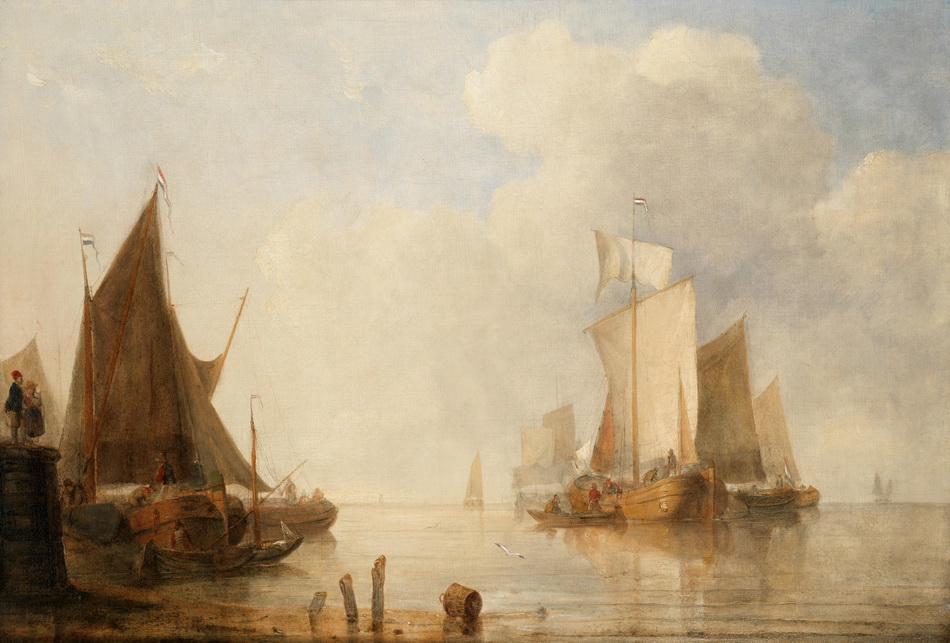
图片文件尺寸 : 4722 x 6020px
Attributed to Sir Augustus Wall Callcott, RA:
A Dutch shoreline with coastal craft preparing to depart
oil on canvas
76.5 x 108.6cm (30 1/8 x 42 3/4in).
归属于RA Augustus Wall Callcott爵士 荷兰海岸线,沿海船只正准备出发

图片文件尺寸 : 4114 x 3060px
托马斯·鲁尼(Thomas Luny)说:“一艘英国“74”型护卫舰和其他各种海岸船只准备离开锚地时,它正在展开帆-Thomas Luny
A British 74 unfurling its sails as it prepares to leave the anchorage with a frigate and various coastal craft beyond--Thomas Luny (英国, 1759 - 1837)

图片文件尺寸 : 3913 x 5235px
Willem van de Velde the Younger:Calm: English ships and other small craft off a distant shore
oil on canvas
71.1 x 106.7cm (28 x 42in).
in a carved and gilded English Chippendale-style frame
年轻的威廉·范德维尔德 平静:英国船只和其他小船在遥远的海岸上,用雕刻和镀金的英国Chippendale风格的框架
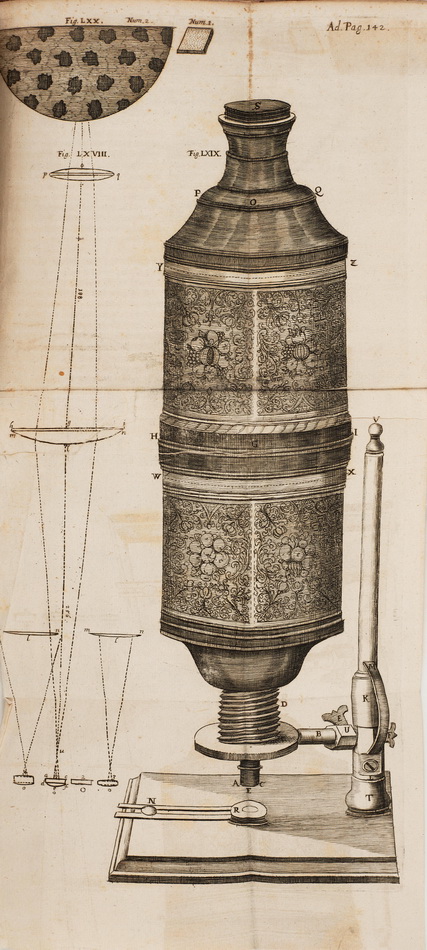
图片文件尺寸 : 4887 x 4274px
STURM, JOHANN CHRISTOPH. 1635-1703.:Collegium experimentale sive curiosum. Nuremburg: Wolfgang M. Endter, 1676.
2 parts in 1 volume. 4to (198 x 145 mm). Half-title, 4 folding engraved plates, numerous engraved illustrations in the text (some full-page). Contemporary calf, spine gilt with 5 raised bands, modern cloth chemise and quarter morocco slipcase. Old re-casing of original binding, with repairs to joints; browning throughout, a few stains.
FIRST EDITION. Sturm, professor of mathematics and physics at the University of Altdorf, presents his experiments relating to hydrostatics, pneumatics, optics and magnetism, his descriptions of recent inventions such as an airship (using four spheres made of very thin copper foil tethered to the craft, the illustration showing a man steering with use of an oar), diving bell, microscope, air pump, and barometer. A second part was published in 1685 and they often appear together. Krivatsy 11539.
斯图姆,约翰克里斯多夫。1635–1703. 大学实验性好奇心。纽伦堡:沃尔夫冈·恩德特,1676年。
![A Master\'s Guide to Building a Bamboo Fly Rod. [Katonah, NY]: Martha\'s Glen Publishing Co., [1977].](http://www.minghuafuzhi.com/2022/12/02141457110.jpg)
图片文件尺寸 : 4605 x 5892px
GARRISON, EDMUND EVERETT. 2893-1975; and HOAGY B. CARMICHAEL. B.1938. :A Master\'s Guide to Building a Bamboo Fly Rod. [Katonah, NY]: Martha\'s Glen Publishing Co., [1977].
4to. Illustrated with photographs by Matthew Vinciguerra and Luis Marden. Publisher\'s brown morocco gilt, green silk moire endleaves, edges gilt, glassine jacket, quarter-morocco and marbled paper clamshell box. Sunning to top panel of box, otherwise minimal wear.
LIMITED EDITION, number 84 of 128, signed by the author to Thomas Doolittle. A chance meeting between master rod-maker Garrison and television producer Charmichael (the son of famed songwriter Hoagy Carmichael) led to a television documentary and this book, documenting the elaborate and exacting process Garrison employed in building his hand-crafted rods.
警备队,埃德蒙·埃弗雷特。2893-1975; 和HOAGY B.CARMICHAEL。B、 1938年。 制作竹飞杆的大师指南。[纽约州卡托纳]:玛莎·格伦出版,[1977]。
|
||||||||||||||||||||||||||||||||||||||||||||||||||||||||||||||||||||||||||||||||||||||||||||||||||||||||||||||||||||||||||||||||||||||||||||||||||||||||||||||||||

 图片文件像素:5457 x 4998 px
草间弥生,当代艺术I-
Yayoi Kusama - Zeitgenössische Kunst I-
(born in Matsumoto, Japan 1929)
Pumpkin KKK, 2002, signed, dated and titled on the reverse, acrylic on canvas, 22.7 x 15.8 cm, in plexiglass box
This work is accompanied by a registration card issued by Yayoi Kusama Studio
We are grateful to Yayoi Kusama Inc. for confirming the registration of the work in its database
Provenance:
European Private Collection
Iconic Pumpkin
Yayoi Kusama is possibly the best known Japanese artist in the world. Her famous polka dots have become her trademark and Kusama\'s stylized pumpkins are among the most iconic masterpieces of contemporary art.
Born in the late 1920s, Yayoi Kusama grew up in the conservative confines of the small town of Matsumoto in Nagano Prefecture in Japan. She attended the Kyoto School of Arts and Crafts, and after staging her first exhibitions, through which she was ‘discovered’ by the international art world, Kusama was able to emigrate to America, where she lived and worked, primarily in New York, from 1957 to 1973. Kusama celebrated her first major success in New York in 1959 with a solo exhibition at the Brata Gallery, entitled Obsessional Monochrome. The Infinity Net Paintings exhibited there were compositions of dense networks executed with white brushstrokes on a black ground and characterised by the theme of repetition.
Grids, flashes of light and, above all, dots that repeat endlessly are the most striking characteristic of Kusama\'s works and established her fame as the ‘Polka Dot Princess’. For the artist, the dots that overgrow everything are not merely a harmless pattern. They have their origins in the hallucinations and panic attacks she has experienced since her youth, which determined her perception of the world. Growing up, she saw dot and net patterns and feared she would dissolve into them. The polka dots and their constant repetition now became an expression of the search for infinity and the desire for self-dissolution. The dots erase the image into which the artist channels her fears. With her polka dots, Kusama covers not only canvases, but also everyday objects such as tea kettles or bookshelves, clothes, giant tentacles, oversized flowers, entire rooms or herself. And pumpkins as well.
\"Pumpkin KKK\" (2002) represents another important theme in Yayoi Kusama\'s work. For Kusama, the pumpkin is associated with memories of childhood and has been a favourite motif with almost mythical status since the 1970s-1980s. The artist first saw pumpkins during walks with her grandfather, and they had a calming effect on the hallucination-stricken artist. \"I love pumpkins for their humorous shape, their warmth and their human quality,\" Kusama says. She devoted herself to pumpkins in paintings and sculptures and incorporated them into her Infinity Rooms. Bold colours characterise the pumpkins, as do the precisely placed polka dots. The colour scheme follows an inner symbolism, according to which the artist categorises unprocessed experiences. The pumpkins stand for triumph over inner struggles, their endless repetition allows the artist to find her mental balance.
Since her return to Japan, Kusama, who has never made a secret of her illness, has voluntarily lived in a psychiatric institution. In 2017, a museum dedicated solely to her opened in Tokyo and numerous international exhibitions testify to considerable on-going interest in her work. With her unconventional works, her extraordinary performances, self-dramatisations and happenings, Kusama has anticipated many trends in contemporary art.
|
|
||||
| 菲利克斯·布拉克蒙 | 1833-1914 | 法国雕刻师 | ||
| 尤金·格拉塞 | 1845-1917 | 瑞士/法国设计师 | ||
| 埃米尔·加勒 | 1846-1904 | 法国玻璃匠 | ||
| 路易斯康福特蒂芙尼 | 1848-1933 | 美国彩绘玻璃艺术家 | ||
| 安东尼·高迪 | 1852-1926 | 西班牙建筑师 | ||
| 费迪南德·霍德勒 | 1853-1918 | 瑞士画家 | ||
| 阿道夫-莱昂·威莱特 | 1857-1926 | 法国插画家 | ||
| 西奥菲尔·亚历山大·斯坦伦 | 1859-1923 | 瑞士/法国画家/版画家 | ||
| 埃德蒙-弗朗索瓦·阿曼-让 | 1860-1935 | 法国画家 | ||
| 阿尔丰斯穆夏 | 1860-1939 | 捷克版画家 | ||
| 维克多奥尔塔 | 1861-1947 | 比利时建筑师/设计师 | ||
| 阿里斯蒂德·马约尔 | 1861-1944 | 法国雕塑家 | ||
| 古斯塔夫克里姆特 | 1862-1918 | 奥地利画家 | ||
| 亨利范德维尔德 | 1863-1957 | 比利时设计师 | ||
| 吕西安·列维-杜默 | 1865-1953 | 法国画家 | ||
| 乔治莱门 | 1865-1916 | 比利时画家 | ||
| 赫克托吉玛 | 1867-1942 | 法国建筑师/设计师 | ||
| 乔治·德·弗雷 | 1868-1943 | 荷兰画家/版画家 | ||
| 查尔斯·雷尼·麦金托什 | 1868-1928 | 苏格兰设计师 | ||
| 约翰刺点 | 1868-1932 | 荷兰插画家 | ||
| 奥布里比尔兹利 | 1872-1898 | 英文插画家 | ||
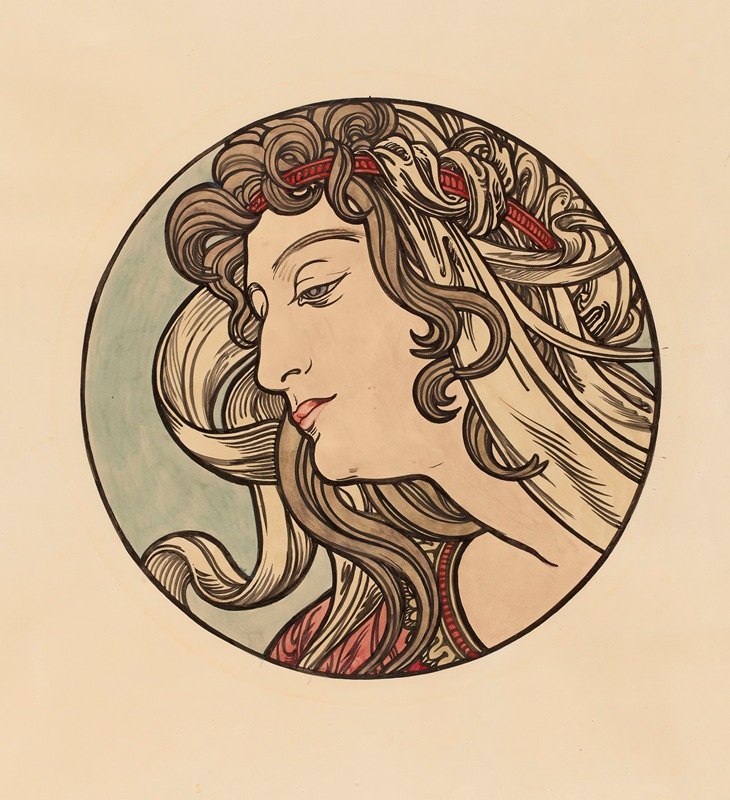
图片文件尺寸 : 3194 x 2374px
“无名氏首次展出波士顿建筑俱乐部的工艺美术和特展”-Anonymous
First exhibition of the arts crafts special exhibition of the Boston Architectural Club--Anonymous
图片文件尺寸 : 5464 x 5693px
Henry Redmore:
A hay barge and other coastal craft in calm waters
signed and dated \'H Redmore/1876\' (lower left)
oil on canvas
30.5 x 51cm (12 x 20 1/16in).
亨利·雷德莫尔 平静水域中的干草驳船和其他沿海船只
图片文件尺寸 : 4722 x 6020px
Attributed to Sir Augustus Wall Callcott, RA:
A Dutch shoreline with coastal craft preparing to depart
oil on canvas
76.5 x 108.6cm (30 1/8 x 42 3/4in).
归属于RA Augustus Wall Callcott爵士 荷兰海岸线,沿海船只正准备出发
图片文件尺寸 : 4114 x 3060px
托马斯·鲁尼(Thomas Luny)说:“一艘英国“74”型护卫舰和其他各种海岸船只准备离开锚地时,它正在展开帆-Thomas Luny
A British 74 unfurling its sails as it prepares to leave the anchorage with a frigate and various coastal craft beyond--Thomas Luny (英国, 1759 - 1837)
图片文件尺寸 : 3913 x 5235px
Willem van de Velde the Younger:Calm: English ships and other small craft off a distant shore
oil on canvas
71.1 x 106.7cm (28 x 42in).
in a carved and gilded English Chippendale-style frame
年轻的威廉·范德维尔德 平静:英国船只和其他小船在遥远的海岸上,用雕刻和镀金的英国Chippendale风格的框架
图片文件尺寸 : 4887 x 4274px
STURM, JOHANN CHRISTOPH. 1635-1703.:Collegium experimentale sive curiosum. Nuremburg: Wolfgang M. Endter, 1676.
2 parts in 1 volume. 4to (198 x 145 mm). Half-title, 4 folding engraved plates, numerous engraved illustrations in the text (some full-page). Contemporary calf, spine gilt with 5 raised bands, modern cloth chemise and quarter morocco slipcase. Old re-casing of original binding, with repairs to joints; browning throughout, a few stains.
FIRST EDITION. Sturm, professor of mathematics and physics at the University of Altdorf, presents his experiments relating to hydrostatics, pneumatics, optics and magnetism, his descriptions of recent inventions such as an airship (using four spheres made of very thin copper foil tethered to the craft, the illustration showing a man steering with use of an oar), diving bell, microscope, air pump, and barometer. A second part was published in 1685 and they often appear together. Krivatsy 11539.
斯图姆,约翰克里斯多夫。1635–1703. 大学实验性好奇心。纽伦堡:沃尔夫冈·恩德特,1676年。
图片文件尺寸 : 4605 x 5892px
GARRISON, EDMUND EVERETT. 2893-1975; and HOAGY B. CARMICHAEL. B.1938. :A Master\'s Guide to Building a Bamboo Fly Rod. [Katonah, NY]: Martha\'s Glen Publishing Co., [1977].
4to. Illustrated with photographs by Matthew Vinciguerra and Luis Marden. Publisher\'s brown morocco gilt, green silk moire endleaves, edges gilt, glassine jacket, quarter-morocco and marbled paper clamshell box. Sunning to top panel of box, otherwise minimal wear.
LIMITED EDITION, number 84 of 128, signed by the author to Thomas Doolittle. A chance meeting between master rod-maker Garrison and television producer Charmichael (the son of famed songwriter Hoagy Carmichael) led to a television documentary and this book, documenting the elaborate and exacting process Garrison employed in building his hand-crafted rods.
警备队,埃德蒙·埃弗雷特。2893-1975; 和HOAGY B.CARMICHAEL。B、 1938年。 制作竹飞杆的大师指南。[纽约州卡托纳]:玛莎·格伦出版,[1977]。
|
||||||||||||||||||||||||||||||||||||||||||||||||||||||||||||||||||||||||||||||||||||||||||||||||||||||||||||||||||||||||||||||||||||||||||||||||||||||||||||||||||
图片文件像素:5457 x 4998 px
草间弥生,当代艺术I-
Yayoi Kusama - Zeitgenössische Kunst I-
(born in Matsumoto, Japan 1929)
Pumpkin KKK, 2002, signed, dated and titled on the reverse, acrylic on canvas, 22.7 x 15.8 cm, in plexiglass box
This work is accompanied by a registration card issued by Yayoi Kusama Studio
We are grateful to Yayoi Kusama Inc. for confirming the registration of the work in its database
Provenance:
European Private Collection
Iconic Pumpkin
Yayoi Kusama is possibly the best known Japanese artist in the world. Her famous polka dots have become her trademark and Kusama\'s stylized pumpkins are among the most iconic masterpieces of contemporary art.
Born in the late 1920s, Yayoi Kusama grew up in the conservative confines of the small town of Matsumoto in Nagano Prefecture in Japan. She attended the Kyoto School of Arts and Crafts, and after staging her first exhibitions, through which she was ‘discovered’ by the international art world, Kusama was able to emigrate to America, where she lived and worked, primarily in New York, from 1957 to 1973. Kusama celebrated her first major success in New York in 1959 with a solo exhibition at the Brata Gallery, entitled Obsessional Monochrome. The Infinity Net Paintings exhibited there were compositions of dense networks executed with white brushstrokes on a black ground and characterised by the theme of repetition.
Grids, flashes of light and, above all, dots that repeat endlessly are the most striking characteristic of Kusama\'s works and established her fame as the ‘Polka Dot Princess’. For the artist, the dots that overgrow everything are not merely a harmless pattern. They have their origins in the hallucinations and panic attacks she has experienced since her youth, which determined her perception of the world. Growing up, she saw dot and net patterns and feared she would dissolve into them. The polka dots and their constant repetition now became an expression of the search for infinity and the desire for self-dissolution. The dots erase the image into which the artist channels her fears. With her polka dots, Kusama covers not only canvases, but also everyday objects such as tea kettles or bookshelves, clothes, giant tentacles, oversized flowers, entire rooms or herself. And pumpkins as well.
\"Pumpkin KKK\" (2002) represents another important theme in Yayoi Kusama\'s work. For Kusama, the pumpkin is associated with memories of childhood and has been a favourite motif with almost mythical status since the 1970s-1980s. The artist first saw pumpkins during walks with her grandfather, and they had a calming effect on the hallucination-stricken artist. \"I love pumpkins for their humorous shape, their warmth and their human quality,\" Kusama says. She devoted herself to pumpkins in paintings and sculptures and incorporated them into her Infinity Rooms. Bold colours characterise the pumpkins, as do the precisely placed polka dots. The colour scheme follows an inner symbolism, according to which the artist categorises unprocessed experiences. The pumpkins stand for triumph over inner struggles, their endless repetition allows the artist to find her mental balance.
Since her return to Japan, Kusama, who has never made a secret of her illness, has voluntarily lived in a psychiatric institution. In 2017, a museum dedicated solely to her opened in Tokyo and numerous international exhibitions testify to considerable on-going interest in her work. With her unconventional works, her extraordinary performances, self-dramatisations and happenings, Kusama has anticipated many trends in contemporary art.
|
|
||||
| 菲利克斯·布拉克蒙 | 1833-1914 | 法国雕刻师 | ||
| 尤金·格拉塞 | 1845-1917 | 瑞士/法国设计师 | ||
| 埃米尔·加勒 | 1846-1904 | 法国玻璃匠 | ||
| 路易斯康福特蒂芙尼 | 1848-1933 | 美国彩绘玻璃艺术家 | ||
| 安东尼·高迪 | 1852-1926 | 西班牙建筑师 | ||
| 费迪南德·霍德勒 | 1853-1918 | 瑞士画家 | ||
| 阿道夫-莱昂·威莱特 | 1857-1926 | 法国插画家 | ||
| 西奥菲尔·亚历山大·斯坦伦 | 1859-1923 | 瑞士/法国画家/版画家 | ||
| 埃德蒙-弗朗索瓦·阿曼-让 | 1860-1935 | 法国画家 | ||
| 阿尔丰斯穆夏 | 1860-1939 | 捷克版画家 | ||
| 维克多奥尔塔 | 1861-1947 | 比利时建筑师/设计师 | ||
| 阿里斯蒂德·马约尔 | 1861-1944 | 法国雕塑家 | ||
| 古斯塔夫克里姆特 | 1862-1918 | 奥地利画家 | ||
| 亨利范德维尔德 | 1863-1957 | 比利时设计师 | ||
| 吕西安·列维-杜默 | 1865-1953 | 法国画家 | ||
| 乔治莱门 | 1865-1916 | 比利时画家 | ||
| 赫克托吉玛 | 1867-1942 | 法国建筑师/设计师 | ||
| 乔治·德·弗雷 | 1868-1943 | 荷兰画家/版画家 | ||
| 查尔斯·雷尼·麦金托什 | 1868-1928 | 苏格兰设计师 | ||
| 约翰刺点 | 1868-1932 | 荷兰插画家 | ||
| 奥布里比尔兹利 | 1872-1898 | 英文插画家 | ||