1971. 安迪·沃霍尔,当代艺术I 高清作品[23%]

DO-Andy Warhol - 现代艺术 I
图片文件像素:5491 x 4804 px

安迪·沃霍尔,当代艺术I-

Andy Warhol - Zeitgenössische Kunst I-

(Pittsburgh 1928–1987 New York)
Jack Nicklaus, 1977, acrylic, silkscreen, ink on canvas, on the reverse with the stamps of The Estate of Andy Warhol and The Andy Warhol Foundation for the Visual Arts, New York, numbered with archive number PO 41.049, numbered again on the stretcher, 25.4 x 25.4 cm, on stretcher

Provenance:
Estate of the artist
Private collection, Florence
Galerie Hafenrichter, Nurnberg
Private collection, 德国y - acquired from the above

Literature:
Catalogue Raisonné, Andy Warhol, Paintings, 1976–1978, no. 3846

This small-format work by Andy Warhol from 1977 is a portrait of one of the best golfers of the 20th century - US golfer Jack Nicklaus, also known as The Golden Bear.

From the early 1960s until the late 1980s, Nicklaus was regarded as one of the best golfers in the world. With 18 major victories under his belt, he is still the most successful player in his sport.

This portrait was created as part of Warhol’s so-called Athletes series, commissioned by his friend and art collector Richard Weisman. It includes a total of ten portraits of famous athletes of the time, such as Muhammad Ali, Chris Evert and Pelé.
It is an interesting departure from Warhol’s usual society portraits and occupies a rather idiosyncratic position in his extensive oeuvre.

Warhol had little interest in sports and its heros, and did not choose the protagonists of the series himself, leaving this task to Weisman. The latter knew many athletes personally, which made it easy to persuade them to pose for Warhol. Warhol eventually met each of the top athletes in person, and took photographs of them with his Polaroid Big Shot camera. The silkscreen portraits were subsequently created on the basis of these images. Each portrait is executed in various colors, and captures both the glamour and personality of the individual athlete.

Of the around 60 Polaroids Warhol made of Jack Nicklaus with his Big Shot camera, he selected four and processed them further into canvases.
On the basis on the photographs of Nicklaus with his golf club, Warhol ultimately created 15 original portraits of the athlete.

1972. 克里斯多夫·谢纳。1573-1650. 来自Admirando FacularsMaculas Varius的Rosa Ursina Sive Sun。布拉恰诺:安德烈亚斯·菲乌斯(Andreas Phaeus)在公爵出版社,1626-1630年。 高清作品[22%]

Rosa Ursina Sive Sol ex Admirando Facularum  Macularum suarum Phoenomeno Varius.  Bracciano: Andreas Phaeus at the Ducal Press, 1626-1630.

图片文件尺寸 : 4065 x 5080px

SCHEINER, CHRISTOPH. 1573-1650. :Rosa Ursina Sive Sol ex Admirando Facularum Macularum suarum Phoenomeno Varius. Bracciano: Andreas Phaeus at the Ducal Press, 1626-1630.
Folio (375 x 260 mm). Engraved title vignette, engraved portrait of Paolo Giordano Orsini, Duke of Bracciano, additional engraved title, numerous engraved illustrations throughout (many full-page), woodcut head- and tailpieces and initials. [38], 784 (with numerous errors in pagination), [38] pp., with the blanks F4, R6 4I6. Full 18th-century (?) vellum, manuscript spine title, all edges gilt. Repairs to large portion of outer lower corner of first 5 leaves (letterpress half-title, title, portrait leaf, contents and engraved title) with loss to text and images, occasional heavy browning and waterstaining, especially to prefatory and end matter, sporadic foxing, loss to top blank corner of 4G6.

FIRST EDITION of Scheiner\'s major work on sunspots. Scheiner first observed sunspots in 1611, publishing his finding pseudonymously the following year in Tres Epistolae de Maculis Solaribus. The tract initiated a dispute with Galileo over the nature of sunspots. The present work, Scheiner\'s magnum opus and the standard work on sunspots for over well over a century, opens with an extended attack on Galileo, although Scheiner had by this point accepted Galileo\'s theory that sunspots exist on the surface of the sun and are not, as he had previously argued, caused by shadows cast by satellites of the sun. The many fine engravings depict Scheiner\'s observations, a map of the moon, and the helioscope and other instruments. \"For his masterpiece, Scheiner produced the first monograph on a heavenly body, the Sun. Even today it is still an impressive volume, with scores of engravings of sunspots and the various instruments needed for solar observations\" (Jesuit Science in the Age of Galileo). Cinti 79; Honeyman 2781.

克里斯多夫·谢纳。1573-1650. 来自Admirando FacularsMaculas Varius的Rosa Ursina Sive Sun。布拉恰诺:安德烈亚斯·菲乌斯(Andreas Phaeus)在公爵出版社,1626-1630年。

1973. 安迪·沃霍尔,当代艺术I 高清作品[20%]

DO-Andy Warhol - 现代艺术 I
图片文件像素:5347 x 5320 px

安迪·沃霍尔,当代艺术I-

Andy Warhol - Zeitgenössische Kunst I-

(Pittsburgh 1928-1987 New York)
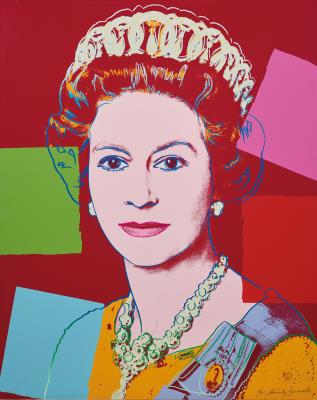
Queen Elizabeth II of the United Kingdom, from Reigning Queens, 1985, signed in pencil and numbered 9/40, screenprint in colours on Lenox Museum Board with the blindstamp of the printer Rupert Jasen Smith, New York, published by George C.P. Mulder, Amsterdam, 100 x 80 cm, In plexiglass case

This is no. 9 from an edition of 40 + 10 artist’s proofs

Provenance:
Martin Lawrence Limited Editions, Inc., New York (label on the reverse)
European private collection

Literature:
F. Feldman J. Schellmann, Andy Warhol Prints, A Catalogue Raisonné 1962-1987, II. 334-349, p. 138 with ill.

For the realisation of Queen Elizabeth II of the United Kingdom, a photograph taken on the occasion of the Silver Jubilee, the 25th anniversary of her reign, was used as a reference. The sitter\'s pose remains unaltered, retaining the structure and grandeur that are typical of classical portraiture. Warhol adds the commercial medium, emphasising it. His are classical depictions that praise the importance and solemnity of the subject depicted.

The same image of the queen appears in each of her four prints but they vary in colour. This one in particular has a primarily red background, and features graphic shapes printed from separate screens. Warhol began working in this style in the mid-1970s, fragmenting the image with various overlayed shapes and patches of colour.

The association of commercial medium and traditional portraiture is key, allowing Warhol to create a product that would subsequently be hailed as a work of art. Seriality, consumerism, the concept of fame and social hierarchy emanate from the superimposition of colour fields that enhance the subject\'s femininity. The pronounced make-up and bright colours denote the Pop character of mass culture, emphasising appearance and conveying a certain frivolity - unlike traditional portraits, where character and gravitas prevailed over aesthetics. Despite beginning with an impersonal approach and a mechanical reproduction of the subject, these interventions in the image gave the work a deliberately ‘artistic’ look. In many of his female portraits, such as here, the multicoloured surfaces and suggestion of make-up enhance the glamour and femininity of the subjects. With characteristic ambivalence, Warhol explained his additions to these later prints as immaterial:

‘I really would still rather do just a silkscreen of the face without all the rest, but people expect just a little bit more. That’s why I put in all the drawing.’ (Barry Blinderman, ‘Modern Myths: An Interview with Andy Warhol’, Arts, October 1981, p.145.)

This work is published in an edition of forty with ten artist’s proofs, five printer’s proofs and three hors commerce. The work is also published as a Royal Edition with diamond dust on the drawing lines, published in an edition of thirty with five artist’s proofs, two printer’s proofs and two hors commerce.

1974. Lempicka Tamara-现代 高清作品[16%]

DO-Tamara de Lempicka  - Moderne
图片文件像素:5378 x 3944 px

Lempicka Tamara-现代-

Tamara de Lempicka * - Moderne-

(Warschau 1898–1980 Cuernavaca /Mexiko)
Chambre d’hôtel, ca. 1951, signiert, Öl auf Leinwand, 56 x 48 cm, gerahmt

Provenienz:
Galleria Bonaparte, Mailand
Europäische Privatsammlung

Ausgestellt:
Montecatini Terme, Da De Chirico a Fontana. Gli anni d\'oro di Montecatini Terme, 27. September - 3. November 2002, Ausst.-Kat. S. 127 und 223
Mailand, Tamara de Lempicka, Palazzo Reale, 5. Oktober 2006 – 14. Januar 2007, Ausst.-Kat. Nr. 58, S. 166–167 mit Abb.
Paris, Tamara De Lempicka, La Reine de l’Art Déco, Pinacothèque de Paris, 18. April – 8. September 2013, Ausstellungs Kat. S. 212–213 mit Abb. (mit falschen Maßangaben)
Turin, Tamara de Lempicka, Palazzo Chiabalese, 19. März - 6. September 2015
Verona, Palazzo Forti, 20. September 2015 - 31. Januar 2016, Ausst.-Kat.
Madrid, Tamara de Lempicka, Reina del Art Déco, Palacio de Gaviria, 5. Oktober 2018 - 5. Mai 2019

Literatur:
A. Blondel, Tamara de Lempicka, catalogue raisonné 1921–1979, Acatos, Lausanne 1999, Nr. B 301, S. 359 mit Abb. (mit falschen Maßangaben)

Tamara de Lempicka, die herausragende Vertreterin der Art-Déco-Malerei in den 1920er Jahren, kombinierte in ihrem späteren Werk disparate Elemente aus ihrem Frühwerk, wie in ihrem „Chambre d\'Hôtel“.

Tamara de Lempicka gilt als eine der erfolgreichsten Frauen der Kunstgeschichte. Nach der Oktoberrevolution flüchtete die in Polen geborene Künstlerin von St. Petersburg nach Paris, wo sie ihren Ruhm begründete. De Lempicka verkehrte in den Cafés der französischen Hauptstadt, wo sie zahlreiche Persönlichkeiten wie Georges Braque und Filippo Tommaso Marinetti kennenlernte. Ihre Gemälde haben eine starke visuelle Wirkung und zeichnen sich durch dekonstruierte, volumetrische Formen aus, in denen die Einflüsse des naturalistischen Kubismus und die Harmonie des italienischen Manierismus durchscheinen. Ein Großteil ihrer Werke sind Porträts von Persönlichkeiten, die in den von ihr besuchten Salons verkehrten. Die Porträtierten tragen reale Züge und sind gleichzeitig Symbolfiguren, elegant und geschmückt mit dem Reichtum der schönen Gesellschaft, in der sie lebten. Auch die zahlreichen Selbstporträts der Künstlerin zeugen von ihrer Lebens- und Genussfreude. Der kühle, glatte Malstil evoziert Theatralik, die Porträtierten wirken skulptural und monumental, der versteinerte Blick verbirgt jeden Anflug von Menschlichkeit.
Nach einer Amerikareise und Jahren des Erfolges erlebt de Lempicka das, was sie selbst als „Künstlerdepression” bezeichnete. Der ständige Druck, etwas zu produzieren und die Erwartungen ihrer Umgebung zu erfüllen, führte zu einer Erschöpfung und Auszehrung ihrer Kreativität. Ab etwa 1930 schlug de Lempicka einen anderen Weg ein, und ihr Werk nahm einen eher meditativen, fast religiösen Charakter an. Auch ihre Technik näherte sich einem hyperrealistischen und surrealistischen Modell an, wie das Gemälde „Chambre d\'Hôtel“ von 1951 zeigt, das in Amerika entstand, wo de Lempicka nach der Flucht vor den Nazis eine neue Heimat fand: Die Studie eines Zimmers präsentiert sich als gleichzeitig still und ohrenbetäubend laut. Es gibt keine Gesichter, wie in ihren früheren Werken, aber es gibt Raum für eine weniger konstruierte Struktur, die in ihrer Form weniger gebrochen, aber viel strenger in ihrer visuellen Wirkung ist. Man sieht einen Ausschnitt aus einem Hotelzimmer, in dem ein Spiegel den Raum weiter vergrößert und eine Art Durchgang darin schafft. Die Komposition ist durchdachter, fast narrativ, sie wird nicht mehr vom Rahmen erdrückt, sondern setzt sich fort und deutet den größeren Zusammenhang an.

Bildcredit:
Tamara de Lempicka in einem Kleid von Marcel Rochas, Paris, um 1931, Foto. Dora Kallmus (Madame d’Ora), © AGF / Bridgeman Images

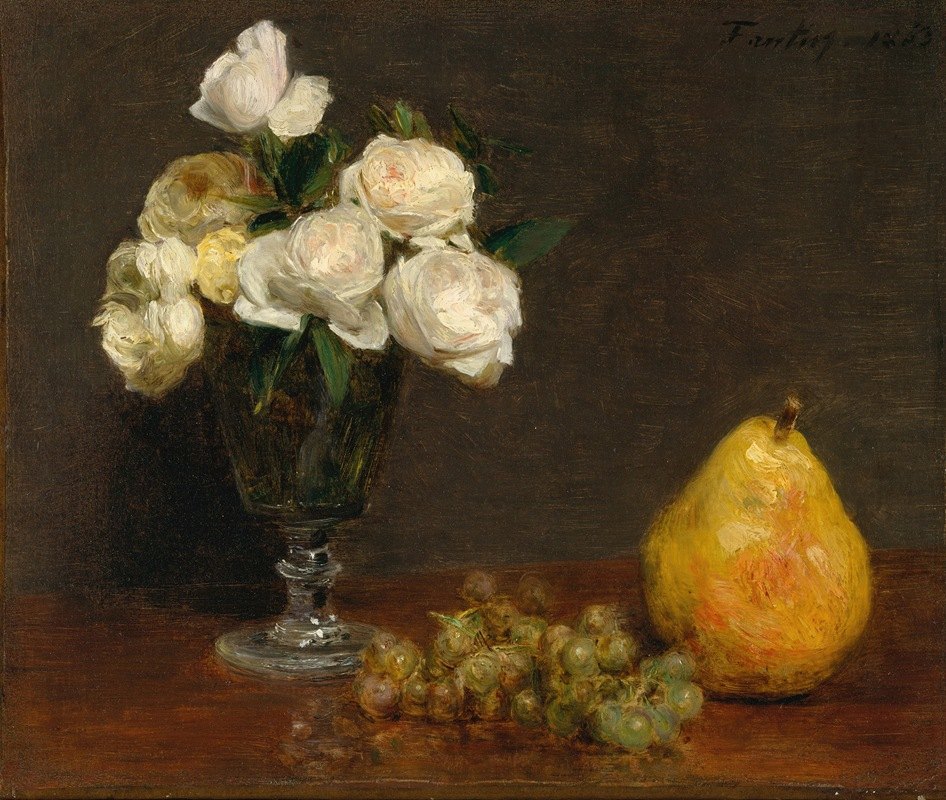
1975. 擅长画花卉画的画家大全 世界名画高清图片故事 高清作品[15%]

按时间顺序排列的列表 使用ctrl-F (PC) 或command-F (Mac) 搜索名称

安布罗斯·博斯查特长老 1573-1621 荷兰画家
约翰阿雷拉诺 1614-1676 西班牙画家
让-巴蒂斯特·莫诺耶 1634-1699 法国画家
雷切尔·拉施 1664-1750 荷兰画家
乔治·狄奥尼修斯荣誉 1710-1770 德国画家/插画家
扬凡奥斯 1744-1808 荷兰画家
杰拉德范斯潘东克 1746-1822 荷兰画家
皮埃尔·约瑟夫·雷杜特 1759-1840 卢森堡/法国画家
扬·弗兰斯·范达尔 1764-1840 佛兰芒画家
乔治范奥斯 1782-1861 荷兰画家
约翰·劳伦茨·詹森 1800-1856 丹麦画家
西蒙圣让 1808-1860 法国画家
马丁·约翰逊·海德 1819-1904 美国画家
施洗约翰罗比 1821-1910 比利时画家
亨利·方丹·拉图尔 1836-1904 法国画家
玛丽亚奥基杜温 1845-1927 美国画家
尤金·亨利·科乔瓦 1850-1911 法国画家
保罗德隆普雷 1855-1911 法国/美国画家
乔治亚·欧姬芙 1887-1986 美国画家
Still Life with Roses and Fruit-

1976. 多斯托耶夫斯基的名片上写着亚历山大·赫尔岑。 照片署名并题写(俄语)给亚历山大·赫尔岑, 高清作品[11%]

Photograph signed and inscribed [in Russian] to Alexander Herzen,

图片文件尺寸 : 3981 x 5780px

DOSTOEVSKY CARTE-DE-VISITE INSCRIBED TO ALEXANDER HERZEN.:DOSTOEVSKY, FYODOR. 1821-1881. Photograph signed and inscribed [in Russian] to Alexander Herzen, albumen print carte-de-visite full length portrait by M.B. Tulinov, Petersburg, 1861, 105 x 65 mm, inscribed by Dostoevsky in Russian to the verso, \"Alexander Ivanovich Herzen in memory of our meeting in London. Fyodor Dostoyevsky 8 July/20 July 1862,\" minor stain to verso.
Provenance: Alexander Ivanovich Herzen; to daughter Olga Aleksandrovna [Herzen] Monod; by descent.
Publication: For a discussion of the photograph, see Volgin, Igor. \"Introduction\" to The Dostoevsky Archive (1997), p 21.

Pull quote: \"Herzen awaits his readers in the future. Far above the heads of the present crowd, he transmits his thoughts to those who will be able to comprehend them.\" – Leo Tolstoy, 1905.

VERY RARE CARTE DE VISITE PHOTOGRAPH OF FYODOR DOSTOEVSKY PRESENTED TO ALEXANDER HERZEN IN REMEMBRANCE OF THEIR 1862 MEETING IN LONDON: A TREMENDOUSLY IMPORTANT ASSOCIATION BETWEEN TWO OF THE LEADING INTELLECTUALS OF THE 19TH-CENTURY.

Alexander Herzen was one of the most important and influential Russian writers and thinkers of the 19th-century. called the \"father of Russian socialism,\" he had a profound influence on late-19th century Russian writers, including Fyodor Dostoevsky. Born illegitimately to a wealthy Russian landowner, Herzen became a dissident and critic of the Russian feudal system. Of Herzen, Tolstoy said he had never met a man \"with so rare a combination of scintillating brilliance and depth.\" His writings, including From the Other Shore (1848) and those appearing in his influential publications of the 1850s-60s The Bell and the Polestar, would help mold a generation of Russian writing and thought.

Herzen and Dostoevsky met for the first time in Russia in 1846, following Dostoevsky\'s comment in a letter to his brother that Herzen and Goncharov stand as \"the most remarkable\" of his rivals; Herzen\'s recollection of the meeting was less than effusive, however: \"I can\'t say he made a particularly present impression.\" Their second meeting occurred when Dostoevsky visited Herzen in London in July of 1862, of which this photograph is a memento. During the 1850s and early 1860s, visits to the emigree Herzen by Russian writers and intellectuals were something of a right of passage, and Dostoevsky\'s visit followed right on the heels of Turgenev. This series of meetings profoundly affected Dostoevsky and his work, and is clearly acknowledged in his Winter Notes which he wrote later that year, exhibiting a clear debt to Herzen\'s own writings. Dostoevsky, along with Solzhenitsyn, acknowledged the formative influence of Herzen on his work, and Herzen would also appear in composite in a number of Dostoevsky\'s characters throughout his career. Herzen, however, noted, rather condescendingly, \"Dostoevsky was here yesterday—he is a naïve, not entirely lucid, but a very dear person. He believes enthusiastically in the Russian people.\"

The two towering figures would meet again on a steamship from Naples to Livorno the following year, where Dostoevsky was travelling with his mistress Polina Suslova. According to Suslova\'s diaries (as published in The Dostoevsky Archives), Dostoevsky took pains to hide their relationship from Herzen, introducing her vaguely as a family member, and even encouraged her to arrange a visit with Herzen\'s son in Paris that Winter. After they parted, Dostoevsky became angry with her over a photograph of her he had seen at Herzen\'s, which she had given at an earlier date. In 1865, Dostoevsky wrote to Herzen imploring him for a loan, and became peevish when Herzen did not immediately respond. By the late 1860s Dostoevsky would disparage Herzen, somewhat unfairly, as a \"Westernizer,\" leading to his more severe criticism of Herzen in his Writer\'s Diary.

Herzen was one of the most complex and brilliant figures of the 19th-century, and was largely responsible for assimilating western ideas into Russian thought, while still maintaining his advocacy for the freedom of the Russian serf.

In reality, the two writers/thinkers shared a great deal in their outlook: both asserted the importance of the individual, and the folly of the search for a unified teleological system, cutting against the grain of their mid-19th century contemporaries. While Herzen was embraced by Lenin, identified as the \"father of Russian socialism,\" Herzen\'s socialism was a different breed, \"Centralization may do a great deal for order and for various public undertakings, but it is incompatible with freedom. It easily brings a nation to the position of a well-tended flock or a pack of hounds cleverly kept in order by a huntsman.\" Lenin regarded Herzen\'s focus on freedom as a shortcoming of his bourgeois roots. During the 20th-century Russian-British philosopher Isaiah Berlin came across Herzen\'s writings and recognized the prescience of Herzen\'s thought. It was Berlin, who reestablished Herzen\'s influence, agreeing with and amplifying his idea that the pursuit of \"a perfect society\" invariably leads to blood.

The present photograph was taken by Mikhail Borisovich Tulinov (1823–1889) in Petersburg in 1861. Any period photograph of Dostoevsky is rare, and moreso inscribed. We trace two inscribed photographs at auction in the last 40 years. However, we find no record of an inscribed photograph of similar substance and importance in the historical record. An incredible, and incredibly rare, Dostoevsky item tying together two of the greatest thinkers and writers of the 19th-century.

REFERENCES:
Kelly, Aileen. The Discovery of Chance: The Life and Thought of Alexander Herzen. 2016.
Kelly, Aileen. \"Irony and Utopia in Herzen and Dostoevsky: From the Other Shore and Diary of a Writer.\" The Russian Review, 50:4 (1991), pp 397-416.
Lantz, Kenneth. The Dostoevsky Encycolpedia. 2004.
Serakin, Peter. The Dostoevsky Archive: Firsthand Accounts of the Novelist from Contemporaries\' Memoirs and Rare Periodicals. 1997.


\"If only people wanted to save themselves instead of saving the world, how much they would do for the salvation of the world and the liberation of humanity!\" – Alexander Herzen, From the Other Shore, 1848.

多斯托耶夫斯基的名片上写着亚历山大·赫尔岑。 照片署名并题写(俄语)给亚历山大·赫尔岑,

1977. 擅长静物画的画家大全 擅长画静物画都有哪些画家? 高清作品[7%]

按时间顺序排列的列表

静物画作品集 3000幅

使用ctrl-F (PC) 或command-F (Mac) 搜索名称

胡安·桑切斯·科坦 1560-1627 西班牙画家
乔治弗莱格尔 1566-1638 德国画家
安布罗斯·博斯查特长老 1573-1621 荷兰画家
弗洛里斯范戴克 1575-1651 荷兰画家
弗兰斯·斯奈德 1579-1657 佛兰芒画家
奥西亚斯·贝尔特 1580-1624 佛兰芒画家
胡安德埃斯皮诺萨 1590-1641 西班牙画家
弗洛里斯·范舒顿 1590-1655 荷兰画家
丹尼尔西格斯 1590-1661 佛兰芒画家
威廉·克劳兹。合田 1594-1680 荷兰画家
克拉拉皮特斯 1594-1657 佛兰芒画家
雅各布范埃斯 1596-1666 佛兰芒画家
胡安·范德哈门和莱昂 1596-1631 西班牙画家
彼得克莱兹 1597-1660 荷兰画家
塞巴斯蒂安斯托斯科普夫 1597-1657 法国画家
弗朗西斯科·德祖巴兰 1598-1664 西班牙画家
乔瓦娜·加佐尼 1600-1670 意大利画家
雅克·林纳德 1600-1645 法国画家
弗朗索瓦·伊肯斯 1601-1693 佛兰芒画家
艾萨克索罗 1604-1638 佛兰芒画家
简·戴维兹。家 1606-1683 荷兰画家
鲁宾鲍金 1610-1663 法国画家
西蒙·卢蒂丘伊斯 1610-1661 荷兰画家
路易莎莫永 1610-1696 法国画家
迈克尔·佩斯 1610-1670 意大利画家
安东尼奥·佩雷达 1611-1678 西班牙画家
约翰阿雷拉诺 1614-1676 西班牙画家
帕拉西奥斯的弗朗西斯 1615-1650 西班牙画家
亚伯拉罕·亨德里克斯。来自巴伐利亚 1620-1690 荷兰画家
简·詹斯。范德维尔德三世 1620-1662 荷兰画家
胡安德祖巴兰 1620-1649 西班牙画家
彼得·博尔 1622-1674 佛兰芒画家
威廉小牛 1622-1693 荷兰画家
乔里斯·范森 1623-1667 佛兰芒画家
约翰范凯塞尔 1626-1679 荷兰画家
威廉范阿尔斯特 1627-1683 荷兰画家
科尼利厄斯·吉斯布莱希茨 1630-1675 佛兰芒画家
玛丽·范·奥斯特威克 1630-1693 荷兰画家
克里斯托弗·拉米雷斯·德阿雷拉诺 1630-1644 西班牙画家
科尼利厄斯·德海姆 1631-1695 荷兰画家
让-巴蒂斯特·莫诺耶 1634-1699 法国画家
约瑟夫雷科 1634-1695 意大利画家
埃德华特科利尔 1640-1707 荷兰画家
保罗列日瓦 1640-1660 法国画家
简维尼克斯二世 1642-1719 荷兰画家
简·詹斯。血红素 1650-1695 荷兰画家
雅各布博格达尼 1660-1724 匈牙利画家
阿德里安科尔特 1660-1707 荷兰画家
雷切尔·拉施 1664-1750 荷兰画家
让-巴蒂斯特-西蒙夏尔丹 1699-1779 法国画家
路易斯·埃吉迪奥·梅伦德斯 1716-1780 西班牙画家
扬凡奥斯 1744-1808 荷兰画家
安妮·瓦莱尔-科斯特 1744-1818 法国画家
杰拉德范斯潘东克 1746-1822 荷兰画家
詹姆斯·皮尔 1749-1831 美国画家
彼得菲尔德 1750-1814 佛兰芒画家
皮埃尔·约瑟夫·雷杜特 1759-1840 卢森堡/法国画家
扬·弗兰斯·范达尔 1764-1840 佛兰芒画家
拉斐尔·皮尔 1774-1825 美国画家
乔治范奥斯 1782-1861 荷兰画家
弗兰茨·克萨维尔·皮特 1791-1866 奥地利画家
约翰·劳伦茨·詹森 1800-1856 丹麦画家
乔治兰斯 1802-1864 英国画家
约翰·弗朗西斯 1808-1886 美国画家
西蒙圣让 1808-1860 法国画家
塞弗林罗森 1815-1872 德国/美国画家
施洗约翰罗比 1821-1910 比利时画家
约翰·霍华德·格里菲思 1826-1898 英国/加拿大画家
阿德尔海德·迪特里希 1827-1891 美国画家
布莱斯·亚历山大·德斯高夫 1830-1901 法国画家
安托万沃隆 1833-1900 法国画家
乔治克莱尔 1835-1890 英国画家
亨利·方丹·拉图尔 1836-1904 法国画家
理查德·拉巴尔·古德温 1840-1910 美国画家
玛丽亚奥基杜温 1845-1927 美国画家
威廉·迈克尔·哈内特 1848-1892 爱尔兰/美国画家
尤金·亨利·科乔瓦 1850-1911 法国画家
列维威尔斯徒弟 1850-1935 美国画家
埃米尔卡尔森 1853-1932 丹麦/美国画家
约瑟夫德克尔 1853-1924 美国画家
约翰·弗雷德里克·皮托 1854-1907 美国画家
克劳德·拉盖·赫斯特 1855-1942 美国画家
保罗德隆普雷 1855-1911 法国/美国画家
弗朗茨·比肖夫 1864-1929 奥地利/美国画家
查尔斯·A·默勒 1865-1955 美国画家
尼古拉斯奥尔登布鲁克斯 1880-1904 美国画家
维克多·迪布勒伊 1886-1900 法国/美国画家
乔治·莫兰迪 1890-1964 意大利画家
肯尼斯·戴维斯 生于 1925 年 美国画家
威廉·贝利 生于 1930 年 美国画家
玛丽普拉特 1935年出生 加拿大画家
卡罗琳布雷迪 生于 1937 年 美国画家
珍妮特鱼 1938年出生 美国画家
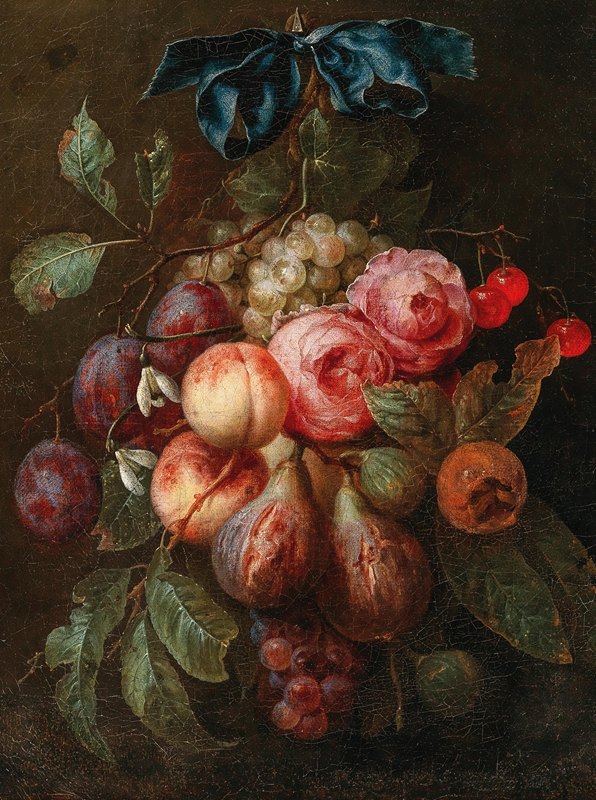
  Fruit and flowers hanging from a ribbon-

静物画作品集 3000幅

1978. 当代现实主义艺术家大全 – 当代现实主义都有哪些画家? 高清作品[7%]

美国,出现于 1960 年代末/70 年代初
当代现实主义是一种直截了当的现实主义表现方法,在这个后抽象时代继续被广泛实践。它不同于照片写实主义,后者在本质上有些夸张、讽刺和概念化。 当代现实主义者形成了一个截然不同的群体,但他们的共同点是他们精通现代艺术的概念,但选择以更传统的形式工作。许多当代现实主义者实际上是从抽象画家开始的,他们经历了一个由教授和理论家主导的教育体系,他们对具象绘画不屑一顾。 与这一运动相关的最著名艺术家包括威廉·贝利尼尔·威利弗菲利普·珀尔斯坦. 有一个可识别的当代现实主义者“群体”,但我们使用了一个相当宽松的定义来允许包括更多的 20 世纪现实主义者。
 
按时间顺序排列的当代现实主义者列表
使用ctrl-F (PC) 或command-F (Mac) 搜索姓名

彼得赫德 1904-1984 美国画家
亨丽埃特怀斯 1907-1997 美国画家
约翰库克 1909-1978 美国画家
西尔维亚雪橇 1916-2010 英国/美国画家
安德鲁惠氏 1917-2009 美国画家
罗杰·梅德瑞斯 1920-2001 美国画家
简·弗雷利歇尔 1924-2014 美国画家
菲利普·珀尔斯坦 1924年出生 美国画家
伯纳德赛峰 1924-1995 美国/加拿大画家
詹姆斯·巴马 1926年出生 美国画家
比利·莫罗·杰克逊 1926年出生 美国画家
罗伯特·维克里 1926年出生 美国画家
阿尔弗雷德·莱斯利 生于 1927 年 美国画家/电影制片人
科琳布朗宁 1929年出生 爱尔兰/美国画家
尼尔韦利弗 1929-2005 美国画家
威廉·贝利 生于 1930 年 美国画家
杰克比尔 1931年出生 美国画家
约瑟夫·拉斐尔 1933年出生 美国画家
克里斯托弗·普拉特 1935年出生 加拿大画家
玛丽普拉特 1935年出生 加拿大画家
克劳迪乌斯布拉沃 1936-2011 智利画家
沃伦·克里斯韦尔 1936年出生 美国画家
西德尼·古德曼 1936-2013 美国画家
珍妮特鱼 1938年出生 美国画家
安东尼格林 1939年出生 英国画家
约翰注册 1939-1996 美国画家
肯·丹比 1940-2007 加拿大画家
利本克 1946年出生 美国画家
凯瑟琳墨菲 1946年出生 美国画家
杰米惠氏 1946年出生 美国画家
理查德·托马斯·戴维斯 1947年出生 美国/加拿大画家
兰德尔湖 1947年出生 美国画家
埃里克·菲舍尔 1948年出生 美国画家/雕塑家
斯科特普赖尔 1949年出生 美国画家
保罗·奥特罗 生于 1950 年 美国画家
林恩·多诺霍 1953-2003 加拿大画家
博·巴特利特 1955年出生 美国画家
文森特德西德里奥 1955年出生 美国画家
马克·内斯特 1957年出生 美国画家
贝尔纳多·托伦斯 1957年出生 西班牙画家
伊丽莎白伯丹 美国画家
William Bailey. Mercatale Still Life. 1981-

1979. 抽象表现主义艺术家大全 – 抽象表现主义画家都有谁? 高清作品[4%]

以纽约市为中心,1946 年至 1960 年代
抽象表现主义是一种艺术家纯粹通过使用形式和色彩来表达自己的艺术。它是非具象的或非客观的艺术,这意味着没有真实的物体被表现出来。 现在被认为是第一个具有国际重要性的美国艺术运动,这​​个词最初用于描述威廉·德·库宁杰克逊·波洛克阿希尔·高尔基的作品。 该运动或多或少可以分为两类:以波洛克、德库宁、弗朗茨克莱恩菲利普古斯顿等艺术家为代表的动作绘画,强调绘画中涉及的身体动作;色域绘画,由Mark RothkoKenneth Noland等人实践,主要关注探索纯色在画布上的效果。  
按时间顺序排列的抽象表现主义者列表
使用ctrl-F (PC) 或command-F (Mac) 搜索名称

汉斯霍夫曼 1880-1966 德国/美国画家
马克托比 1890-1976 美国画家
阿尔玛托马斯 1891-1978 非裔美国画家
路易丝内维尔森 1899-1988 俄罗斯/美国雕塑家
杰克特沃科夫 1900-1982 波兰/美国画家
阿佳·容克斯 1900-1983 拉脱维亚/美国画家
玛丽卡勒里 1903-1977 美国雕塑家
阿道夫戈特利布 1903-1974 美国画家
阿尔弗雷德詹森 1903-1981 危地马拉/美国画家
西摩利普顿 1903-1986 美国雕塑家
马克·罗斯科 1903-1970 拉脱维亚/美国画家
亚伦西斯金德 1903-1991 美国摄影师
埃斯特万维森特 1903-2001 西班牙/美国画家
威廉德库宁 1904-1997 荷兰/美国画家
何塞德里维拉 1904-1985 美国雕塑家
阿希尔·高尔基 1904-1948 亚美尼亚/美国画家
巴尔科姆·格林 1904-1990 美国画家
格特鲁德·格林 1904-1956 美国画家
野口勇 1904-1988 日本/美国雕塑家
克莱福德斯蒂尔 1904-1980 美国画家
约翰费伦 1905-1970 美国画家
巴内特·纽曼 1905-1970 美国画家
詹姆斯布鲁克斯 1906-1992 美国画家
赫伯特·费伯 1906-1991 美国雕塑家
大卫·史密斯 1906-1965 美国雕塑家
阿尔伯特科廷 1907-1980 俄罗斯/美国画家
珍珠精 1908-1988 美国画家
李克拉斯纳 1908-1984 美国画家
乔治·麦克尼尔 1908-1995 美国画家
杰克·布什 1909-1977 加拿大画家
恩里科·多纳蒂 1909-2008 美国画家
诺曼刘易斯 1909-1979 非裔美国画家
莫里斯·格雷夫斯 1910-2001 美国画家/雕塑家
弗朗兹克莱恩 1910-1962 美国画家
路易丝布尔乔亚 1911-2010 法国/美国雕塑家
威廉·巴齐奥特斯 1912-1963 美国画家
莫里斯路易斯 1912-1962 美国画家
罗伯托马塔 1912-2002 智利/法国画家
杰克逊·波洛克 1912-1956 美国画家
劳伦斯卡尔卡尼奥 1913-1993 美国画家
菲利普古斯顿 1913-1980 加拿大/美国画家
伊布拉姆·拉索 1913-2003 美国雕塑家
康拉德马卡雷利酒店 1913-2000 美国画家
阿德莱因哈特 1913-1967 美国画家
威廉斯科特 1913-1989 英国画家
阿尔贝托布里 1915-1995 意大利画家
爱德华杜格莫尔 1915-1996 美国画家
罗伯特·马瑟韦尔 1915-1991 美国画家
埃尔默比肖夫 1916-1991 美国画家
阿方索·奥索里奥 1916-1990 菲律宾/美国画家
理查德·普塞特-达特 1916-1992 美国画家
尼古拉斯·卡罗内 1917-2010 美国画家/雕塑家
斯蒂芬·格林 1917-1999 美国画家
戴维黑尔 1917-1992 美国雕塑家
米尔顿·雷斯尼克 1917-2004 俄罗斯/美国画家
伊莱恩·弗里德·德库宁 1918-1989 美国画家
克莱夫格雷 1918-2004 美国画家
爱德华科贝特 1919-1971 美国画家
莱斯特约翰逊 1919-2010 美国画家
乔治·莫里森 1919-2000 美国原住民画家/雕塑家
吉恩·戴维斯 1920-1985 美国画家
卡雷尔·阿佩尔 1921-2006 荷兰画家
诺曼布鲁姆 1921-1999 美国画家
内尔布莱恩 1922-1996 美国画家
老罗伯特·德尼罗 1922-1993 美国画家
恩典哈蒂根 1922-2008 美国画家
朱尔斯·奥利茨基 1922-2007 乌克兰/美国画家
西奥多罗斯·斯塔莫斯 1922-1997 美国画家
山姆弗朗西斯 1923-1994 美国画家
保罗詹金斯 1923-2012 美国画家
让·保罗·里奥佩尔 1923-2002 加拿大画家
理查德·斯坦凯维奇 1923-1983 美国组合艺术家
安东尼·塔皮埃斯 1923-2012 西班牙画家
肯尼斯·诺兰 1924-2010 美国画家
琼·米切尔 1926-1992 美国画家
海伦弗兰肯塔勒 1928-2011 美国画家
艾尔赫尔德 1928-2005 美国画家
丽塔·勒滕德 1928年出生 加拿大本土画家
赛托姆布雷 1928-2011 美国画家
贾斯珀约翰斯 生于 1930 年 美国画家/雕塑家
拉斐尔科拉索 1943-1990 美国画家
约瑟夫·马里奥尼 1943年出生 美国画家

1980. 搜索建议 高清作品[1%]

搜索建议:

如果未找到符合您搜索条件的记录,可能由于国外画家、画作名称音译为中文的差别,以及中文分词问题, 建议您进行如下操作: 1. 如果您用英文查询,请输入英文单词搜索,多词用空格分开。 2. 如果您输入中文查询,搜索画家名字至少2个(含2个)汉字,多词空格分割。 (如:要查找“克劳德·莫奈的睡莲”,那么输入“莫奈 睡莲”,或输入“Monet lotus”查找将更为有效)。 (如:要查找“世界的起源”,把“的”替换成空格,输入“世界 起源”查找将更为有效)。 (如查找伊丽莎白的“黑莓采摘”,因翻译原因,可能翻译为黑莓收获,输入“黑莓” 或“Blackberry”查找或更为高效)。 网站搜索模式分为模糊搜索和精确搜索,请多词且多次尝试,以便快速找到您中意的作品。 3. 请不要包含空格以外的标点符号。  网站下载频道为重新架构,旧版网站内容无法直接按编号搜索,如果您迫切想找到某位艺术家的某幅更为高清的作品,可直接联系我们 我们也正在努力完善网站,在个人能力有限的情况下相关信息尽可能求其正确。

网站导航:

按照相关类别检索艺术家A-Z 国籍 艺术史
stills油画图片- 高清stills绘画作品- 代表作全集 中艺名画下载


1971. 安迪·沃霍尔,当代艺术I 高清作品[23%]

DO-Andy Warhol - 现代艺术 I
图片文件像素:5491 x 4804 px

安迪·沃霍尔,当代艺术I-

Andy Warhol - Zeitgenössische Kunst I-

(Pittsburgh 1928–1987 New York)
Jack Nicklaus, 1977, acrylic, silkscreen, ink on canvas, on the reverse with the stamps of The Estate of Andy Warhol and The Andy Warhol Foundation for the Visual Arts, New York, numbered with archive number PO 41.049, numbered again on the stretcher, 25.4 x 25.4 cm, on stretcher

Provenance:
Estate of the artist
Private collection, Florence
Galerie Hafenrichter, Nurnberg
Private collection, 德国y - acquired from the above

Literature:
Catalogue Raisonné, Andy Warhol, Paintings, 1976–1978, no. 3846

This small-format work by Andy Warhol from 1977 is a portrait of one of the best golfers of the 20th century - US golfer Jack Nicklaus, also known as The Golden Bear.

From the early 1960s until the late 1980s, Nicklaus was regarded as one of the best golfers in the world. With 18 major victories under his belt, he is still the most successful player in his sport.

This portrait was created as part of Warhol’s so-called Athletes series, commissioned by his friend and art collector Richard Weisman. It includes a total of ten portraits of famous athletes of the time, such as Muhammad Ali, Chris Evert and Pelé.
It is an interesting departure from Warhol’s usual society portraits and occupies a rather idiosyncratic position in his extensive oeuvre.

Warhol had little interest in sports and its heros, and did not choose the protagonists of the series himself, leaving this task to Weisman. The latter knew many athletes personally, which made it easy to persuade them to pose for Warhol. Warhol eventually met each of the top athletes in person, and took photographs of them with his Polaroid Big Shot camera. The silkscreen portraits were subsequently created on the basis of these images. Each portrait is executed in various colors, and captures both the glamour and personality of the individual athlete.

Of the around 60 Polaroids Warhol made of Jack Nicklaus with his Big Shot camera, he selected four and processed them further into canvases.
On the basis on the photographs of Nicklaus with his golf club, Warhol ultimately created 15 original portraits of the athlete.

1972. 克里斯多夫·谢纳。1573-1650. 来自Admirando FacularsMaculas Varius的Rosa Ursina Sive Sun。布拉恰诺:安德烈亚斯·菲乌斯(Andreas Phaeus)在公爵出版社,1626-1630年。 高清作品[22%]

Rosa Ursina Sive Sol ex Admirando Facularum  Macularum suarum Phoenomeno Varius.  Bracciano: Andreas Phaeus at the Ducal Press, 1626-1630.

图片文件尺寸 : 4065 x 5080px

SCHEINER, CHRISTOPH. 1573-1650. :Rosa Ursina Sive Sol ex Admirando Facularum Macularum suarum Phoenomeno Varius. Bracciano: Andreas Phaeus at the Ducal Press, 1626-1630.
Folio (375 x 260 mm). Engraved title vignette, engraved portrait of Paolo Giordano Orsini, Duke of Bracciano, additional engraved title, numerous engraved illustrations throughout (many full-page), woodcut head- and tailpieces and initials. [38], 784 (with numerous errors in pagination), [38] pp., with the blanks F4, R6 4I6. Full 18th-century (?) vellum, manuscript spine title, all edges gilt. Repairs to large portion of outer lower corner of first 5 leaves (letterpress half-title, title, portrait leaf, contents and engraved title) with loss to text and images, occasional heavy browning and waterstaining, especially to prefatory and end matter, sporadic foxing, loss to top blank corner of 4G6.

FIRST EDITION of Scheiner\'s major work on sunspots. Scheiner first observed sunspots in 1611, publishing his finding pseudonymously the following year in Tres Epistolae de Maculis Solaribus. The tract initiated a dispute with Galileo over the nature of sunspots. The present work, Scheiner\'s magnum opus and the standard work on sunspots for over well over a century, opens with an extended attack on Galileo, although Scheiner had by this point accepted Galileo\'s theory that sunspots exist on the surface of the sun and are not, as he had previously argued, caused by shadows cast by satellites of the sun. The many fine engravings depict Scheiner\'s observations, a map of the moon, and the helioscope and other instruments. \"For his masterpiece, Scheiner produced the first monograph on a heavenly body, the Sun. Even today it is still an impressive volume, with scores of engravings of sunspots and the various instruments needed for solar observations\" (Jesuit Science in the Age of Galileo). Cinti 79; Honeyman 2781.

克里斯多夫·谢纳。1573-1650. 来自Admirando FacularsMaculas Varius的Rosa Ursina Sive Sun。布拉恰诺:安德烈亚斯·菲乌斯(Andreas Phaeus)在公爵出版社,1626-1630年。

1973. 安迪·沃霍尔,当代艺术I 高清作品[20%]

DO-Andy Warhol - 现代艺术 I
图片文件像素:5347 x 5320 px

安迪·沃霍尔,当代艺术I-

Andy Warhol - Zeitgenössische Kunst I-

(Pittsburgh 1928-1987 New York)
Queen Elizabeth II of the United Kingdom, from Reigning Queens, 1985, signed in pencil and numbered 9/40, screenprint in colours on Lenox Museum Board with the blindstamp of the printer Rupert Jasen Smith, New York, published by George C.P. Mulder, Amsterdam, 100 x 80 cm, In plexiglass case

This is no. 9 from an edition of 40 + 10 artist’s proofs

Provenance:
Martin Lawrence Limited Editions, Inc., New York (label on the reverse)
European private collection

Literature:
F. Feldman J. Schellmann, Andy Warhol Prints, A Catalogue Raisonné 1962-1987, II. 334-349, p. 138 with ill.

For the realisation of Queen Elizabeth II of the United Kingdom, a photograph taken on the occasion of the Silver Jubilee, the 25th anniversary of her reign, was used as a reference. The sitter\'s pose remains unaltered, retaining the structure and grandeur that are typical of classical portraiture. Warhol adds the commercial medium, emphasising it. His are classical depictions that praise the importance and solemnity of the subject depicted.

The same image of the queen appears in each of her four prints but they vary in colour. This one in particular has a primarily red background, and features graphic shapes printed from separate screens. Warhol began working in this style in the mid-1970s, fragmenting the image with various overlayed shapes and patches of colour.

The association of commercial medium and traditional portraiture is key, allowing Warhol to create a product that would subsequently be hailed as a work of art. Seriality, consumerism, the concept of fame and social hierarchy emanate from the superimposition of colour fields that enhance the subject\'s femininity. The pronounced make-up and bright colours denote the Pop character of mass culture, emphasising appearance and conveying a certain frivolity - unlike traditional portraits, where character and gravitas prevailed over aesthetics. Despite beginning with an impersonal approach and a mechanical reproduction of the subject, these interventions in the image gave the work a deliberately ‘artistic’ look. In many of his female portraits, such as here, the multicoloured surfaces and suggestion of make-up enhance the glamour and femininity of the subjects. With characteristic ambivalence, Warhol explained his additions to these later prints as immaterial:

‘I really would still rather do just a silkscreen of the face without all the rest, but people expect just a little bit more. That’s why I put in all the drawing.’ (Barry Blinderman, ‘Modern Myths: An Interview with Andy Warhol’, Arts, October 1981, p.145.)

This work is published in an edition of forty with ten artist’s proofs, five printer’s proofs and three hors commerce. The work is also published as a Royal Edition with diamond dust on the drawing lines, published in an edition of thirty with five artist’s proofs, two printer’s proofs and two hors commerce.

1974. Lempicka Tamara-现代 高清作品[16%]

DO-Tamara de Lempicka  - Moderne
图片文件像素:5378 x 3944 px

Lempicka Tamara-现代-

Tamara de Lempicka * - Moderne-

(Warschau 1898–1980 Cuernavaca /Mexiko)
Chambre d’hôtel, ca. 1951, signiert, Öl auf Leinwand, 56 x 48 cm, gerahmt

Provenienz:
Galleria Bonaparte, Mailand
Europäische Privatsammlung

Ausgestellt:
Montecatini Terme, Da De Chirico a Fontana. Gli anni d\'oro di Montecatini Terme, 27. September - 3. November 2002, Ausst.-Kat. S. 127 und 223
Mailand, Tamara de Lempicka, Palazzo Reale, 5. Oktober 2006 – 14. Januar 2007, Ausst.-Kat. Nr. 58, S. 166–167 mit Abb.
Paris, Tamara De Lempicka, La Reine de l’Art Déco, Pinacothèque de Paris, 18. April – 8. September 2013, Ausstellungs Kat. S. 212–213 mit Abb. (mit falschen Maßangaben)
Turin, Tamara de Lempicka, Palazzo Chiabalese, 19. März - 6. September 2015
Verona, Palazzo Forti, 20. September 2015 - 31. Januar 2016, Ausst.-Kat.
Madrid, Tamara de Lempicka, Reina del Art Déco, Palacio de Gaviria, 5. Oktober 2018 - 5. Mai 2019

Literatur:
A. Blondel, Tamara de Lempicka, catalogue raisonné 1921–1979, Acatos, Lausanne 1999, Nr. B 301, S. 359 mit Abb. (mit falschen Maßangaben)

Tamara de Lempicka, die herausragende Vertreterin der Art-Déco-Malerei in den 1920er Jahren, kombinierte in ihrem späteren Werk disparate Elemente aus ihrem Frühwerk, wie in ihrem „Chambre d\'Hôtel“.

Tamara de Lempicka gilt als eine der erfolgreichsten Frauen der Kunstgeschichte. Nach der Oktoberrevolution flüchtete die in Polen geborene Künstlerin von St. Petersburg nach Paris, wo sie ihren Ruhm begründete. De Lempicka verkehrte in den Cafés der französischen Hauptstadt, wo sie zahlreiche Persönlichkeiten wie Georges Braque und Filippo Tommaso Marinetti kennenlernte. Ihre Gemälde haben eine starke visuelle Wirkung und zeichnen sich durch dekonstruierte, volumetrische Formen aus, in denen die Einflüsse des naturalistischen Kubismus und die Harmonie des italienischen Manierismus durchscheinen. Ein Großteil ihrer Werke sind Porträts von Persönlichkeiten, die in den von ihr besuchten Salons verkehrten. Die Porträtierten tragen reale Züge und sind gleichzeitig Symbolfiguren, elegant und geschmückt mit dem Reichtum der schönen Gesellschaft, in der sie lebten. Auch die zahlreichen Selbstporträts der Künstlerin zeugen von ihrer Lebens- und Genussfreude. Der kühle, glatte Malstil evoziert Theatralik, die Porträtierten wirken skulptural und monumental, der versteinerte Blick verbirgt jeden Anflug von Menschlichkeit.
Nach einer Amerikareise und Jahren des Erfolges erlebt de Lempicka das, was sie selbst als „Künstlerdepression” bezeichnete. Der ständige Druck, etwas zu produzieren und die Erwartungen ihrer Umgebung zu erfüllen, führte zu einer Erschöpfung und Auszehrung ihrer Kreativität. Ab etwa 1930 schlug de Lempicka einen anderen Weg ein, und ihr Werk nahm einen eher meditativen, fast religiösen Charakter an. Auch ihre Technik näherte sich einem hyperrealistischen und surrealistischen Modell an, wie das Gemälde „Chambre d\'Hôtel“ von 1951 zeigt, das in Amerika entstand, wo de Lempicka nach der Flucht vor den Nazis eine neue Heimat fand: Die Studie eines Zimmers präsentiert sich als gleichzeitig still und ohrenbetäubend laut. Es gibt keine Gesichter, wie in ihren früheren Werken, aber es gibt Raum für eine weniger konstruierte Struktur, die in ihrer Form weniger gebrochen, aber viel strenger in ihrer visuellen Wirkung ist. Man sieht einen Ausschnitt aus einem Hotelzimmer, in dem ein Spiegel den Raum weiter vergrößert und eine Art Durchgang darin schafft. Die Komposition ist durchdachter, fast narrativ, sie wird nicht mehr vom Rahmen erdrückt, sondern setzt sich fort und deutet den größeren Zusammenhang an.

Bildcredit:
Tamara de Lempicka in einem Kleid von Marcel Rochas, Paris, um 1931, Foto. Dora Kallmus (Madame d’Ora), © AGF / Bridgeman Images

1975. 擅长画花卉画的画家大全 世界名画高清图片故事 高清作品[15%]

按时间顺序排列的列表 使用ctrl-F (PC) 或command-F (Mac) 搜索名称

安布罗斯·博斯查特长老 1573-1621 荷兰画家
约翰阿雷拉诺 1614-1676 西班牙画家
让-巴蒂斯特·莫诺耶 1634-1699 法国画家
雷切尔·拉施 1664-1750 荷兰画家
乔治·狄奥尼修斯荣誉 1710-1770 德国画家/插画家
扬凡奥斯 1744-1808 荷兰画家
杰拉德范斯潘东克 1746-1822 荷兰画家
皮埃尔·约瑟夫·雷杜特 1759-1840 卢森堡/法国画家
扬·弗兰斯·范达尔 1764-1840 佛兰芒画家
乔治范奥斯 1782-1861 荷兰画家
约翰·劳伦茨·詹森 1800-1856 丹麦画家
西蒙圣让 1808-1860 法国画家
马丁·约翰逊·海德 1819-1904 美国画家
施洗约翰罗比 1821-1910 比利时画家
亨利·方丹·拉图尔 1836-1904 法国画家
玛丽亚奥基杜温 1845-1927 美国画家
尤金·亨利·科乔瓦 1850-1911 法国画家
保罗德隆普雷 1855-1911 法国/美国画家
乔治亚·欧姬芙 1887-1986 美国画家
Still Life with Roses and Fruit-

1976. 多斯托耶夫斯基的名片上写着亚历山大·赫尔岑。 照片署名并题写(俄语)给亚历山大·赫尔岑, 高清作品[11%]

Photograph signed and inscribed [in Russian] to Alexander Herzen,

图片文件尺寸 : 3981 x 5780px

DOSTOEVSKY CARTE-DE-VISITE INSCRIBED TO ALEXANDER HERZEN.:DOSTOEVSKY, FYODOR. 1821-1881. Photograph signed and inscribed [in Russian] to Alexander Herzen, albumen print carte-de-visite full length portrait by M.B. Tulinov, Petersburg, 1861, 105 x 65 mm, inscribed by Dostoevsky in Russian to the verso, \"Alexander Ivanovich Herzen in memory of our meeting in London. Fyodor Dostoyevsky 8 July/20 July 1862,\" minor stain to verso.
Provenance: Alexander Ivanovich Herzen; to daughter Olga Aleksandrovna [Herzen] Monod; by descent.
Publication: For a discussion of the photograph, see Volgin, Igor. \"Introduction\" to The Dostoevsky Archive (1997), p 21.

Pull quote: \"Herzen awaits his readers in the future. Far above the heads of the present crowd, he transmits his thoughts to those who will be able to comprehend them.\" – Leo Tolstoy, 1905.

VERY RARE CARTE DE VISITE PHOTOGRAPH OF FYODOR DOSTOEVSKY PRESENTED TO ALEXANDER HERZEN IN REMEMBRANCE OF THEIR 1862 MEETING IN LONDON: A TREMENDOUSLY IMPORTANT ASSOCIATION BETWEEN TWO OF THE LEADING INTELLECTUALS OF THE 19TH-CENTURY.

Alexander Herzen was one of the most important and influential Russian writers and thinkers of the 19th-century. called the \"father of Russian socialism,\" he had a profound influence on late-19th century Russian writers, including Fyodor Dostoevsky. Born illegitimately to a wealthy Russian landowner, Herzen became a dissident and critic of the Russian feudal system. Of Herzen, Tolstoy said he had never met a man \"with so rare a combination of scintillating brilliance and depth.\" His writings, including From the Other Shore (1848) and those appearing in his influential publications of the 1850s-60s The Bell and the Polestar, would help mold a generation of Russian writing and thought.

Herzen and Dostoevsky met for the first time in Russia in 1846, following Dostoevsky\'s comment in a letter to his brother that Herzen and Goncharov stand as \"the most remarkable\" of his rivals; Herzen\'s recollection of the meeting was less than effusive, however: \"I can\'t say he made a particularly present impression.\" Their second meeting occurred when Dostoevsky visited Herzen in London in July of 1862, of which this photograph is a memento. During the 1850s and early 1860s, visits to the emigree Herzen by Russian writers and intellectuals were something of a right of passage, and Dostoevsky\'s visit followed right on the heels of Turgenev. This series of meetings profoundly affected Dostoevsky and his work, and is clearly acknowledged in his Winter Notes which he wrote later that year, exhibiting a clear debt to Herzen\'s own writings. Dostoevsky, along with Solzhenitsyn, acknowledged the formative influence of Herzen on his work, and Herzen would also appear in composite in a number of Dostoevsky\'s characters throughout his career. Herzen, however, noted, rather condescendingly, \"Dostoevsky was here yesterday—he is a naïve, not entirely lucid, but a very dear person. He believes enthusiastically in the Russian people.\"

The two towering figures would meet again on a steamship from Naples to Livorno the following year, where Dostoevsky was travelling with his mistress Polina Suslova. According to Suslova\'s diaries (as published in The Dostoevsky Archives), Dostoevsky took pains to hide their relationship from Herzen, introducing her vaguely as a family member, and even encouraged her to arrange a visit with Herzen\'s son in Paris that Winter. After they parted, Dostoevsky became angry with her over a photograph of her he had seen at Herzen\'s, which she had given at an earlier date. In 1865, Dostoevsky wrote to Herzen imploring him for a loan, and became peevish when Herzen did not immediately respond. By the late 1860s Dostoevsky would disparage Herzen, somewhat unfairly, as a \"Westernizer,\" leading to his more severe criticism of Herzen in his Writer\'s Diary.

Herzen was one of the most complex and brilliant figures of the 19th-century, and was largely responsible for assimilating western ideas into Russian thought, while still maintaining his advocacy for the freedom of the Russian serf.

In reality, the two writers/thinkers shared a great deal in their outlook: both asserted the importance of the individual, and the folly of the search for a unified teleological system, cutting against the grain of their mid-19th century contemporaries. While Herzen was embraced by Lenin, identified as the \"father of Russian socialism,\" Herzen\'s socialism was a different breed, \"Centralization may do a great deal for order and for various public undertakings, but it is incompatible with freedom. It easily brings a nation to the position of a well-tended flock or a pack of hounds cleverly kept in order by a huntsman.\" Lenin regarded Herzen\'s focus on freedom as a shortcoming of his bourgeois roots. During the 20th-century Russian-British philosopher Isaiah Berlin came across Herzen\'s writings and recognized the prescience of Herzen\'s thought. It was Berlin, who reestablished Herzen\'s influence, agreeing with and amplifying his idea that the pursuit of \"a perfect society\" invariably leads to blood.

The present photograph was taken by Mikhail Borisovich Tulinov (1823–1889) in Petersburg in 1861. Any period photograph of Dostoevsky is rare, and moreso inscribed. We trace two inscribed photographs at auction in the last 40 years. However, we find no record of an inscribed photograph of similar substance and importance in the historical record. An incredible, and incredibly rare, Dostoevsky item tying together two of the greatest thinkers and writers of the 19th-century.

REFERENCES:
Kelly, Aileen. The Discovery of Chance: The Life and Thought of Alexander Herzen. 2016.
Kelly, Aileen. \"Irony and Utopia in Herzen and Dostoevsky: From the Other Shore and Diary of a Writer.\" The Russian Review, 50:4 (1991), pp 397-416.
Lantz, Kenneth. The Dostoevsky Encycolpedia. 2004.
Serakin, Peter. The Dostoevsky Archive: Firsthand Accounts of the Novelist from Contemporaries\' Memoirs and Rare Periodicals. 1997.


\"If only people wanted to save themselves instead of saving the world, how much they would do for the salvation of the world and the liberation of humanity!\" – Alexander Herzen, From the Other Shore, 1848.

多斯托耶夫斯基的名片上写着亚历山大·赫尔岑。 照片署名并题写(俄语)给亚历山大·赫尔岑,

1977. 擅长静物画的画家大全 擅长画静物画都有哪些画家? 高清作品[7%]

按时间顺序排列的列表

静物画作品集 3000幅

使用ctrl-F (PC) 或command-F (Mac) 搜索名称

胡安·桑切斯·科坦 1560-1627 西班牙画家
乔治弗莱格尔 1566-1638 德国画家
安布罗斯·博斯查特长老 1573-1621 荷兰画家
弗洛里斯范戴克 1575-1651 荷兰画家
弗兰斯·斯奈德 1579-1657 佛兰芒画家
奥西亚斯·贝尔特 1580-1624 佛兰芒画家
胡安德埃斯皮诺萨 1590-1641 西班牙画家
弗洛里斯·范舒顿 1590-1655 荷兰画家
丹尼尔西格斯 1590-1661 佛兰芒画家
威廉·克劳兹。合田 1594-1680 荷兰画家
克拉拉皮特斯 1594-1657 佛兰芒画家
雅各布范埃斯 1596-1666 佛兰芒画家
胡安·范德哈门和莱昂 1596-1631 西班牙画家
彼得克莱兹 1597-1660 荷兰画家
塞巴斯蒂安斯托斯科普夫 1597-1657 法国画家
弗朗西斯科·德祖巴兰 1598-1664 西班牙画家
乔瓦娜·加佐尼 1600-1670 意大利画家
雅克·林纳德 1600-1645 法国画家
弗朗索瓦·伊肯斯 1601-1693 佛兰芒画家
艾萨克索罗 1604-1638 佛兰芒画家
简·戴维兹。家 1606-1683 荷兰画家
鲁宾鲍金 1610-1663 法国画家
西蒙·卢蒂丘伊斯 1610-1661 荷兰画家
路易莎莫永 1610-1696 法国画家
迈克尔·佩斯 1610-1670 意大利画家
安东尼奥·佩雷达 1611-1678 西班牙画家
约翰阿雷拉诺 1614-1676 西班牙画家
帕拉西奥斯的弗朗西斯 1615-1650 西班牙画家
亚伯拉罕·亨德里克斯。来自巴伐利亚 1620-1690 荷兰画家
简·詹斯。范德维尔德三世 1620-1662 荷兰画家
胡安德祖巴兰 1620-1649 西班牙画家
彼得·博尔 1622-1674 佛兰芒画家
威廉小牛 1622-1693 荷兰画家
乔里斯·范森 1623-1667 佛兰芒画家
约翰范凯塞尔 1626-1679 荷兰画家
威廉范阿尔斯特 1627-1683 荷兰画家
科尼利厄斯·吉斯布莱希茨 1630-1675 佛兰芒画家
玛丽·范·奥斯特威克 1630-1693 荷兰画家
克里斯托弗·拉米雷斯·德阿雷拉诺 1630-1644 西班牙画家
科尼利厄斯·德海姆 1631-1695 荷兰画家
让-巴蒂斯特·莫诺耶 1634-1699 法国画家
约瑟夫雷科 1634-1695 意大利画家
埃德华特科利尔 1640-1707 荷兰画家
保罗列日瓦 1640-1660 法国画家
简维尼克斯二世 1642-1719 荷兰画家
简·詹斯。血红素 1650-1695 荷兰画家
雅各布博格达尼 1660-1724 匈牙利画家
阿德里安科尔特 1660-1707 荷兰画家
雷切尔·拉施 1664-1750 荷兰画家
让-巴蒂斯特-西蒙夏尔丹 1699-1779 法国画家
路易斯·埃吉迪奥·梅伦德斯 1716-1780 西班牙画家
扬凡奥斯 1744-1808 荷兰画家
安妮·瓦莱尔-科斯特 1744-1818 法国画家
杰拉德范斯潘东克 1746-1822 荷兰画家
詹姆斯·皮尔 1749-1831 美国画家
彼得菲尔德 1750-1814 佛兰芒画家
皮埃尔·约瑟夫·雷杜特 1759-1840 卢森堡/法国画家
扬·弗兰斯·范达尔 1764-1840 佛兰芒画家
拉斐尔·皮尔 1774-1825 美国画家
乔治范奥斯 1782-1861 荷兰画家
弗兰茨·克萨维尔·皮特 1791-1866 奥地利画家
约翰·劳伦茨·詹森 1800-1856 丹麦画家
乔治兰斯 1802-1864 英国画家
约翰·弗朗西斯 1808-1886 美国画家
西蒙圣让 1808-1860 法国画家
塞弗林罗森 1815-1872 德国/美国画家
施洗约翰罗比 1821-1910 比利时画家
约翰·霍华德·格里菲思 1826-1898 英国/加拿大画家
阿德尔海德·迪特里希 1827-1891 美国画家
布莱斯·亚历山大·德斯高夫 1830-1901 法国画家
安托万沃隆 1833-1900 法国画家
乔治克莱尔 1835-1890 英国画家
亨利·方丹·拉图尔 1836-1904 法国画家
理查德·拉巴尔·古德温 1840-1910 美国画家
玛丽亚奥基杜温 1845-1927 美国画家
威廉·迈克尔·哈内特 1848-1892 爱尔兰/美国画家
尤金·亨利·科乔瓦 1850-1911 法国画家
列维威尔斯徒弟 1850-1935 美国画家
埃米尔卡尔森 1853-1932 丹麦/美国画家
约瑟夫德克尔 1853-1924 美国画家
约翰·弗雷德里克·皮托 1854-1907 美国画家
克劳德·拉盖·赫斯特 1855-1942 美国画家
保罗德隆普雷 1855-1911 法国/美国画家
弗朗茨·比肖夫 1864-1929 奥地利/美国画家
查尔斯·A·默勒 1865-1955 美国画家
尼古拉斯奥尔登布鲁克斯 1880-1904 美国画家
维克多·迪布勒伊 1886-1900 法国/美国画家
乔治·莫兰迪 1890-1964 意大利画家
肯尼斯·戴维斯 生于 1925 年 美国画家
威廉·贝利 生于 1930 年 美国画家
玛丽普拉特 1935年出生 加拿大画家
卡罗琳布雷迪 生于 1937 年 美国画家
珍妮特鱼 1938年出生 美国画家
  Fruit and flowers hanging from a ribbon-

静物画作品集 3000幅

1978. 当代现实主义艺术家大全 – 当代现实主义都有哪些画家? 高清作品[7%]

美国,出现于 1960 年代末/70 年代初
当代现实主义是一种直截了当的现实主义表现方法,在这个后抽象时代继续被广泛实践。它不同于照片写实主义,后者在本质上有些夸张、讽刺和概念化。 当代现实主义者形成了一个截然不同的群体,但他们的共同点是他们精通现代艺术的概念,但选择以更传统的形式工作。许多当代现实主义者实际上是从抽象画家开始的,他们经历了一个由教授和理论家主导的教育体系,他们对具象绘画不屑一顾。 与这一运动相关的最著名艺术家包括威廉·贝利尼尔·威利弗菲利普·珀尔斯坦. 有一个可识别的当代现实主义者“群体”,但我们使用了一个相当宽松的定义来允许包括更多的 20 世纪现实主义者。
 
按时间顺序排列的当代现实主义者列表
使用ctrl-F (PC) 或command-F (Mac) 搜索姓名

彼得赫德 1904-1984 美国画家
亨丽埃特怀斯 1907-1997 美国画家
约翰库克 1909-1978 美国画家
西尔维亚雪橇 1916-2010 英国/美国画家
安德鲁惠氏 1917-2009 美国画家
罗杰·梅德瑞斯 1920-2001 美国画家
简·弗雷利歇尔 1924-2014 美国画家
菲利普·珀尔斯坦 1924年出生 美国画家
伯纳德赛峰 1924-1995 美国/加拿大画家
詹姆斯·巴马 1926年出生 美国画家
比利·莫罗·杰克逊 1926年出生 美国画家
罗伯特·维克里 1926年出生 美国画家
阿尔弗雷德·莱斯利 生于 1927 年 美国画家/电影制片人
科琳布朗宁 1929年出生 爱尔兰/美国画家
尼尔韦利弗 1929-2005 美国画家
威廉·贝利 生于 1930 年 美国画家
杰克比尔 1931年出生 美国画家
约瑟夫·拉斐尔 1933年出生 美国画家
克里斯托弗·普拉特 1935年出生 加拿大画家
玛丽普拉特 1935年出生 加拿大画家
克劳迪乌斯布拉沃 1936-2011 智利画家
沃伦·克里斯韦尔 1936年出生 美国画家
西德尼·古德曼 1936-2013 美国画家
珍妮特鱼 1938年出生 美国画家
安东尼格林 1939年出生 英国画家
约翰注册 1939-1996 美国画家
肯·丹比 1940-2007 加拿大画家
利本克 1946年出生 美国画家
凯瑟琳墨菲 1946年出生 美国画家
杰米惠氏 1946年出生 美国画家
理查德·托马斯·戴维斯 1947年出生 美国/加拿大画家
兰德尔湖 1947年出生 美国画家
埃里克·菲舍尔 1948年出生 美国画家/雕塑家
斯科特普赖尔 1949年出生 美国画家
保罗·奥特罗 生于 1950 年 美国画家
林恩·多诺霍 1953-2003 加拿大画家
博·巴特利特 1955年出生 美国画家
文森特德西德里奥 1955年出生 美国画家
马克·内斯特 1957年出生 美国画家
贝尔纳多·托伦斯 1957年出生 西班牙画家
伊丽莎白伯丹 美国画家
William Bailey. Mercatale Still Life. 1981-

1979. 抽象表现主义艺术家大全 – 抽象表现主义画家都有谁? 高清作品[4%]

以纽约市为中心,1946 年至 1960 年代
抽象表现主义是一种艺术家纯粹通过使用形式和色彩来表达自己的艺术。它是非具象的或非客观的艺术,这意味着没有真实的物体被表现出来。 现在被认为是第一个具有国际重要性的美国艺术运动,这​​个词最初用于描述威廉·德·库宁杰克逊·波洛克阿希尔·高尔基的作品。 该运动或多或少可以分为两类:以波洛克、德库宁、弗朗茨克莱恩菲利普古斯顿等艺术家为代表的动作绘画,强调绘画中涉及的身体动作;色域绘画,由Mark RothkoKenneth Noland等人实践,主要关注探索纯色在画布上的效果。  
按时间顺序排列的抽象表现主义者列表
使用ctrl-F (PC) 或command-F (Mac) 搜索名称

汉斯霍夫曼 1880-1966 德国/美国画家
马克托比 1890-1976 美国画家
阿尔玛托马斯 1891-1978 非裔美国画家
路易丝内维尔森 1899-1988 俄罗斯/美国雕塑家
杰克特沃科夫 1900-1982 波兰/美国画家
阿佳·容克斯 1900-1983 拉脱维亚/美国画家
玛丽卡勒里 1903-1977 美国雕塑家
阿道夫戈特利布 1903-1974 美国画家
阿尔弗雷德詹森 1903-1981 危地马拉/美国画家
西摩利普顿 1903-1986 美国雕塑家
马克·罗斯科 1903-1970 拉脱维亚/美国画家
亚伦西斯金德 1903-1991 美国摄影师
埃斯特万维森特 1903-2001 西班牙/美国画家
威廉德库宁 1904-1997 荷兰/美国画家
何塞德里维拉 1904-1985 美国雕塑家
阿希尔·高尔基 1904-1948 亚美尼亚/美国画家
巴尔科姆·格林 1904-1990 美国画家
格特鲁德·格林 1904-1956 美国画家
野口勇 1904-1988 日本/美国雕塑家
克莱福德斯蒂尔 1904-1980 美国画家
约翰费伦 1905-1970 美国画家
巴内特·纽曼 1905-1970 美国画家
詹姆斯布鲁克斯 1906-1992 美国画家
赫伯特·费伯 1906-1991 美国雕塑家
大卫·史密斯 1906-1965 美国雕塑家
阿尔伯特科廷 1907-1980 俄罗斯/美国画家
珍珠精 1908-1988 美国画家
李克拉斯纳 1908-1984 美国画家
乔治·麦克尼尔 1908-1995 美国画家
杰克·布什 1909-1977 加拿大画家
恩里科·多纳蒂 1909-2008 美国画家
诺曼刘易斯 1909-1979 非裔美国画家
莫里斯·格雷夫斯 1910-2001 美国画家/雕塑家
弗朗兹克莱恩 1910-1962 美国画家
路易丝布尔乔亚 1911-2010 法国/美国雕塑家
威廉·巴齐奥特斯 1912-1963 美国画家
莫里斯路易斯 1912-1962 美国画家
罗伯托马塔 1912-2002 智利/法国画家
杰克逊·波洛克 1912-1956 美国画家
劳伦斯卡尔卡尼奥 1913-1993 美国画家
菲利普古斯顿 1913-1980 加拿大/美国画家
伊布拉姆·拉索 1913-2003 美国雕塑家
康拉德马卡雷利酒店 1913-2000 美国画家
阿德莱因哈特 1913-1967 美国画家
威廉斯科特 1913-1989 英国画家
阿尔贝托布里 1915-1995 意大利画家
爱德华杜格莫尔 1915-1996 美国画家
罗伯特·马瑟韦尔 1915-1991 美国画家
埃尔默比肖夫 1916-1991 美国画家
阿方索·奥索里奥 1916-1990 菲律宾/美国画家
理查德·普塞特-达特 1916-1992 美国画家
尼古拉斯·卡罗内 1917-2010 美国画家/雕塑家
斯蒂芬·格林 1917-1999 美国画家
戴维黑尔 1917-1992 美国雕塑家
米尔顿·雷斯尼克 1917-2004 俄罗斯/美国画家
伊莱恩·弗里德·德库宁 1918-1989 美国画家
克莱夫格雷 1918-2004 美国画家
爱德华科贝特 1919-1971 美国画家
莱斯特约翰逊 1919-2010 美国画家
乔治·莫里森 1919-2000 美国原住民画家/雕塑家
吉恩·戴维斯 1920-1985 美国画家
卡雷尔·阿佩尔 1921-2006 荷兰画家
诺曼布鲁姆 1921-1999 美国画家
内尔布莱恩 1922-1996 美国画家
老罗伯特·德尼罗 1922-1993 美国画家
恩典哈蒂根 1922-2008 美国画家
朱尔斯·奥利茨基 1922-2007 乌克兰/美国画家
西奥多罗斯·斯塔莫斯 1922-1997 美国画家
山姆弗朗西斯 1923-1994 美国画家
保罗詹金斯 1923-2012 美国画家
让·保罗·里奥佩尔 1923-2002 加拿大画家
理查德·斯坦凯维奇 1923-1983 美国组合艺术家
安东尼·塔皮埃斯 1923-2012 西班牙画家
肯尼斯·诺兰 1924-2010 美国画家
琼·米切尔 1926-1992 美国画家
海伦弗兰肯塔勒 1928-2011 美国画家
艾尔赫尔德 1928-2005 美国画家
丽塔·勒滕德 1928年出生 加拿大本土画家
赛托姆布雷 1928-2011 美国画家
贾斯珀约翰斯 生于 1930 年 美国画家/雕塑家
拉斐尔科拉索 1943-1990 美国画家
约瑟夫·马里奥尼 1943年出生 美国画家

1980. 搜索建议 高清作品[1%]

搜索建议:

如果未找到符合您搜索条件的记录,可能由于国外画家、画作名称音译为中文的差别,以及中文分词问题, 建议您进行如下操作: 1. 如果您用英文查询,请输入英文单词搜索,多词用空格分开。 2. 如果您输入中文查询,搜索画家名字至少2个(含2个)汉字,多词空格分割。 (如:要查找“克劳德·莫奈的睡莲”,那么输入“莫奈 睡莲”,或输入“Monet lotus”查找将更为有效)。 (如:要查找“世界的起源”,把“的”替换成空格,输入“世界 起源”查找将更为有效)。 (如查找伊丽莎白的“黑莓采摘”,因翻译原因,可能翻译为黑莓收获,输入“黑莓” 或“Blackberry”查找或更为高效)。 网站搜索模式分为模糊搜索和精确搜索,请多词且多次尝试,以便快速找到您中意的作品。 3. 请不要包含空格以外的标点符号。  网站下载频道为重新架构,旧版网站内容无法直接按编号搜索,如果您迫切想找到某位艺术家的某幅更为高清的作品,可直接联系我们 我们也正在努力完善网站,在个人能力有限的情况下相关信息尽可能求其正确。

网站导航:

按照相关类别检索艺术家A-Z 国籍 艺术史